Donald Nijboer - Böcker
Visar alla böcker från författaren Donald Nijboer. Handla med fri frakt och snabb leverans.
16 produkter
16 produkter
406 kr
Skickas inom 7-10 vardagar
Prepare to embark on an extraordinary journey into the heart of naval warfare during World War II with Graphic War Navy. Following the success of Graphic War: The Secret Aviation Drawings and Illustrations of World War II, Donald Nijboer unveils a treasure trove of top-secret drawings that have remained unpublished. This meticulously-curated collection showcases a wealth of training manuals, vibrant wartime posters, and captivating illustrations. Scouring archives around the world, Nijboer has included naval material from Great Britain, The United States, Germany, France, Canada, Japan, and Italy. One of the highlights of Graphic War Navy is the stunning cutaway drawings of naval vessels and their armaments. These visuals played a pivotal role in the strategies of both Allied and Axis forces. In an era where there was limited intelligence about enemy craft, these illustrations were indispensable. Delve into the world of anonymous graphic artists and technical illustrators who, though unrecognized in their time, left an indelible mark on history. Their work, revived within these pages, offers a rare glimpse into war room tactics and the training of personnel. Whether you’re a naval enthusiast, a modeller, an artist, or simply someone fascinated with World War II history, Graphic War Navy promises an enthralling insider’s view of the epic battles fought in the vast expanse of the open sea.
World War II Aerial Combat 1937 - 1945
The Allied and Axis Air Forces A Visual History
Inbunden, Engelska, 2025
386 kr
Skickas inom 7-10 vardagar
Here, for the first time, is the story of the victorious, the vanquished and the forgotten air forces that fought in the Second World War in more than 300 period photographs. World War II would see the full potential of air power over the battlefield and oceans. From mere appendages of the army and navy, air forces became essential tools of destruction and critical for future battlefield and naval success.The histories of air warfare during World War II have focused exclusively on the air forces of the major powers: the United States, Britain, Germany, the Soviet Union and Japan. What has been completely ignored is the forgotten men and machines that fought alongside the Allies and Axis air forces, and there were many. Some of these air forces even found themselves fighting for both sides at the same time.Alongside coverage of the major air powers, this book includes information, rare photos and illustrations from the numerous small Allied and Axis air forces that left their mark and fills an important gap in our knowledge of WWII aviation. This is the story of the forgotten air forces of Poland, Belgium, Norway, Netherlands, France, Greece, India, China, Yugoslavia, Italy, Romania, Hungary, Bulgaria, Croatia, Slovakia and Finland - all of which fought with determination and some with great skill against overwhelming odds.
254 kr
Skickas inom 7-10 vardagar
The final year of World War II witnessed the decline of the piston-engine fighter and the beginning of the jet age. Taking to the skies were tried-and-true fighters, improved versions of old aircraft, and newly developed jets, including prototypes that flew for the first time just before the war ended. * Hundreds of photos chronicle these dynamic aircraft in Europe and the Pacific * Includes American Mustangs, Thunderbolts, and Shooting Stars (first operational U.S. jet); British Tempests, Spitfires, and Gloster Meteors (first operational Allied jet); German Fw 190s, Bf 109Ks, and Messerschmitt Me 262s (first operational jet fighter); Japanese Ki 100s, Raidens, and Tojos; and many more * Ideal reference for military history fans, scholars, and modelers
396 kr
Skickas inom 7-10 vardagar
More than half of the U.S.’s aircraft losses in Europe in World War II were due to German antiaircraft artillery, and many of the American aircraft shot down by Luftwaffe fighters had first been driven out of formation by flak and made easy prey for the fighters. A world away in the Pacific, American flak guns aboard naval ships formed the last line of defense against Japanese kamikazes. Historian Donald Nijboer relies on firsthand accounts, newly discovered files, photos, diagrams, and maps to reveal the forgotten contribution of flak in World War II, from doctrine and tactics to combat stories on the ground and in the air about what it was like to fly into the teeth of antiaircraft fire.
306 kr
Skickas
Among many other developments, World War II saw naval warfare shift from the battleship to the aircraft carrier, which remains one of the iconic weapons of the war and the core of modern battle fleets. Developed in the 1920s and 1930s, the aircraft carrier came into its own in World War II and featured prominently in numerous battles, including the Coral Sea, Midway, Guadalcanal, and Leyte Gulf. Later in the war, with many of its own carriers destroyed and its carrier-borne air force crippled, the Japanese relied on kamikazes to replace its aerial strike force and to attack the United States’ carrier force, and the United States used its carriers to attack the Japanese homeland.In this photo history, Donald Nijboer traces the history of aircraft carriers, from their early development just after World War I, to the Japanese carrier-borne attack on Pearl Harbor, through the great battles of the Pacific War, which featured some of military history’s great ships: the Yorktown, the Enterprise, the Hornet, the Lexington, and other vessels. Special sections cover British carrier operations in the Indian and Pacific Oceans, as well as the limited carrier operations of the German Navy, including the Graf Zeppelin.
187 kr
Skickas inom 10-15 vardagar
By the time the Americans began their aerial bombardment of Japan in 1944, both the JAAF and IJNAF were spent forces.What the Japanese did have though was the Ki-44 "Tojo". Armed with two 40 mm cannon, it was the most heavily armed and feared single-seat fighter to see action against the new American bomber, the B-29 Superfortress. For the bomber crews, they had what they believed was their ‘ace in hole’: a fully armed B-29 carried four remotely operated gun turrets and a tail gunner's position, making it the world's most advanced self-defending bomber.In every respect the Ki-44 pilots were fighting a desperate battle. Many who made their mark did so using suicidal ramming attacks or "taiatari". Illustrated with full colour artwork, this volume examines why the Ki-44 was unable to break up bomber formations conventionally during the Pacific War, and how its ramming tactics, while terrifying, graphically revealed Japan's inability to stop the B-29.
162 kr
Skickas inom 7-10 vardagar
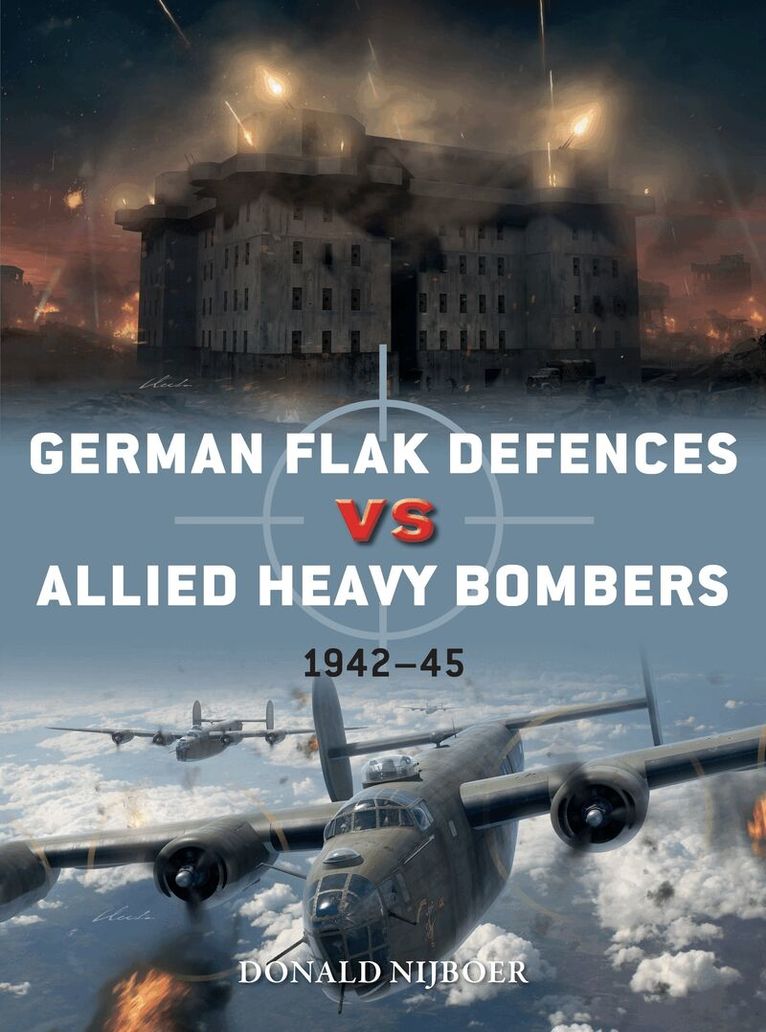
Since the end of World War II, the strategic bombing of Germany has inspired numerous studies, countless books and several documentary films, and it is not surprising.With more than one million tons of bombs dropped, close to 300,000 civilians killed, 700,000 wounded and in excess of 3,500,000 industrial and residential structures destroyed, the Allied bomber offensive was industrial war on a grand scale. The air battle that raged over Germany has often been described as a battle between Allied and German fighters but what has been frequently missed by historians on all sides is the impact of German anti-aircraft defences (flak).Though often dismissed as ineffective and a waste of valuable material and personnel, the German flak arm made a major contribution to the defence of the Third Reich – at least half of the American aircraft shot down over Germany fell to flak, and according to the RAF Official History, it was estimated that flak accounted for 1229 of 3302 aircraft lost by Bomber Command between 1942 and April 1945. Additionally, the strategic role of flak extended beyond simply shooting down aircraft – its other, more important task was to force bombers to drop their ordnance sooner or from a higher altitude, thus reducing bombing accuracy.Both these roles are explored in depth in this detailed study of the German flak defences and of their adversaries, the Allied heavy bombers. Containing full-colour illustrations including cockpit scenes and armament views, this is the definitive guide to the much-overlooked conflict between Allied planes and German anti-aircraft defences.
162 kr
Skickas inom 7-10 vardagar
The SBD Dauntless dive-bomber was a key cog in the US Navy’s aerial arsenal throughout the Pacific War.Although a product of aviation design in the mid to late 1930s, the type soldiered on even as more advanced aircraft were appearing from American factories as the war progressed. Despite its classification as a dive-bomber and rather dated appearance, the SBD Dauntless could more than handle its own against the feared A6M Zero-sen – a regular opponent, especially during the first 18 months of the campaign in the Pacific. The SBD was credited with 138 victories in aerial combat (principally in 1942), 107 of which were fighters and the rest bombers. Seven SBD units claimed five or more aerial victories, with future ace Lt(jg) John Leppla of VS-2 being credited with four victories while flying from the carrier USS Lexington during the Battle of the Coral Sea in May 1942.The Zero-sen came to symbolise Japan’s military prowess during the early stages of the war in the Pacific, and it quickly became the world’s premier carrier-based fighter – a title it would hold well into 1943. The psychological impact of the Zero-sen was so great that all Allied fighters were judged by the standards set by it. The aviators flying the A6M in 1941-42 were amongst the most experienced fighter pilots in the world, and they claimed a significant number of the SBDs destroyed while trying to defend their carriers from attack during the Battles of Coral Sea, Midway and Santa Cruz in 1942. While one was a dive-bomber and the other a nimble fighter, both met in combat many times, with the Dauntless proving an elusive and deadly target thanks to the tenacity and skill of the pilots and gunners manning the Douglas aircraft. While the Zero-sen was credited with shooting down many SBDs, the rugged dive-bomber gave as good as it got and emerged, not surprisingly, victorious on many occasions.This book examines these aircraft in detail, exploring their history and development and contains accurate descriptions of the combats between the SBD Dauntless and Zero-sen throughout the first four carrier battles of 1942 and the Solomons Campaign.
340 kr
Skickas inom 7-10 vardagar
The perfect companion to Masters of the Air on Apple TV+, this is a superbly illustrated examination of the aircraft, pilots, crews and operations of the US Eighth Air Force.The US Eighth Air Force—known as the “Mighty Eighth”—was a combat air force activated in Georgia, USA on January 28, 1942. Its bomber command soon moved to Northern Europe to conduct strategic bombing missions, seeking to destroy Germany’s ability to wage war. Among the major operations it participated in were “Big Week” in February 1944; the D-Day landings in June 1944; and the defeat of the Luftwaffe and destruction of German industry. Eighth Air Force was the largest of the deployed combat Army Air Forces in numbers of personnel, aircraft, and equipment. At peak strength, Eighth Air Force had 40 heavy bomber groups, 15 fighter groups, and four specialized support groups. This work provides a superbly illustrated and fully comprehensive exploration of the Mighty Eighth’s bomber and fighter planes, its incredibly brave pilots and crew, and its daring and dramatic operations. It also explores the careers of key personalities associated with the Mighty Eighth, such as Earle Partridge, James Doolittle, and William Kepner. Packed with hundreds of color aircraft profiles, battlescene artworks, and period photographs, The Mighty Eighth provides a truly comprehensive look at the illustrious history of the US Eighth Air Force.
185 kr
Skickas inom 7-10 vardagar
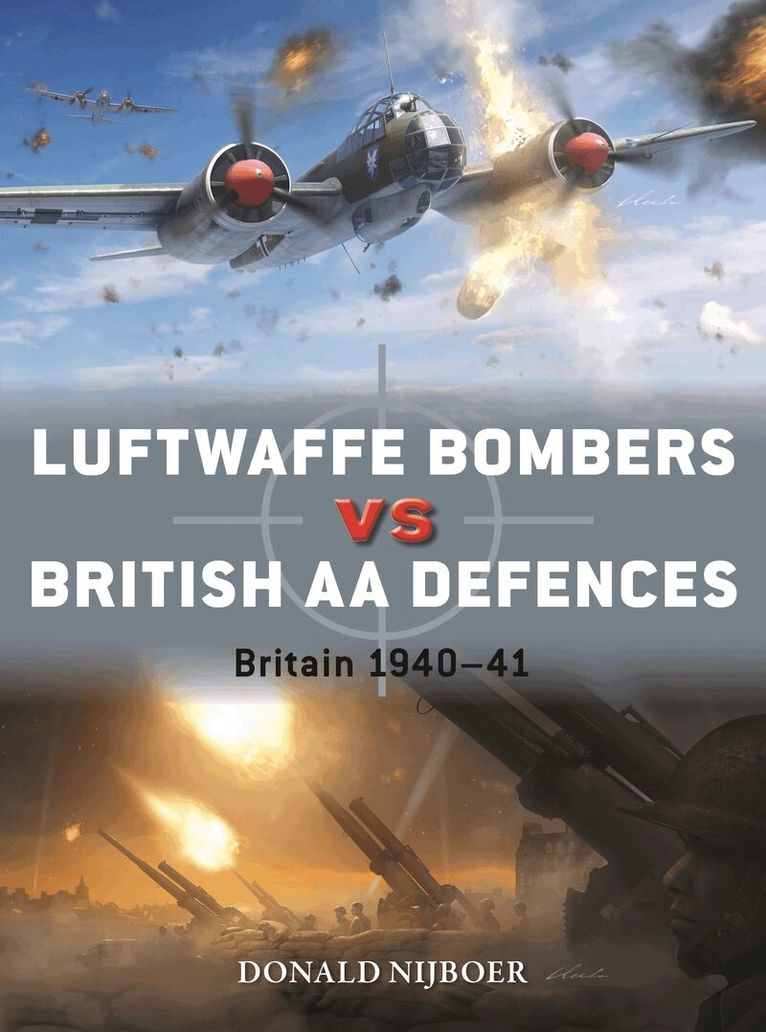
An illustrated study of the British Army’s Anti-Aircraft (AA) Command’s performance against the Luftwaffe during the Battle of Britain and the Blitz.When the Battle of Britain commenced in July 1940, the Luftwaffe committed more than 1,200 medium bombers, 300 Ju 87 Stukas and 760 Bf 109 and Bf 110 fighters to the campaign. The response from British AA Command mustered 359 4.5in. guns, 666 3.7in. guns and 226 3in. guns, as well as 3,538 light and medium AA guns to tackle low-level Luftwaffe raiders, but was under-gunned and overstretched, struggling to provide sufficient weapons for every key site. Nevertheless, AA gunners shot down some 300 German aircraft by the end of the Battle of Britain on 31 October 1940, upping this count to 578 before the Blitz finished on 11 May 1941, and leading an estimated 48 per cent of Luftwaffe bombers to turn back because of heavy AA fire.In this action-packed study, World War 2 aviation expert Donald Nijboer examines the capabilities of both sides, and explores how British AA Command not only shot down so many enemy aircraft, but also forced them to fly higher, broke up their formations and decreased their accuracy. Tactical diagrams, maps, archival photographs and newly commissioned artwork provide additional insight and detail, helping to bring the bitter struggle over the skies of southern England to life.
257 kr
Skickas inom 7-10 vardagar
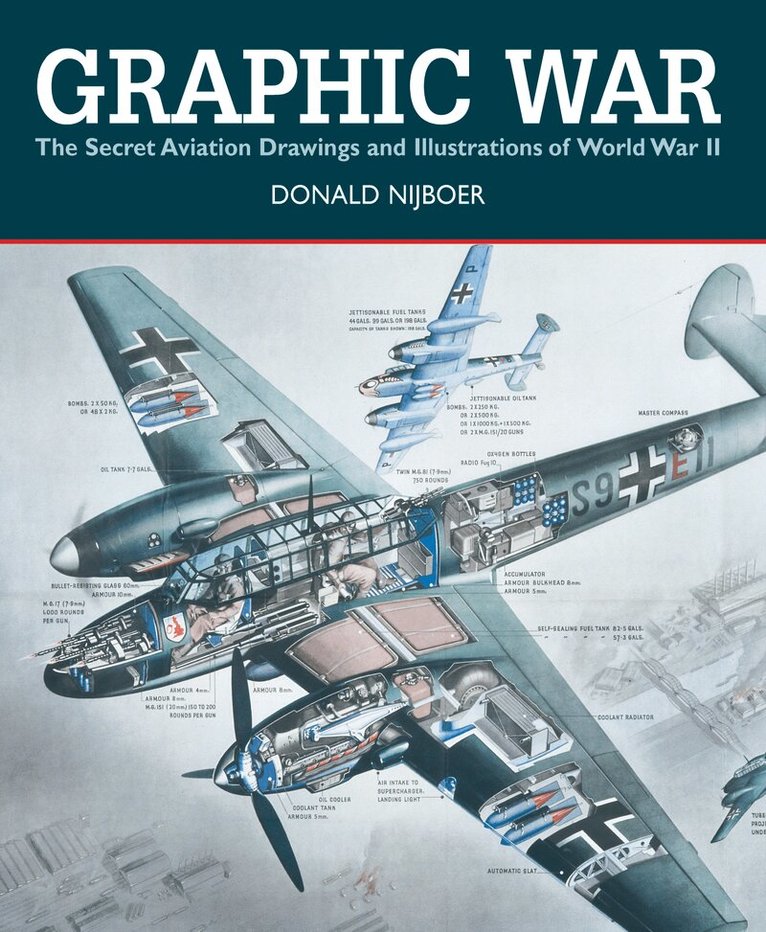
Graphic War is a superb collection of top-secret drawings, including training manuals and colourful wartime posters, from World War II. They were brilliantly created from a few downed aircraft, but mainly from pilots' views of the enemy in the air, during missions. Almost all of the material was originally listed as restricted - official use onlyA" and previously unpublished in any form. The cutaway drawings of the aircraft and airborne weaponry were critical to the war efforts of Allied and Axis forces alike. As there was little intelligence available to pilots about the design, power and armament on opposing aircraft, these graphic transcriptionsA" were essential. Many of the graphic artists and technical illustrators employed by the Allies, and most employed by the Axis powers, remain anonymous. Their work survives on these pages, however, to provide rare and unique insight into war room strategy and the air- and ground-crew trainee classroom. Aviation enthusiasts, modellers, illustrators, artists and anyone with an interest in World War II history will find Graphic War a compelling inside look at the war fought in the sky.
187 kr
Skickas inom 10-15 vardagar
An illustrated account of the Mediterranean clash between the leading RAF and Italian aces flying the Supermarine Spitfire V and the Macchi C.202 Folgore, respectively.The inability of the Italians and Germans to invade Malta proved decisive for Allied victory in the Mediterranean during World War II, as the islands provided the Allies with a base from which to project air power. Early Italian efforts to pound the islands into submission were supplemented by major German forces from January 1942 and in a few weeks the situation for the defenders reached a critical stage; in response, in March 1942 the first Spitfires were delivered to Malta.This book explores the summer that C.202s fought over Malta, escorting tiny formations of Cant Z.1007s, SM.79s and Ju 88s. The fighting subsided in August and September, but grew in strength with the arrival of more C.202s. In October the Regia Aeronautica could muster three Gruppi with a total of 74 C.202s. For ten days the Italians pressed a relentless attack before attrition brought the offensive to a halt. Throughout the bombing campaign the British were able to supply Malta with ever increasing numbers of Spitfires, and this book highlights their significance.
187 kr
Skickas inom 10-15 vardagar
Products of vastly different design philosophies, the Seafire F III and the A6M Zero were never intended to meet in combat, and never should have. The Zero, extremely nimble at low speeds was purpose built as a shipboard fighter. In contrast, the Spitfire was intended for operations from established airfields, and needed to be adapted as a carrier fighter. This book examines these two iconic fighters and their two very different histories, using fantastic artwork and first hand accounts to illustrate the last aerial duel of World War II, as the British Seafire overcame its critics to emerge victorious over the Japanese Zero.
198 kr
Skickas inom 10-15 vardagar
The success of No 126 Wing began before the D-Day landings and through operations at Falaise Gap, Operation Market Garden, the winter offensive in the Ardennes, and crossing the Rhine into Germany. Donald Nijboer examines the wing's operations chapter by chapter, demonstrating how the five squadrons of Spitfires of No 126 Wing were self-sufficient in everything they did and how, after the Normandy landings, the ground forces could not move without this valuable support. Squadron and ace biographies and stunning artwork bring this fascinating book to life.
187 kr
Skickas inom 10-15 vardagar
With its distinctive, twin-tailed design, the P-38 was one of the most recognizable fighter aircraft of World War II. It was also one of the best. The perfect balance of speed, firepower and range, it made a formable opponent during the crucial battles for the Solomon Islands and New Guinea. In response, the Japanese worked with the Germans to develop the Ki-61, a heavy air superiority fighter with an impressive array of firepower. In head-to-head match-ups, the P-38 proved the superior fighter, but individual duels often came down to the ability and experience of the individual pilots. This book recreates these fast, deadly duels in the skies of the Pacific using dramatic artwork and first-hand accounts.
187 kr
Skickas inom 10-15 vardagar
The Luftwaffe's desperate reliance on jet technology led to the world's first cruise missile attack on one of the world's largest cities and also heralded the first air-to-air combat between jet-powered aircraft. This is the story of that combat.A total of 10,500 missiles were launched as part of the V1 attack, of which 3,957 were destroyed by the defences. Indeed, it could have been much worse, for by the end of the war the Germans had manufactured close to 32,000 flying bombs. The defences put forward to guard against the V1 were formidable – 23,000 men and women with their guns, radar and communications networks were installed on coastal sites.Squadrons of Britain's newest Spitfires, the F XIVs, and Hawker Tempest Vs were kept at home to battle the new menace. Rushed into action in July 1944 to help counter the V1 threat, Britain's Gloster Meteor I was the first jet fighter to enter RAF service. On 4 August the Meteor scored its first V1 victory. Having just closed in on a flying bomb, its officer squeezed the trigger but his guns jammed. Using the Meteor's superior speed, he was able to overtake the missile and, using his wing tip, he tipped the craft over and sent it crashing into the ground.This detailed, illustrated account explores these historic interceptions between the V1 and Britain's Gloster Meteor, and how they ushered in a new era of aerial combat.