Donald S. Prudlo – författare
Visar alla böcker från författaren Donald S. Prudlo. Handla med fri frakt och snabb leverans.
6 produkter
6 produkter
Certain Sainthood
Canonization and the Origins of Papal Infallibility in the Medieval Church
Inbunden, Engelska, 2016
689 kr
Skickas inom 10-15 vardagar
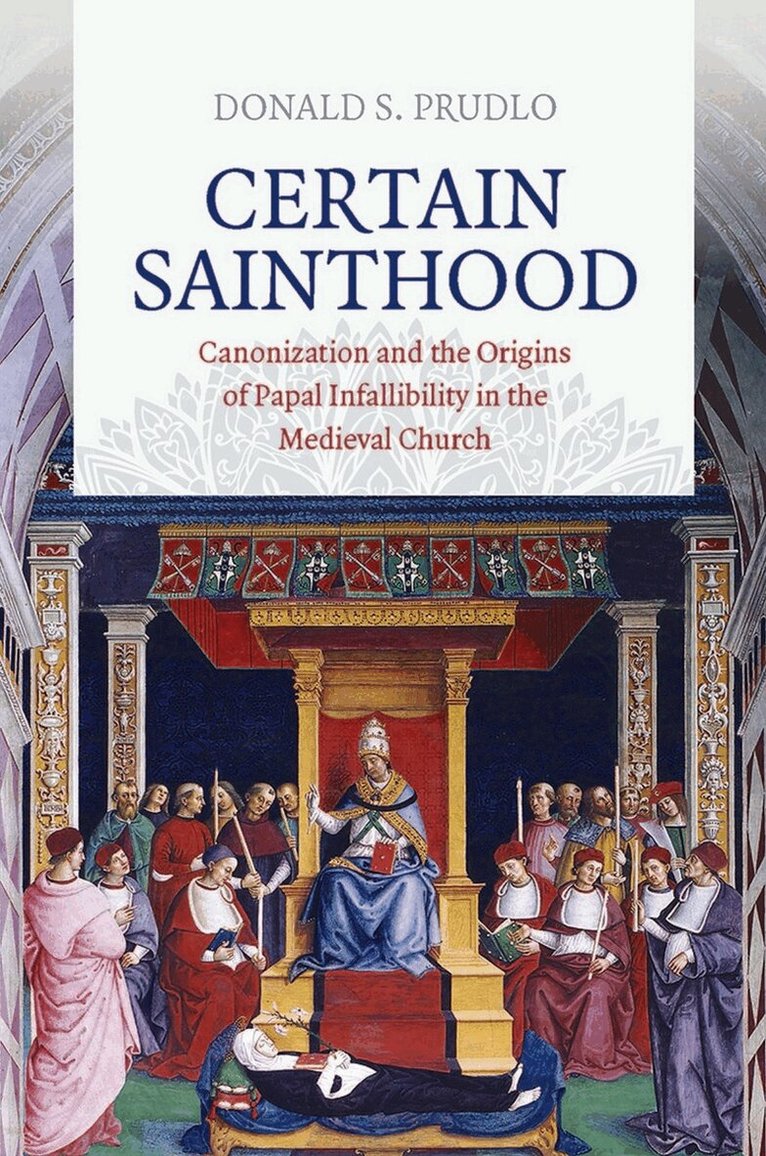
The doctrine of papal infallibility is a central tenet of Roman Catholicism, and yet it is frequently misunderstood by Catholics and non-Catholics alike. Much of the present-day theological discussion points to the definition of papal infallibility made at Vatican I in 1870, but the origins of the debate are much older than that. In Certain Sainthood, Donald S. Prudlo traces this history back to the Middle Ages, to a time when Rome was struggling to extend the limits of papal authority over Western Christendom. Indeed, as he shows, the very notion of papal infallibility grew out of debates over the pope's authority to canonize saints. Prudlo's story begins in the twelfth and thirteenth centuries when Rome was increasingly focused on the fight against heresy. Toward this end the papacy enlisted the support of the young mendicant orders, specifically the Dominicans and Franciscans. As Prudlo shows, a key theme in the papacy's battle with heresy was control of canonization: heretical groups not only objected to the canonizing of specific saints, they challenged the concept of sainthood in general. In so doing they attacked the roots of papal authority. Eventually, with mendicant support, the very act of challenging a papally created saint was deemed heresy. Certain Sainthood draws on the insights of a new generation of scholarship that integrates both lived religion and intellectual history into the study of theology and canon law. The result is a work that will fascinate scholars and students of church history as well as a wider public interested in the evolution of one of the world's most important religious institutions.
244 kr
Skickas inom 7-10 vardagar
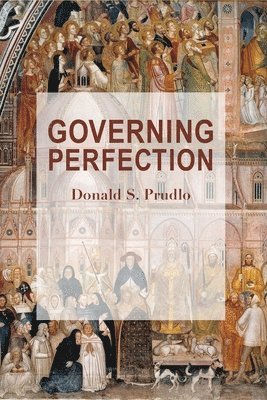
"In the beginning, God administrated." For as Donald Prudlo observes, "There can be no achievement without administration." In this book he seeks to restore the idea that while administration is necessary even in the institutional Church, holiness is not only possible for those charged with governance, but is a fulfillment and type of Christus Rector omnium, or "Christ, Ruler of all.Scrutinizing the relevant thought of Aristotle, Machiavelli, Thomas Aquinas, and Nietzsche, among others, Prudlo pursues the notion of order in governance and confronts both the bloat of bureaucracy and the "intoxicating nature of power." How can men and women who strive to live out humility and holiness likewise establish and participate in the structures that wield the powers of governance? "For the followers of Christ does not such a combination seem doomed from the outset?" Prudlo advances a thorough investigation of saints of the Christian tradition, whose responses to the problems inherent in authority and administration are living examples of the reality of grace building upon nature.Of particular interest is Prudlo's historical presentation of the concept of Romanitas, a style of governance inherited from ancient Rome. Four early popes are given close attention for their respective administrations: Damasus I, Leo I, Gelasius I, and Gregory I. Emphasis is also given to the specific administrative genius that emerges from the monastic orders, including the 'Pachomian solution' and the Benedictine Rule. Prudlo gives the reader a portrait of Leo IX's reinvigoration of the ancient practice of 'synodality,' and the centrality of the papacy to internal ecclesial reform. In the context of an inquiry into monastic and papal administrations, readers encounter the beginnings of the Roman Curia as well, and are confronted with the difficulty of inserting new forms of apostolic itinerant preaching into the institutional life of the Church. This study is an important contribution to the history of the papacy, ecclesiology and its relevance to legal ordering, and administration within governance as affected by multiple legal and cultural traditions. It is a masterful presentation that provides both the framework and reflection needed to inspire true perfection the in administrative forum. The relevance and force of Prudlo's Governing Perfection makes it a choice follow-up to his recent translation of Bartholomew of the Martyr's classic, Stimulus Pastorum: A Charge to Pastors (2022).2025 Catholic Media Awards Honorable Mention winner
244 kr
Skickas inom 7-10 vardagar
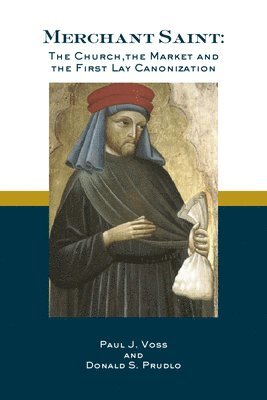
Paul Voss and Donald Prudlo trace Western attitudes to money, merchants, and the market through 3,000 years of history. They focus their attention on one person in particular, Omobono of Cremona (1117–1197), as an axial figure in the wholesale reappraisal of the value of business, entrepreneurship, and white-collar work in Christian Europe. More precisely, Voss and Prudlo examine the evolution of the mentality of wealth and economics in the Catholic Church, beginning from the Scriptural disdain for material pursuits and moving to the eventually declared sainthood of Omobono, a lay merchant living amid the hectic rhythm of a life of business. As the authors note, "His story resonates today with an unexpected poignancy for the contribution it makes to the pressing issues of economic justice, free markets, work-life balance, the 'theology of work,' and Catholic history." The reconstruction of the socio-theological perspective of wealth is a fascinating contribution to contemporary attempts to reconcile culture, capitalism, and the common good. Omobono stands as the first lay individual proposed by the Catholic Church as a model of heroic virtue, and thought him commercial life came thereby also to be 'canonized' as a possible path to sanctity. Voss and Prudlo provide a rich resource for readers concerned with the proper aims and boundaries of a life in the world of commerce, the nature of work, the ethics of profit, the problem of money-lending, the virtues needed for moral capitalism, and the tension between otium and negotium. Voss and Prudlo have accumulated a veritable trove of primary text materials relating to the life of Omobono, and provide translations and commentary to complete their analysis. This fascinating account crosses the threshold of pure history and stimulates inquiry in the fields of philosophy, economics, and theology.
292 kr
Skickas inom 7-10 vardagar
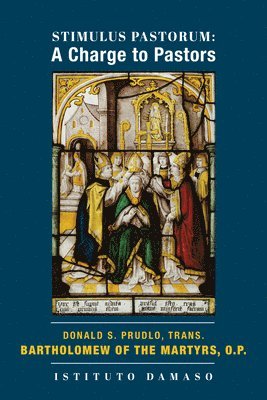
The work of St. Bartholomew of Braga, O.P. (1514–1590) appears here in English for the first time despite its long and enduring influence in ecclesiastical circles. His meditations on the office of pastor have provided critical insight bishops since their initial circulation and have helped form the most famous among them, including Bartholomew's proteges Charles Borromeo. Pope Paul VI ordered a copy of Bartholomew's work to be distributed among the Catholic bishops at the Second Vatican Council. Donald Prudlo's translation situates St. Bartholomew of the Martyrs in his historical context as a lynchpin of Catholic Reform and affirms him as a figurehead of pastoral administration even in our own times.
181 kr
Skickas inom 7-10 vardagar
The work of St. Bartholomew of Braga, O.P. (1514–1590) appears here in English for the first time despite its long and enduring influence in ecclesiastical circles. His meditations on the office of pastor have provided critical insight bishops since their initial circulation and have helped form the most famous among them, including Bartholomew's proteges Charles Borromeo. Pope Paul VI ordered a copy of Bartholomew's work to be distributed among the Catholic bishops at the Second Vatican Council. Donald Prudlo's translation situates St. Bartholomew of the Martyrs in his historical context as a lynchpin of Catholic Reform and affirms him as a figurehead of pastoral administration even in our own times.
Del 107 - Brill's Companions to the Christian Tradition
Companion to the History of the Roman Curia
Inbunden, Engelska, 2025
3 650 kr
Skickas inom 3-6 vardagar
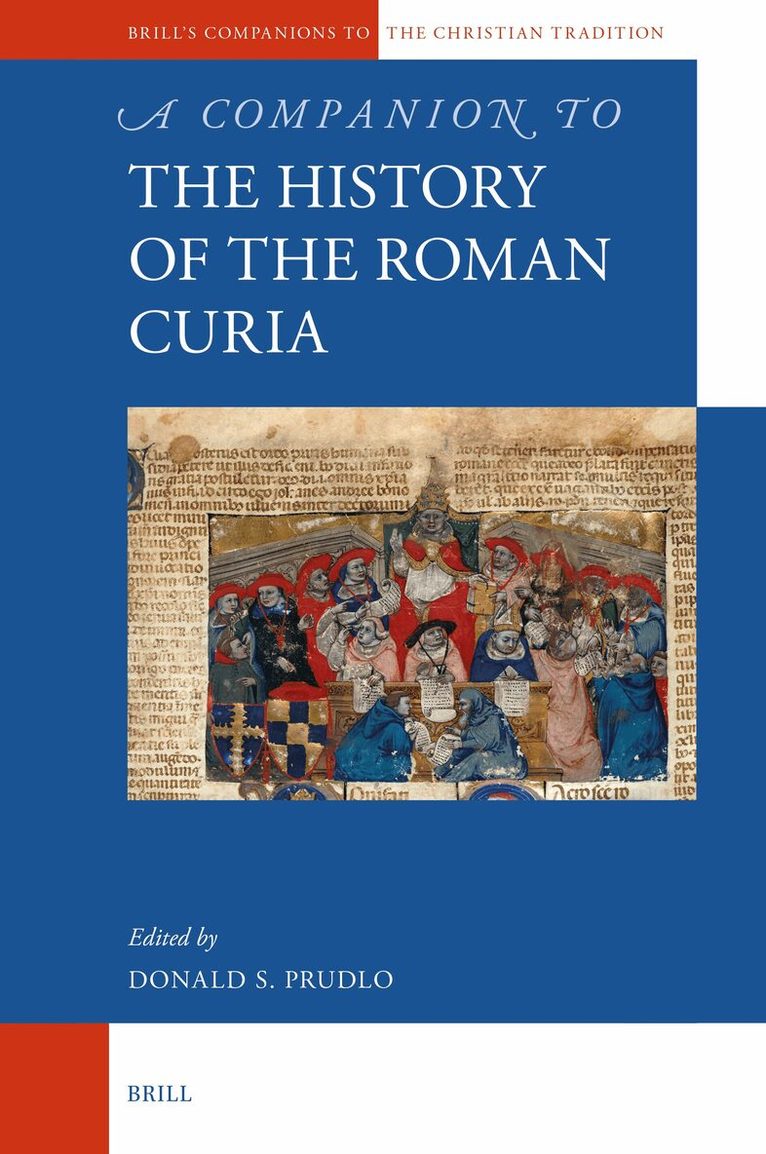
The Roman Curia is the oldest extant body of institutional administration in the world. Indeed, it was the prototype for the development of centralized government in the monarchies of the Middle Ages. Further, it was the administrative backbone of the first worldwide organization in human history. It developed policies, laws, and procedures that continue to affect the entire world. This book offers scholarly contributions from the origins of the Curia to the early modern period.Contributors include Barbara Bombi, Elena Bonora, Bruce Brasington, Sandro Carocci, Peter D. Clarke, Maria Teresa Fattori, Massimo Carlo Giannini, Anthony Lappin, Rita Lizzi Testa, Rosamond McKitterick, Dominic Moreau, Bronwen Neil, Miles Pattenden, Giovanni Pizzorusso, Donald Prudlo, Kirsi Salonen, Cesare Santus, and Danica Summerlin.