Dorothy Ko - Böcker
Visar alla böcker från författaren Dorothy Ko. Handla med fri frakt och snabb leverans.
12 produkter
12 produkter
1 183 kr
Skickas inom 7-10 vardagar
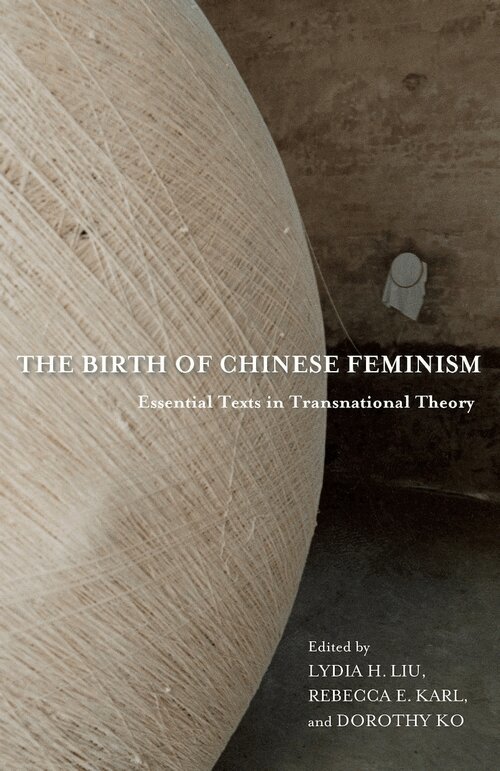
He-Yin Zhen (ca. 1884-1920?) was a theorist who figured centrally in the birth of Chinese feminism. Unlike her contemporaries, she was concerned less with China's fate as a nation and more with the relationship among patriarchy, imperialism, capitalism, and gender subjugation as global historical problems. This volume, the first translation and study of He-Yin's work in English, critically reconstructs early twentieth-century Chinese feminist thought in a transnational context by juxtaposing He-Yin Zhen's writing against works by two better-known male interlocutors of her time. The editors begin with a detailed analysis of He-Yin Zhen's life and thought. They then present annotated translations of six of her major essays, as well as two foundational tracts by her male contemporaries, Jin Tianhe (1874-1947) and Liang Qichao (1873-1929), to which He-Yin's work responds and with which it engages. Jin, a poet and educator, and Liang, a philosopher and journalist, understood feminism as a paternalistic cause that liberals like themselves should defend. He-Yin presents an alternative conception that draws upon anarchism and other radical trends.Ahead of her time, He-Yin Zhen complicates conventional accounts of feminism and China's history, offering original perspectives on sex, gender, labor, and power that remain relevant today.
289 kr
Skickas inom 7-10 vardagar
He-Yin Zhen (ca. 1884-1920?) was a theorist who figured centrally in the birth of Chinese feminism. Unlike her contemporaries, she was concerned less with China's fate as a nation and more with the relationship among patriarchy, imperialism, capitalism, and gender subjugation as global historical problems. This volume, the first translation and study of He-Yin's work in English, critically reconstructs early twentieth-century Chinese feminist thought in a transnational context by juxtaposing He-Yin Zhen's writing against works by two better-known male interlocutors of her time. The editors begin with a detailed analysis of He-Yin Zhen's life and thought. They then present annotated translations of six of her major essays, as well as two foundational tracts by her male contemporaries, Jin Tianhe (1874-1947) and Liang Qichao (1873-1929), to which He-Yin's work responds and with which it engages. Jin, a poet and educator, and Liang, a philosopher and journalist, understood feminism as a paternalistic cause that liberals like themselves should defend. He-Yin presents an alternative conception that draws upon anarchism and other radical trends.Ahead of her time, He-Yin Zhen complicates conventional accounts of feminism and China's history, offering original perspectives on sex, gender, labor, and power that remain relevant today.
587 kr
Skickas inom 7-10 vardagar
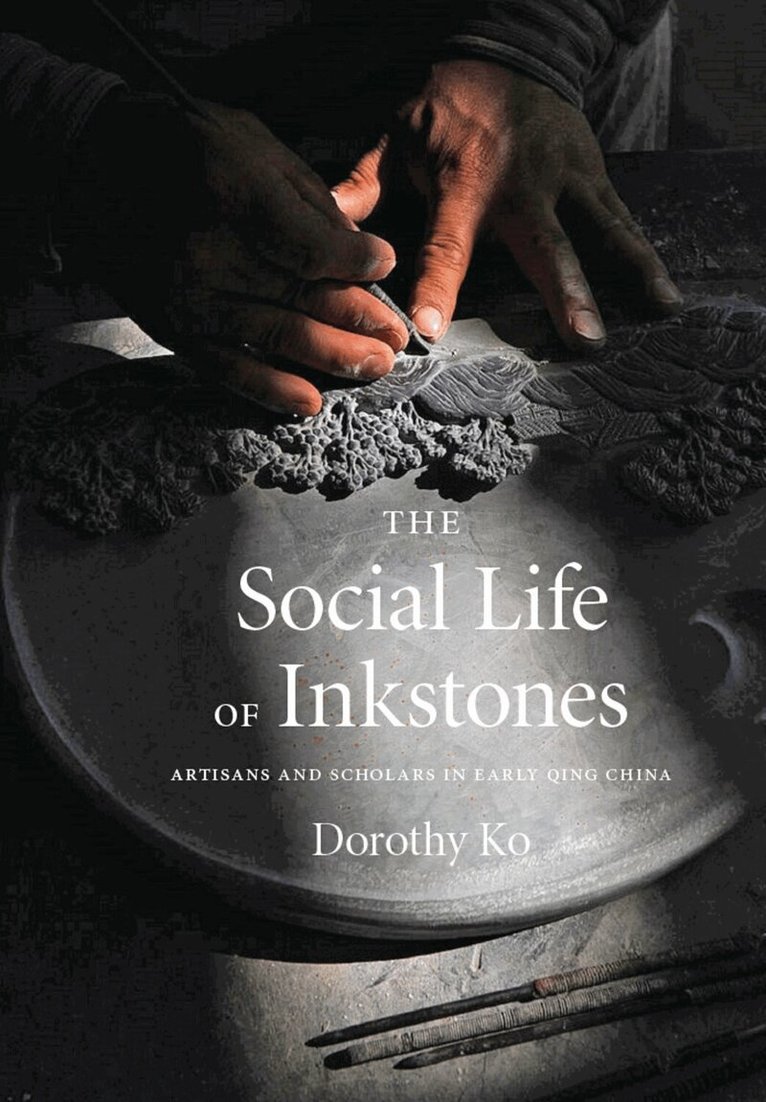
Follows the path of an everyday object, from quarry to deskAn inkstone, a piece of polished stone no bigger than an outstretched hand, is an instrument for grinding ink, an object of art, a token of exchange between friends or sovereign states, and a surface on which texts and images are carved. As such, the inkstone has been entangled with elite masculinity and the values of wen (culture, literature, civility) in China, Korea, and Japan for more than a millennium. However, for such a ubiquitous object in East Asia, it is virtually unknown in the Western world.Examining imperial workshops in the Forbidden City, the Duan quarries in Guangdong, the commercial workshops in Suzhou, and collectors’ homes in Fujian, The Social Life of Inkstones traces inkstones between court and society and shows how collaboration between craftsmen and scholars created a new social order in which the traditional hierarchy of “head over hand” no longer predominated. Dorothy Ko also highlights the craftswoman Gu Erniang, through whose work the artistry of inkstone-making achieved unprecedented refinement between the 1680s and 1730sThe Social Life of Inkstones explores the hidden history and cultural significance of the inkstone and puts the stonecutters and artisans on center stage.
281 kr
Skickas inom 7-10 vardagar
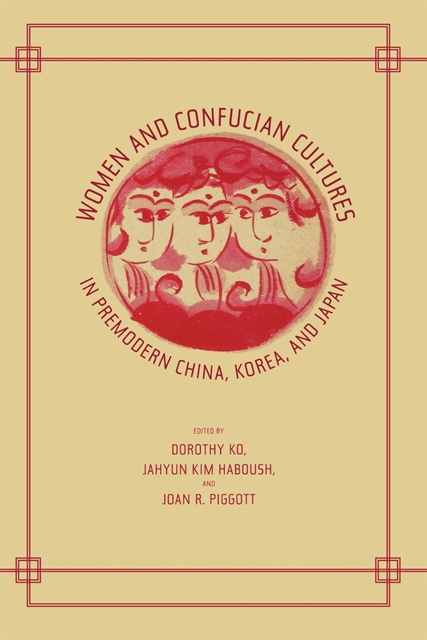
Representing an unprecedented collaboration among international scholars from Asia, Europe, and the United States, this volume rewrites the history of East Asia by rethinking the contentious relationship between Confucianism and women. The authors discuss the absence of women in the Confucian canonical tradition and examine the presence of women in politics, family, education, and art in premodern China, Korea, and Japan. What emerges is a concept of Confucianism that is dynamic instead of monolithic in shaping the cultures of East Asian societies. As teachers, mothers, writers, and rulers, women were active agents in this process. Neither rebels nor victims, these women embraced aspects of official norms while resisting others. The essays present a powerful image of what it meant to be female and to live a woman's life in a variety of social settings and historical circumstances. Challenging the conventional notion of Confucianism as an oppressive tradition that victimized women, this provocative book reveals it as a modern construct that does not reflect the social and cultural histories of East Asia before the nineteenth century.
306 kr
Skickas inom 7-10 vardagar
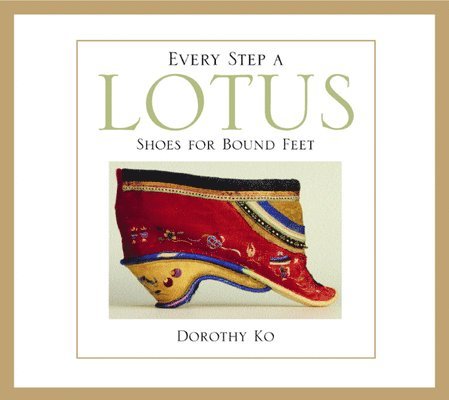
In Every Step a Lotus, Dorothy Ko embarks on a fascinating exploration of the practice of footbinding in China, explaining its origins, purpose, and spread before the nineteenth century. She uses women's own voices to reconstruct the inner chambers of a Chinese house where women with bound feet lived and worked. Focusing on the material aspects of footbinding and shoemaking--the tools needed, the procedures, the wealth of symbolism in the shoes, and the amazing regional variations in style--she contends that footbinding was a reasonable course of action for a woman who lived in a Confucian culture that placed the highest moral value on domesticity, motherhood, and handwork. Her absorbing, superbly detailed, and beautifully written book demonstrates that in the women's eyes, footbinding had less to do with the exotic or the sublime than with the mundane business of having to live in a woman's body in a man's world. Footbinding was likely to have started in the tenth century among palace dancers. Ironically, it was meant not to cripple but to enhance their grace.Its meaning shifted dramatically as it became domesticated in the subsequent centuries, though the original hint of sensuality did not entirely disappear. This contradictory image of footbinding as at once degenerate and virtuous, grotesque and refined, is embodied in the key symbol for the practice--the lotus blossom, being both a Buddhist sign of piety and a poetic allusion to sensory pleasures. Every Step a Lotus includes almost one hundred illustrations of shoes from different regions of China, material paraphernalia associated with the customs and rituals of footbinding, and historical images that contextualize the narrative. Most of the shoes, from the collection of the Bata Shoe Museum in Toronto, have not been exhibited before. Readers will come away from the book with a richer understanding of why footbinding carries such force as a symbol and why, long after its demise, it continues to exercise a powerful grip on our imaginations. A Copublication with the Bata Shoe Museum
289 kr
Skickas inom 7-10 vardagar
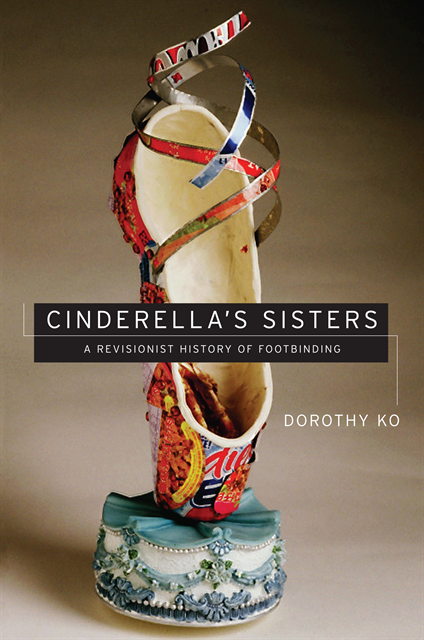
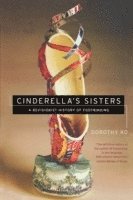
The history of footbinding is full of contradictions and unexpected turns. The practice originated in the dance culture of China's medieval court and spread to gentry families, brothels, maid's quarters, and peasant households. Conventional views of footbinding as patriarchal oppression often neglect its complex history and the incentives of the women involved. This revisionist history, elegantly written and meticulously researched, presents a fascinating new picture of the practice from its beginnings in the tenth century to its demise in the twentieth century. Neither condemning nor defending foot-binding, Dorothy Ko debunks many myths and misconceptions about its origins, development, and eventual end, exploring in the process the entanglements of male power and female desires during the practice's thousand-year history. "Cinderella's Sisters" argues that rather than stemming from sexual perversion, men's desire for bound feet was connected to larger concerns such as cultural nostalgia, regional rivalries, and claims of male privilege. Nor were women hapless victims, the author contends.Ko describes how women - those who could afford it - bound their own and their daughters' feet to signal their high status and self-respect. Femininity, like the binding of feet, was associated with bodily labor and domestic work, and properly bound feet and beautifully made shoes both required exquisite skills and technical knowledge passed from generation to generation. Throughout her narrative, Ko deftly wields methods of social history, literary criticism, material culture studies, and the history of the body and fashion to illustrate how a practice that began as embodied lyricism - as a way to live as the poets imagined - ended up being an exercise in excess and folly.
Teachers of the Inner Chambers
Women and Culture in Seventeenth-Century China
Inbunden, Engelska, 1995
1 515 kr
Skickas inom 7-10 vardagar
A Stanford University Press classic.
376 kr
Skickas inom 10-15 vardagar
A Stanford University Press classic.
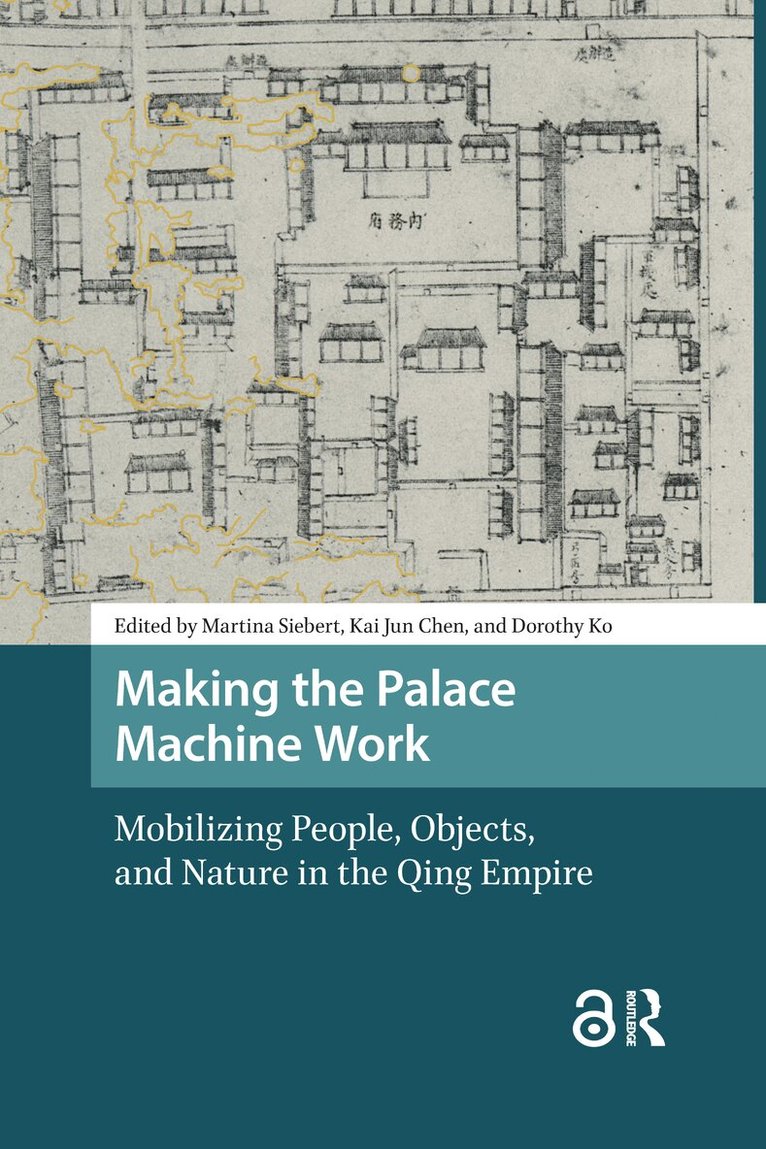
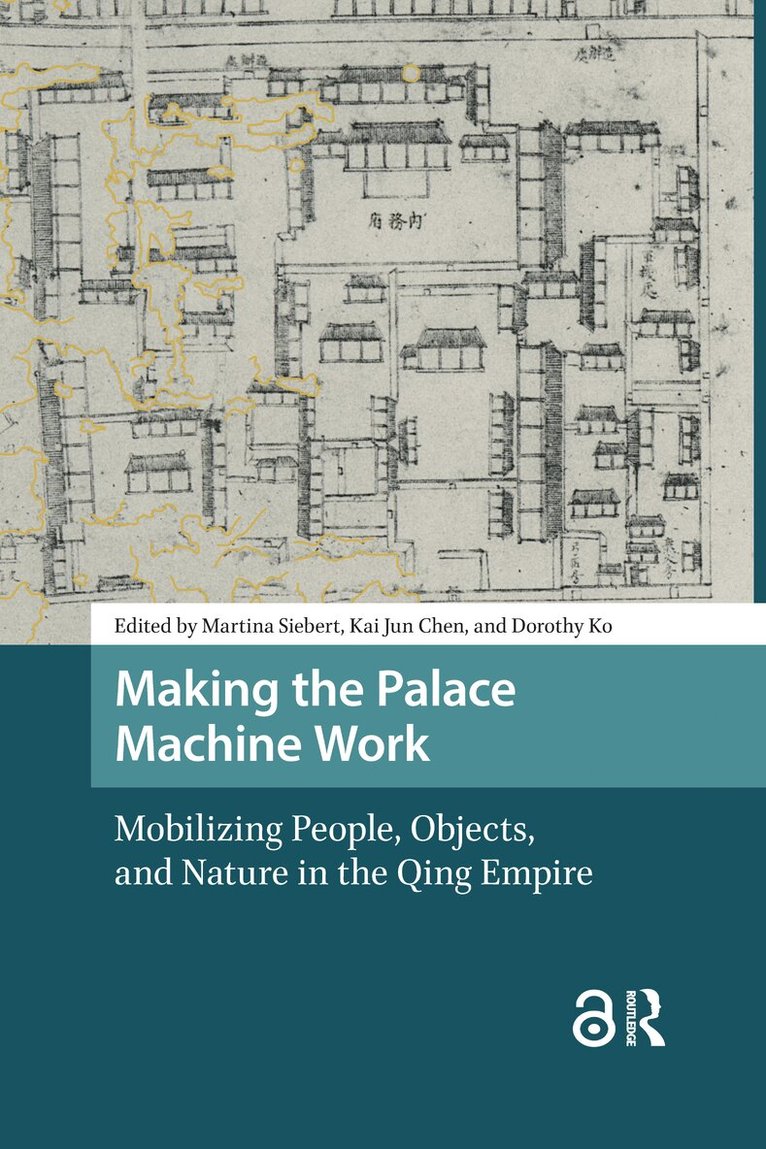
Making the Palace Machine Work
Mobilizing People, Objects, and Nature in the Qing Empire
Häftad, Engelska, 2025
646 kr
Skickas inom 10-15 vardagar
Making the Palace Machine Work: Mobilizing People, Objects, and Nature in the Qing Empire brings the studies of institutions, labour, and material cultures to bear on the history of science and technology by tracing the workings of the Imperial Household Department (Neiwufu) in the Qing court and empire. An enormous apparatus that employed 22,000 men and women at its heyday, the Department operated a machine with myriad moving parts. The first part of the book portrays the people who kept it running, from technical experts to menial servants, and scrutinises the paper trails they left behind. Part II uncovers the working principles of the machine by following the production chains of some of its most splendid products: gilded statues, jade, porcelain, and textiles. Part III examines the complex task of managing living organisms and natural environments, including lotus plants grown in imperial ponds in Beijing, fresh medicines sourced from disparate regions, and tribute elephants from Southeast Asia.
287 kr
Skickas inom 7-10 vardagar
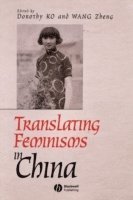
This volume, which brings together articles by scholars and activists in China, Japan, Canada and the US in multiple disciplines, seeks to illuminate the problems and possibilities involved in translating feminism from the metropolitan ‘West’ to a locale rife with its own ideas about gender, class, body and sexuality. Showcases the centrality of gender in the formation of modern China Demonstrates the extent to which translated feminisms — whatever they mean — have transformed the terms in which modern Chinese understand their own subjectivities and histories
Making the Palace Machine Work
Mobilizing People, Objects, and Nature in the Qing Empire
Inbunden, Engelska, 2021
1 950 kr
Skickas inom 10-15 vardagar
Making the Palace Machine Work: Mobilizing People, Objects, and Nature in the Qing Empire brings the studies of institutions, labour, and material cultures to bear on the history of science and technology by tracing the workings of the Imperial Household Department (Neiwufu) in the Qing court and empire.
727 kr
Skickas inom 3-6 vardagar
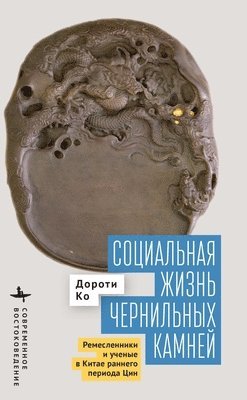
Чернильный камень — это не просто инструмент для растирания чернил, но и предмет искусства, ценность, предмет обмена между друзьями или даже суверенными государствами. Чернильный камень уже более тысячелетия связан с культурой вэнь (письмо, литература, ученость) в Китае, Корее и Японии, однако до сих пор практически не известен на Западе. Исследуя императорские мастерские в Запретном городе, каменоломни Дуань в провинции Гуандун, коммерческие мастерские в Сучжоу и дома коллекционеров в провинции Фуцзянь, Дороти Ко прослеживает связь чернильных камней с придворной жизнью и обществом и показывает, как сотрудничество между ремесленниками и учеными создало новый социальный порядок.