Doug Scott – författare
Visar alla böcker från författaren Doug Scott. Handla med fri frakt och snabb leverans.
5 produkter
5 produkter
2 323 kr
Skickas inom 10-15 vardagar
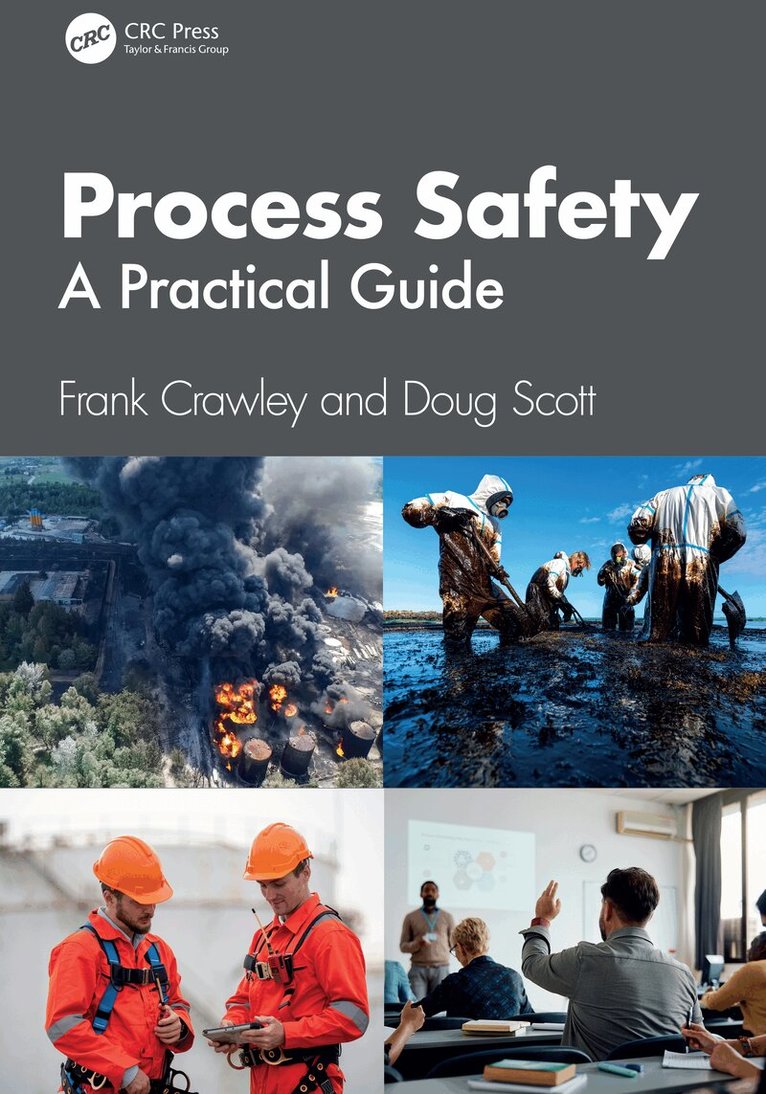
Many chemical engineering graduates leave university with limited practical experience, including in the important field of process safety. Authored by two veterans of industry, this book provides early career engineers with a strong practical background in process safety. It contains basic theory to bolster an understanding of the subject, whilst the bulk of the book gives practical information covering both design and operation of process plants. It offers an interactive approach, with frequent links between chapters and inclusion of numerous case histories to illustrate and support the text. Key Features: Serves as a simple introduction with a bias towards practical and realistic solutions Discusses a wide range of safety-related subjects with comprehensive links to more detailed references Covers both design and operation of plants Features a significant number of brief case histories to offer real-world context, many of which have not been published elsewhere With its accessible and hands-on approach, this book gives early career chemical engineers a deeper understanding of the issues they will face whilst on the job and practical solutions to address and avoid problems. The book’s many case studies will also be of value to more experienced engineers.
188 kr
Skickas inom 5-8 vardagar
In 1982, following the relaxation of access restrictions to Tibet, six climbers set off for the Himalaya to explore the little-known Shishapangma massif in Tibet. Dealing with a chaotic build-up and bureaucratic obstacles so huge they verged on comical, the mountaineers gained access to Shishapangma's unclimbed South-West Face where Doug Scott, Alex MacIntyre and Roger Baxter-Jones made one of the most audacious and stylish Himalayan climbs ever. First published in 1984 as The Shishapangma Expedition, Shishapangma won the first ever Boardman Tasker Prize for Mountain Literature. Told through a series of diary-style entries from all the climbers involved, Shishapangma reveals the difficult nature of Himalayan decision-making, mountaineering tactics and climbing relationships. Tense and candid, the six writers see every event differently, reacting in different ways and pulling no punches in their opinions of the other mountaineers – quite literally at one point. Nonetheless, the climbers, at the peak of their considerable powers and experience, completed an extremely committing enterprise. The example set by their fine climb survives and several new routes (all done in alpine style) have now been added to this magnificent face. For well-trained climbers, such ascents are fast and efficient, but the consequences of error, misjudgement or bad luck can be terminal and, sadly, soon afterwards two of the participants were struck down in mountaineering accidents - MacIntyre hit by stonefall on Annapurna's South Face and Baxter-Jones being caught by an ice avalanche on the Aiguille du Triolet. In addition their support climber, Nick Prescott, died in a Chamonix hospital from an altitude-induced ailment. Shishapangma is a gripping first-hand account of the intense reality of high-altitiude alpinism.
191 kr
Skickas
'A full and fascinating portrait of one of the great figures of mountaineering.' – Michael PalinAt dusk on 24 September 1975, Doug Scott and Dougal Haston became the first Britons to reach the summit of Everest as lead climbers on Chris Bonington's epic expedition to the mountain's immense south-west face.As darkness fell, Scott and Haston scraped a small cave in the snow 100 metres below the summit and survived the highest bivouac ever – without bottled oxygen, sleeping bags and, as it turned out, frostbite. For Doug Scott, it was the fulfilment of a fortune-teller's prophecy given to his mother: that her eldest son would be in danger in a high place with the whole world watching.Scott and Haston returned home national heroes with their image splashed across the front pages. Scott went on to become one of Britain's greatest ever mountaineers, pioneering new climbs in the remotest corners of the globe. His career spans the golden age of British climbing from the 1960s boom in outdoor adventure to the new wave of lightweight alpinism throughout the 1970s and 1980s.In Up and About, the first volume of his autobiography, Scott tells his story from his birth in Nottingham during the darkest days of war to the summit of the world. Surviving the unplanned bivouac without oxygen near the summit of Everest widened the range of what and how he would climb in the future. In fact, Scott established more climbs on the high mountains of the world after his ascent of Everest than before. Those climbs will be covered in the second volume of his life and times.
326 kr
Skickas
Kangchenjunga is the third highest mountain in the world and a notoriously difficult and dangerous mountain to climb. First climbed from the west in 1955 by a British team comprising Joe Brown, George Band, Tony Streather and Norman Hardie, it waited over twenty years for a second ascent. The third ascent, from the north, was made in 1979 by a four-man team including the visionary British alpinist Doug Scott.Completed before his death in 2020, and edited by Catherine Moorehead, Kangchenjunga is Doug Scott’s final book. Scott explores the mountain and its varied people – the mountain sits on the border between Nepal and Sikkim in north-east India – before going on to look at Western approaches and early climbing attempts on the mountain. Kangchenjunga was in fact long believed to be the highest mountain in the world, until in the nineteenth century it was demonstrated that Peak XV – Everest – was taller. Out of respect for the beliefs of the Sikkimese, no climber has ever set foot on the very top of Kangchenjunga, the sacred summit. Scott’s own relationship with the mountain began in 1978, three years after his first British ascent of Everest with Dougal Haston. The assembled team featured some of the greatest mountaineers in history: Scott, Joe Tasker, Peter Boardman and Georges Bettembourg. The plan was for a stripped-down expedition the following spring – minimal Sherpa support, no radios, largely self-financed. It was the first time a mountain of this scale had been attempted by a new and difficult route without the use of oxygen, and with such a small team. Scott, Tasker and Boardman summited on 16 May 1979, further consolidating their legends in this golden era. Kangchenjunga is Doug Scott’s tribute to this sacred mountain, a paean for a Himalayan giant, written by a giant of Himalayan climbing.
211 kr
Skickas
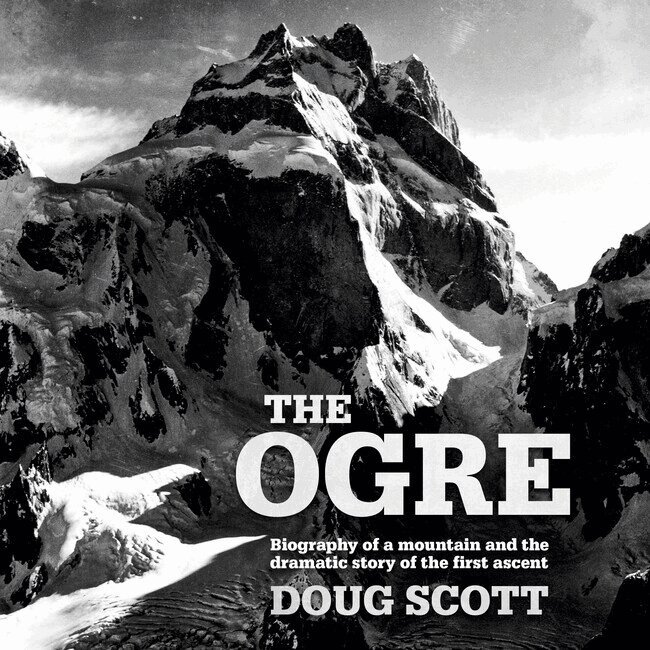
'One of the greatest mountaineering survival stories never told.' – The Sunday TimesSome mountains are high; some mountains are hard. Few are both.On the afternoon of 13 July 1977, having become the first climbers to reach the summit of the Ogre, Doug Scott and Chris Bonington began their long descent. In the minutes that followed, any feeling of success from their achievement would be overwhelmed by the start of a desperate fight for survival. And things would only get worse.Rising to over 7,000 metres in the centre of the Karakoram, the Ogre – Baintha Brakk – is notorious in mountaineering circles as one of the most difficult mountains to climb. First summited by Scott and Bonington in 1977 – on expedition with Paul ‘Tut’ Braithwaite, Nick Estcourt, Clive Rowland and Mo Anthoine – it waited almost twenty-four years for a second ascent, and a further eleven years for a third.The Ogre, by legendary mountaineer Doug Scott, is a two-part biography of this enigmatic peak: in the first part, Scott has painstakingly researched the geography and history of the mountain; part two is the long overdue and very personal account of his and Bonington’s first ascent and their dramatic week-long descent on which Scott suffered two broken legs and Bonington smashed ribs. Using newly discovered diaries, letters and audio tapes, it tells of the heroic and selfless roles played by Clive Rowland and Mo Anthoine. When the desperate climbers finally made it back to base camp, they were to find it abandoned – and themselves still a long way from safety.The Ogre is undoubtedly one of the greatest adventure stories of all time.