Douglas Boyd – författare
Visar alla böcker från författaren Douglas Boyd. Handla med fri frakt och snabb leverans.
31 produkter
Kremlin Conspiracy
1,000 Years of Russian Expansionism
Av Douglas Boyd
E-bok, 2014
110 kr
Lägg i varukorg
What did it mean when Vladimir Putin stepped down from president to prime minister of Russia in 2008 and bounced to the top again in 2013? The Putin-Medvedev clique of mega-rich ex-KGB men and lawyers call their state machine kontora – the firm – and run it as though they own all the shares. They …
Lionheart
The True Story of England's Crusader King
Av Douglas Boyd
Häftad, 2015
160 kr
Lägg i varukorg
When people think of Richard the Lionheart they recall the scene at the end of every Robin Hood epic when he returns from the Crusades to punish his treacherous brother John and the wicked Sheriff of Nottingham. In reality Richard detested England and the English, was deeply troubled by his own …
Lockerbie: The Truth
The Truth
Av Douglas Boyd
Häftad, 2018
219 kr
Lägg i varukorg
On 21 December 1988, Pan Am Flight 103 from Frankfurt to Detroit was destroyed by a bomb, killing all 243 passengers and sixteen crew. Large sections of the aircraft, bodies and personal effects crashed onto residential areas of Lockerbie, Scotland, resulting in the deaths of a further eleven …
Moscow Rules
Secret Police, Spies, Sleepers, Assassins
Av Douglas Boyd
Häftad, 2018
137 kr
Lägg i varukorg
After the guns fell silent in May 1945, the USSR resumed its clandestine warfare against the western democracies. Stalin installed secret police services in the satellite countries of Central and Eastern Europe. Trained by his NKVD officers of the Polish UB, the Czech StB, the Hungarian AVO, …
De Gaulle
The Man Who Defied Six US Presidents
Av Douglas Boyd
E-bok, 2013
163 kr
Lägg i varukorg
After watching a D-Day film, do you wonder why no French units took part in the invasion of their own German-occupied country? General Charles De Gaulle commanded 400,000 Free French soldiers, but US President Roosevelt insisted they not be told the date of the invasion because he intended to …
Plagues and Pandemics
Black Death, Coronaviruses and Other Deadly Diseases of the Past, Present and Future
Av Douglas Boyd
E-bok, 2022
265 kr
Lägg i varukorg
An overview of deadly diseases from throughout world history spanning from prehistoric civilizations to the twenty-first century. All you need for a plague to go pandemic are population clusters and travelers spreading the bacterial or viral pathogens. Many prehistoric civilizations died fast, …
Plagues and Pandemics
Black Death, Coronaviruses and Other Killer Diseases Throughout History
Av Douglas Boyd
E-bok, 2022
259 kr
Lägg i varukorg
All you need for a plague to go pandemic are population clusters and travelers spreading the bacterial or viral pathogens. Many prehistoric civilizations died fast, leaving cities undamaged to mystify archeologists. Plague in Athens killed 30% of the population 430-426 BCE. When Roman Emperor …
Saving the Schindler's Daughter
How Courageous Women Rescued an Orphaned Girl from French Concentration Camps
Av Douglas Boyd
E-bok, 2023
16 kr
Lägg i varukorg
Lore Schindler was ten years old when her dentist father Harry was arrested by the Gestapo in Berlin and sent to Sachsenhausen concentration camp. His wife Grete bought his release by giving all their possessions to the Nazi state. Leaving Germany with just 10 Marks each, parents and daughter …
Right Instrument For Your Child
Av Douglas Boyd, Atarah Ben-Tovim
E-bok, 2012
45 kr
Lägg i varukorg
''A fascinating analysis of both children and instruments'' GUARDIAN This unique book offers a simple and practical method of selecting the right instrument for the individual child. Starting with the physical and emotional make-up of the child and using questionnaires and charts, the authors …
Plantagenet Princes
Sons of Eleanor of Aquitaine and Henry II
Av Douglas Boyd
Inbunden, 2021
225 kr
Lägg i varukorg
When Count Henry of Anjou and his formidable wife Eleanor of Aquitaine became king and queen of England, they amassed an empire stretching 1,000 miles from the Pyrenees to the Scottish border, including half of France. Henry's grandmother Empress (of Germany) Mathilda had taught him that ruling is …
Plantagenet Princesses
The Daughters of Eleanor of Aquitaine and Henry II
Av Douglas Boyd
Inbunden, 2020
288 kr
Lägg i varukorg
The names of few medieval monarchs and their queens are better known than Eleanor of Aquitaine, uniquely queen of France and queen of England, and her second husband Henry II. Although academically labelled medieval', their era was the violent transition from the Dark Ages, when countries' borders …
Normandy's Nightmare War
The French Experience of Nazi Occupation and Allied Bombing, 1940–45
Av Douglas Boyd
E-bok, 2019
86 kr
Lägg i varukorg
The toll that both Nazi occupation and Allied liberation took on this northern French region during World War II, told through eyewitness accounts. Famous for Calvados apple brandy and Camembert cheese, Normandy is a green and pleasant land now dotted with thousands of British-owned second homes. …
Normandy's Nightmare War
The French Experience of Nazi Occupation and Allied Bombing, 1940–45
Av Douglas Boyd
E-bok, 2019
87 kr
Lägg i varukorg
The toll that both Nazi occupation and Allied liberation took on this northern French region during World War II, told through eyewitness accounts. Famous for Calvados apple brandy and Camembert cheese, Normandy is a green and pleasant land now dotted with thousands of British-owned second homes. …
Plantagenet Princesses
The Daughters of Eleanor of Aquitaine and Henry II
Av Douglas Boyd
Häftad, 2027
176 kr
Kommande
The names of few medieval monarchs and their queens are better known than Eleanor of Aquitaine, uniquely queen of France and queen of England, and her second husband Henry II. Although academically labelled ‘medieval’, their era was the violent transition from the Dark Ages, when countries’ borders …
Plantagenet Princes
Sons of Eleanor of Aquitaine and Henry II
Av Douglas Boyd
Häftad, 2027
160 kr
Kommande
When Count Henry of Anjou and his formidable wife Eleanor of Aquitaine became king and queen of England, they amassed an empire stretching 1,000 miles from the Pyrenees to the Scottish border, including half of France. Henry’s grandmother Empress (of Germany) Mathilda had taught him that ruling is …
Female Secret Agents
Av Douglas Boyd
Häftad, 2023
189 kr
Lägg i varukorg
Forget the adventure stories of James Bond, Kim Philby, Klaus Fuchs and co. – espionage is not just a boys’ game. As long as there has been conflict, there have been female agents behind the scenes. In Belgium and northern France in 1914–18 there were several thousand women actively working against …
Eleanor, April Queen of Aquitaine
Av Douglas Boyd
Inbunden, 2004
218 kr
Tillfälligt slut
In this biography of Eleanor of Aquitaine, one of the most exciting women in European medieval history, Boyd takes the reader to the heart of this extraordinary woman. He reveals her as a peculiarly "modern" character - she rejects as a liberated woman the subordinate role decreed by the Chruch and …
Voices from the Dark Years
The Truth About Occupied France 1940-1945
Av Douglas Boyd
Inbunden, 2007
221 kr
Tillfälligt slut
What was life really like in German-occupied France during the Second World War? Douglas Boyd paints the clearest picture yet, using hitherto unpublished first-person accounts of ordinary men and women who lived through this extraordinary and dangerous time, when a few made fortunes, but most went …
Voices from the Dark Years
The Truth about Occupied France, 1940-1945
Av Douglas Boyd
Häftad, 2007
97 kr
Tillfälligt slut
De Gaulle
The Man Who Said No! to the White House
Av Douglas Boyd
Inbunden, 2008
225 kr
Tillfälligt slut
De Gaulle survived four turbulent years of the Second World War as the commander of the French forces. Despite this heroic role, US President Roosevelt preferred to deal with collaborators in occupied France, rather than the man who refused to surrender to Hitler. Roosevelt saw De Gaulle as a …
Kremlin Conspiracy
1,000 Years of Russian Expansionism
Av Douglas Boyd
Häftad, 2014
163 kr
Tillfälligt slut
What did it mean when Vladimir Putin stepped down from president to prime minister of Russia in 2008 and bounced to the top again in 2013? The Putin-Medvedev clique of mega-rich ex-KGB men and lawyers call their state machine kontora – the firm – and run it as though they own all the shares. They …
Other First World War
The Blood-Soaked Russian Fronts 1914-1922
Av Douglas Boyd
Häftad, 2017
182 kr
Tillfälligt slut
Winston Churchill called it ‘the unknown war’. Unlike the long stalemate of the Western Front, the conflict 1914–18 between the Russian Empire and the Central Powers was a war of movement spanning a continent – from the Arctic to the Adriatic, Black and Caspian seas and from the Baltic in the west …
Red October
The Revolution that Changed the World
Av Douglas Boyd
Inbunden, 2017
230 kr
Tillfälligt slut
The October Revolution happened in November 1917. Later Soviet propaganda pretended for several decades that it was ‘the will of the people’, but in reality the brutal rebellion, which killed millions and raised the numerically tiny Bolshevik Party to power, was made possible by massive injections …
Solitary Spy
A Political Prisoner in Cold War Berlin
Av Douglas Boyd
Häftad, 2020
160 kr
Tillfälligt slut
Of the 2.3 million National Servicemen conscripted during the Cold War, 4,200 attended the secret Joint Services School for Linguists, tasked with supplying much-needed Russian speakers to the three services. After training, they were sent to the front lines in Germany and elsewhere to snoop on …
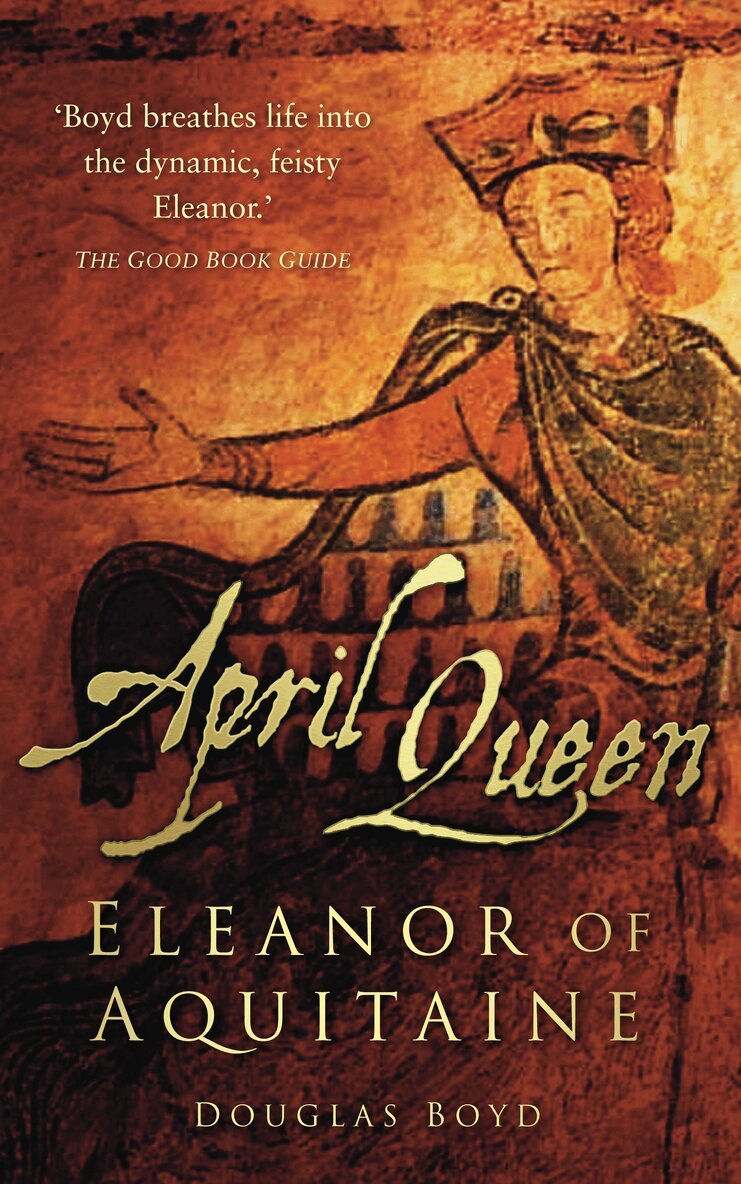
April Queen
Eleanor of Aquitaine
Av Douglas Boyd
Häftad, 2011
133 kr
Tillfälligt slut
Eleanor of Aquitaine was the only person ever to sit on the thrones of both France and England. In this account of the turbulent adventures of the extraordinary mother of Richard the Lionheart and King John, author Douglas Boyd takes us into the heart and mind of the woman who changed the shape of …
Empath
A Step By Step Guide to Step out from your Anxiety, Fear, Stress and Find the Happiness of Your Life
Av Douglas Boyd
Inbunden, 2021
184 kr
Tillfälligt slut
Empath
A Step By Step Guide to Step out from your Anxiety, Fear, Stress and Find the Happiness of Your Life
Av Douglas Boyd
Häftad, 2021
138 kr
Tillfälligt slut
How To Stop Overthinking
What You Really Need to Know to come out from overthinking, Anxiety and Fear
Av Douglas Boyd
Inbunden, 2021
184 kr
Tillfälligt slut
How To Stop Overthinking
What You Really Need to Know to come out from overthinking, Anxiety and Fear
Av Douglas Boyd
Häftad, 2021
138 kr
Tillfälligt slut