Douglas Den Uyl – författare
Visar alla böcker från författaren Douglas Den Uyl. Handla med fri frakt och snabb leverans.
8 produkter
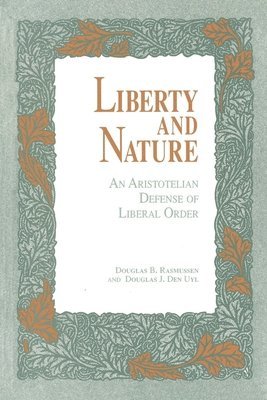
Liberty and Nature
Aristotelian Defense of Liberal Order
Av Douglas B. Rasmussen, Douglas J. Den Uyl m. fl.
Häftad, 1991
450 kr
Lägg i varukorg
"Liberty and Nature - an Aristotelian Defense of Liberal Order" describes the manner in which Aristotle's way of thinking has normally been understood as hostile to modern liberal, pluralistic, and commercial society. In opposition to this prevailing view, the authors set out to show that the …
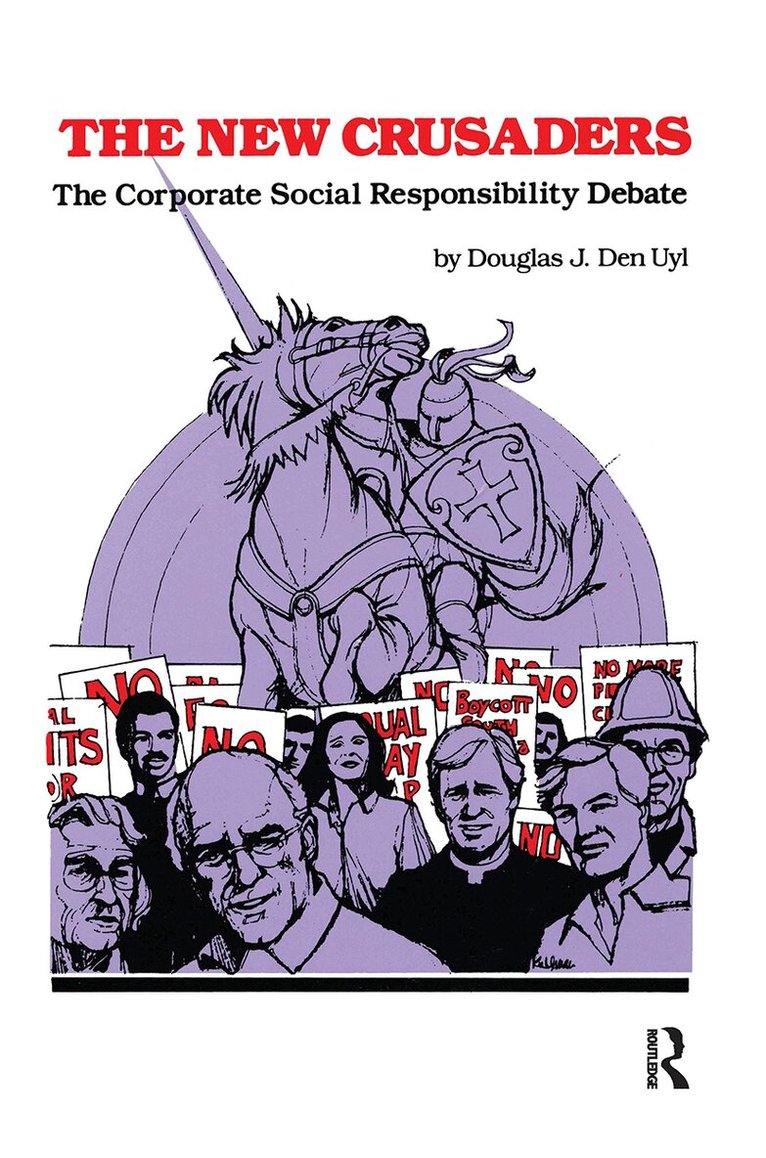
New Crusaders
Häftad, 1984
764 kr
Lägg i varukorg
Should corporations seek to alleviate social inequalities? Or should they, rather, aim solely for profit maximization? Most social thinkers writing on the topic of corporate social responsibility have assumed that the question has been settled, that indeed, corporations ought to act as mere …
New Crusaders
E-bok, 2020
927 kr
Lägg i varukorg
Should corporations seek to alleviate social inequalities? Or should they, rather, aim solely for profit maximization? Most social thinkers writing on the topic of corporate social responsibility have assumed that the question has been settled, that indeed, corporations ought to act as mere …
New Crusaders
E-bok, 2020
927 kr
Lägg i varukorg
Should corporations seek to alleviate social inequalities? Or should they, rather, aim solely for profit maximization? Most social thinkers writing on the topic of corporate social responsibility have assumed that the question has been settled, that indeed, corporations ought to act as mere …
New Crusaders
Inbunden, 2020
2195 kr
Lägg i varukorg
Should corporations seek to alleviate social inequalities? Or should they, rather, aim solely for profit maximization? Most social thinkers writing on the topic of corporate social responsibility have assumed that the question has been settled, that indeed, corporations ought to act as mere …
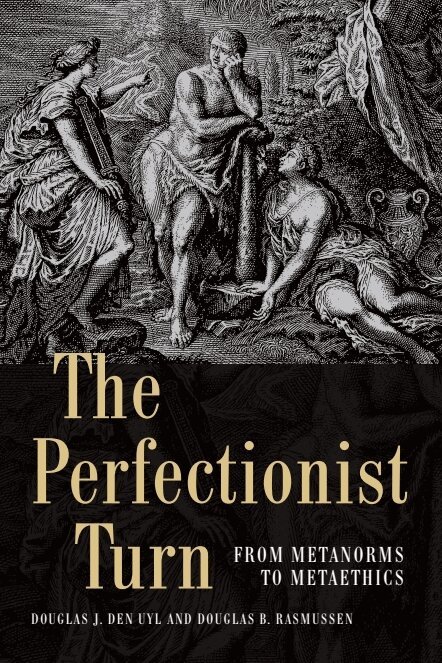
Perfectionist Turn
From Metanorms to Metaethics
Av Douglas Den Uyl, Douglas Rasmussen
Inbunden, 2016
2119 kr
Lägg i varukorg
Contemporary political philosophy - especially in the works of Martha Nussbaum, John Rawls and Amartya Sen - has assumed that it can separate itself off from other philosophical positions and frameworks. In this book, Den Uyl and Rasmussen challenge this trend by moving from the liberalism they …
Virtue of Prudence
Av Douglas Den Uyl, John Kekes
Inbunden, 1991
712 kr
Tillfälligt slut
How is it possible for something to be a supreme virtue at one time and later to be perceived as no virtue at all? This is the legacy left to us by the virtue of prudence. At one time, prudence was regarded as the highest of the «four cardinal virtues». Many today, in contrast, take prudence to be …
God, Man, and Well-Being
Spinoza’s Modern Humanism
Av Douglas Den Uyl, Nicholas Capaldi m. fl.
Häftad, 2008
342 kr
Tillfälligt slut
This book explores the seventeenth-century philosopher Spinoza’s modernist humanism. There is little doubt that Spinoza was one of the principle founders of modernity, but his modernism is often thought to come at the expense of a humanism. Drawing attention to Spinoza’s humanism, this book …