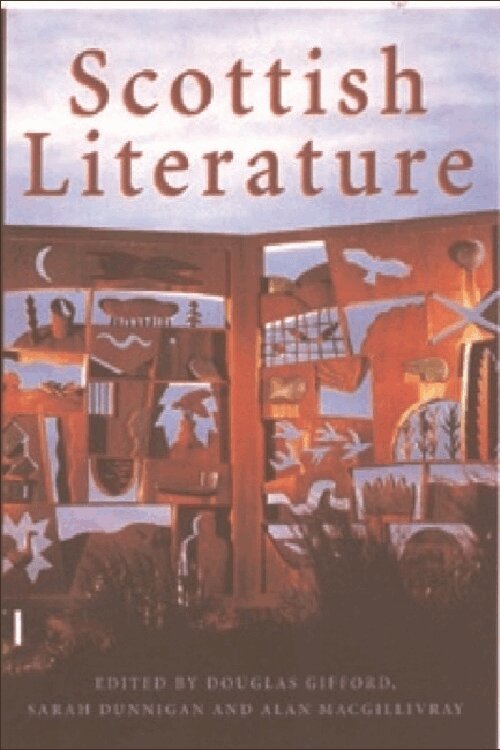
This substantial new volume is a stimulating yet in-depth introduction to Scottish literature in English and Scots. From medieval to modern, the entire range of literature is introduced, examined and explored. Aimed primarily at those with an interest in Scottish literature, this guide also responds to the need for students and teachers to have detailed discussions of individual authors and texts.The volume looks at Scottish literature in six period sections: Early Scottish Literature, Eighteenth-Century, The Age of Scott, Victorian and Edwardian, The Twentieth-Century Scottish Literary Renaissance, and Scottish Literature since 1945. Each section begins with an overview of the period, followed by several chapters examining exemplary authors and texts. Each section finishes with an extensive discussion including suggestions as to how to further explore the rich and often neglected hinterlands of Scottish writing. Extensive reading lists identify primary texts of the period as well as details of a wide range of additional authors. Opening up neglected areas of study as well as responding to the burgeoning interest in novelists, modern poets and dramatists, this book serves as an invaluable guide to Scottish Literature.
Professor Douglas Gifford, Emeritus Professor of Scottish Literature at the University of Glasgow, explores James Hogg’s most famous work, The Private Memoirs and Confessions of a Justified Sinner. This shocking tale of a minister’s son who believes himself chosen by God to punish those he sees as evil-doers, and who has a mysterious guide in all his atrocities, has been labelled a Gothic story – yet it has more in common with traditional Scottish folk-tales, but with the alternative possibility of an astonishingly modern reading, in which there are no devils and no wonders, only the delusions of a diseased mind.Professor Gifford guides the listener through the turns and twists of the novel, accompanied by atmospheric readings of selections from the text by John Shedden. Both psychological and supernatural elements are explored, along with the background to Hogg and his works.This double-disk audio CD makes an excellent tool for classroom use or for home study.
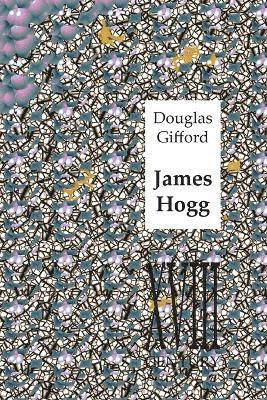
In his own lifetime and for nearly a hundred years James Hogg was was seen as the natural, if lesser, inheritor of the mantle of Robert Burns. Hogg was "the Ettrick Shepherd," self-taught, author of the long poem 'The Queen's Wake' and numerous poems and songs of Border life and love, befriended by Walter Scott and presented in the pages of Blackwood's Magazine as a colourful, boastful, deep-drinking rustic. But with the American publication in 1824 of 'The Private Memoirs and Confessions of a Justified Sinner' the picture began to change. This study, first published in 1976, is the first to attempt to trace the real relationship between Hogg and his Edinburgh contemporaries, and to show how Hogg developed from poetry to fiction and his major novels. The book is both an assessment of Hogg as a major novelist and a study of the social and literary snobbery which was beginning to dominate Edinburgh in the age of Walter Scott.
This substantial new volume is a stimulating yet in-depth introduction to Scottish literature in English and Scots. From medieval to modern, the entire range of literature is introduced, examined and explored. Aimed primarily at those with an interest in Scottish literature, this guide also responds to the need for students and teachers to have detailed discussions of individual authors and texts.The volume looks at Scottish literature in six period sections: Early Scottish Literature, Eighteenth-Century, The Age of Scott, Victorian and Edwardian, The Twentieth-Century Scottish Literary Renaissance, and Scottish Literature since 1945. Each section begins with an overview of the period, followed by several chapters examining exemplary authors and texts. Each section finishes with an extensive discussion including suggestions as to how to further explore the rich and often neglected hinterlands of Scottish writing. Extensive reading lists identify primary texts of the period as well as details of a wide range of additional authors. Opening up neglected areas of study as well as responding to the burgeoning interest in novelists, modern poets and dramatists, this book serves as an invaluable guide to Scottish Literature.
Professor Douglas Gifford, Emeritus Professor of Scottish Literature at the University of Glasgow, explores James Hogg’s most famous work, The Private Memoirs and Confessions of a Justified Sinner. This shocking tale of a minister’s son who believes himself chosen by God to punish those he sees as evil-doers, and who has a mysterious guide in all his atrocities, has been labelled a Gothic story – yet it has more in common with traditional Scottish folk-tales, but with the alternative possibility of an astonishingly modern reading, in which there are no devils and no wonders, only the delusions of a diseased mind.Professor Gifford guides the listener through the turns and twists of the novel, accompanied by atmospheric readings of selections from the text by John Shedden. Both psychological and supernatural elements are explored, along with the background to Hogg and his works.This double-disk audio CD makes an excellent tool for classroom use or for home study.
In his own lifetime and for nearly a hundred years James Hogg was was seen as the natural, if lesser, inheritor of the mantle of Robert Burns. Hogg was "the Ettrick Shepherd," self-taught, author of the long poem 'The Queen's Wake' and numerous poems and songs of Border life and love, befriended by Walter Scott and presented in the pages of Blackwood's Magazine as a colourful, boastful, deep-drinking rustic. But with the American publication in 1824 of 'The Private Memoirs and Confessions of a Justified Sinner' the picture began to change. This study, first published in 1976, is the first to attempt to trace the real relationship between Hogg and his Edinburgh contemporaries, and to show how Hogg developed from poetry to fiction and his major novels. The book is both an assessment of Hogg as a major novelist and a study of the social and literary snobbery which was beginning to dominate Edinburgh in the age of Walter Scott.