Douglas Husak – författare
Visar alla böcker från författaren Douglas Husak. Handla med fri frakt och snabb leverans.
11 produkter
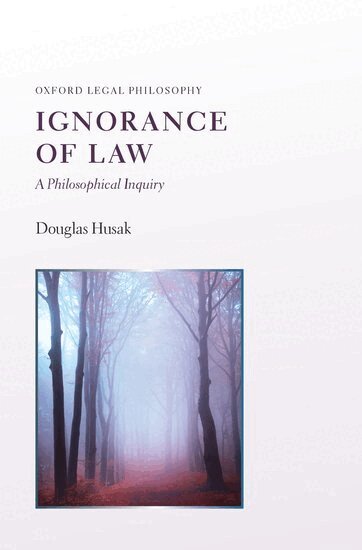
Ignorance of Law
A Philosophical Inquiry
Inbunden, 2016
1611 kr
Lägg i varukorg
This book argues that ignorance of law should usually be a complete excuse from criminal liability. It defends this conclusion by invoking two presumptions: first, the content of criminal law should conform to morality; second, mistakes of fact and mistakes of law should be treated symmetrically. …
Ignorance of Law
A Philosophical Inquiry
E-bok, 2016
1393 kr
Lägg i varukorg
This book argues that ignorance of law should usually be a complete excuse from criminal liability. It defends this conclusion by invoking two presumptions: first, the content of criminal law should conform to morality; second, mistakes of fact and mistakes of law should be treated symmetrically. …
Ignorance of Law
A Philosophical Inquiry
E-bok, 2016
1393 kr
Lägg i varukorg
This book argues that ignorance of law should usually be a complete excuse from criminal liability. It defends this conclusion by invoking two presumptions: first, the content of criminal law should conform to morality; second, mistakes of fact and mistakes of law should be treated symmetrically. …
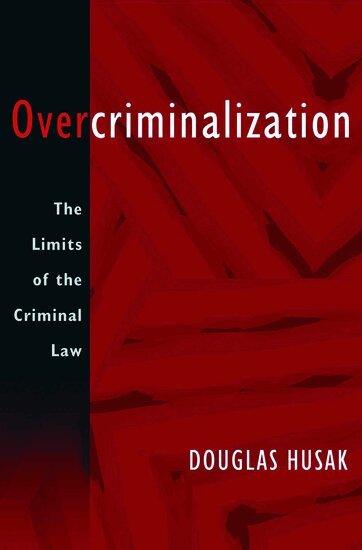
Overcriminalization
The Limits of the Criminal Law
Inbunden, 2007
1433 kr
Lägg i varukorg
In the US, one out of every 138 residents is incarcerated. The size of the prison population has quadrupled since 1980. Approximately 2.4% of Americans are either on probation and parole. The US has the highest rate of criminal punishment in the Western world. The problem with American criminal …
Overcriminalization
The Limits of the Criminal Law
Häftad, 2009
667 kr
Lägg i varukorg
Husak's primary goal is to defend a set of constraints to limit the authority of states to enact and enforce criminal offenses. In addition, Husak situates this endeavor in criminal theory as traditionally construed. This book urges the importance of this topic in the real world, while most …
Overcriminalization
The Limits of the Criminal Law
E-bok, 2008
331 kr
Lägg i varukorg
The United States today suffers from too much criminal law and too much punishment. Husak describes the phenomena in some detail and explores their relation, and why these trends produce massive injustice. His primary goal is to defend a set of constraints that limit the authority of states to …
The Philosophy of Criminal Law
Selected Essays
Inbunden, 2010
1940 kr
Lägg i varukorg
This volume collects 17 of Douglas Husak's influential essays in criminal law theory. The essays span Husak's original and provocative contributions to the major topics in the field, including the grounds of criminal liability, the significance of culpability, the role of defences, and the …
Overcriminalization
The Limits of the Criminal Law
E-bok, 2008
408 kr
Lägg i varukorg
The United States today suffers from too much criminal law and too much punishment. Husak describes the phenomena in some detail and explores their relation, and why these trends produce massive injustice. His primary goal is to defend a set of constraints that limit the authority of states to …
Legalize This!
The Case for Decriminalizing Drugs
E-bok, 2020
170 kr
Lägg i varukorg
Recreational drug users (other than those who take harmful substances like alcohol and tobacco) are regularly imprisoned. Nearly half a million drug offenders are incarcerated in US jails, more than the total number of prisoners in 1980 and more than the entire EU prison population. In some states …
Legalize This!
The Case for Decriminalizing Drugs
Av Douglas Husak, Colin McGinn m. fl.
Häftad, 2002
5,0 utav 5 stjärnor. Totalt antal röster: (1)
315 kr
Lägg i varukorg
Recreational drug users (other than those who take harmful substances like alcohol and tobacco) are regularly imprisoned. Nearly half a million drug offenders are incarcerated in US jails, more than the total number of prisoners in 1980 and more than the entire EU prison population. In some states …
Sobrecriminalización
Los límites del Derecho penal
E-bok, 2013
469 kr
Lägg i varukorg
"La creciente expansión y protagonismo del Derecho penal en gran parte del mundo, y especialmente en Estados Unidos, se ha traducido en una gran cantidad de leyes penales y muchos más castigos que resultan sospechosos en términos de legitimidad. Pero ¿cómo podemos estar seguros de que esta enorme …