D.R. Bridgland – författare
Visar alla böcker från författaren D.R. Bridgland. Handla med fri frakt och snabb leverans.
3 produkter
3 produkter
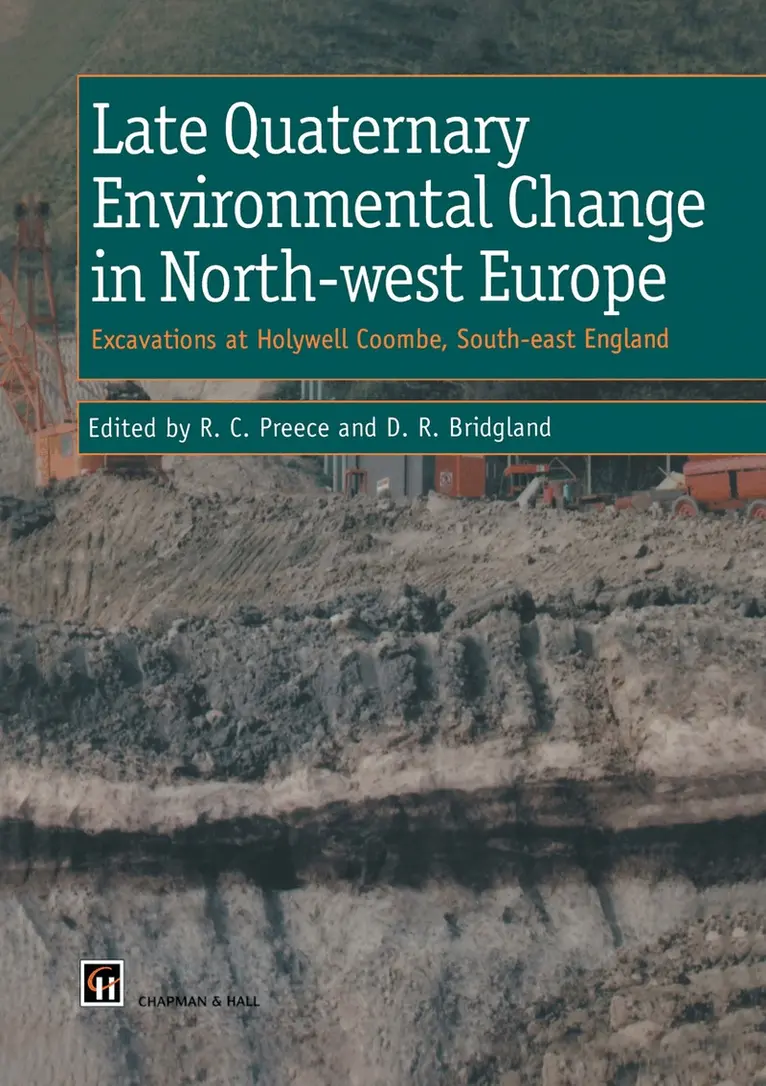
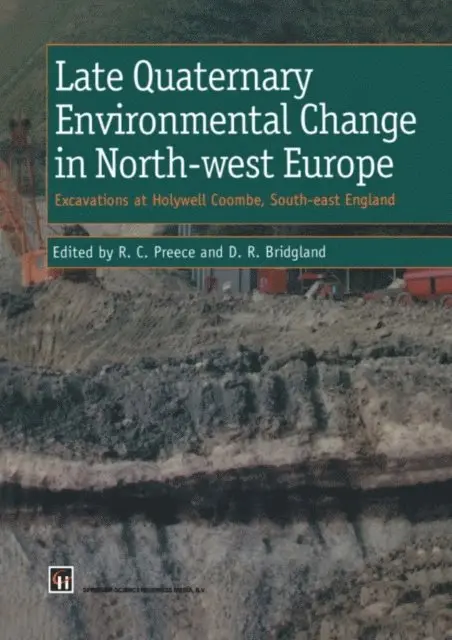
Late Quaternary Environmental Change in North-west Europe: Excavations at Holywell Coombe, South-east England
Excavations at Holywell Coombe, South-east England
Inbunden, Engelska, 1998
1 589 kr
Skickas inom 10-15 vardagar
Holywell Coombe, an embayment in the chalk scarp overlooking Folkestone, Kent, was designated a geological Site of Special Scientific Interest in 1985 because it contains richly fossiliferous Late Quaternary sediments providing a unique archive of the last 13,000 years. The construction of the Channel Tunnel across the Holywell Coombe SSSI brought about a major rescue excavation, funded by Eurotunnel, that set an important precedent in Earth Science conservation. This multidisciplinary investigation has added enormously to our understanding of the environment and natural history of the Late-glacial and Holocene. The climatic complexity of the Late-glacial is recorded in the nature of the sediments, the fossils recovered from them and the soils developed within them. From the Neolithic, and especially during the Early Bronze Age, the slopes were destabilized as a result of forest clearance, leading to the accumulation of hillwash. Archaeological excavations in the hillwash have revealed evidence of prehistoric occupation and agricultural activity in the coombe. Eurotunnel also funded biological surveys of the local terrestrial and aquatic habitats. Combining these with the fossil evidence, it has been possible to document the pedigree of our present fauna and flora, providing one of the most detailed and comprehensive studies of its kind. With contributions from eminent Quaternary scientists from several countries, this work will be an important resource for researchers, lecturers and postgraduate students in Quaternary sciences - geology, geography, biology, ecology and archaeology - as well as for government bodies concerned with nature conservation and environmental protection.
534 kr
Skickas inom 10-15 vardagar
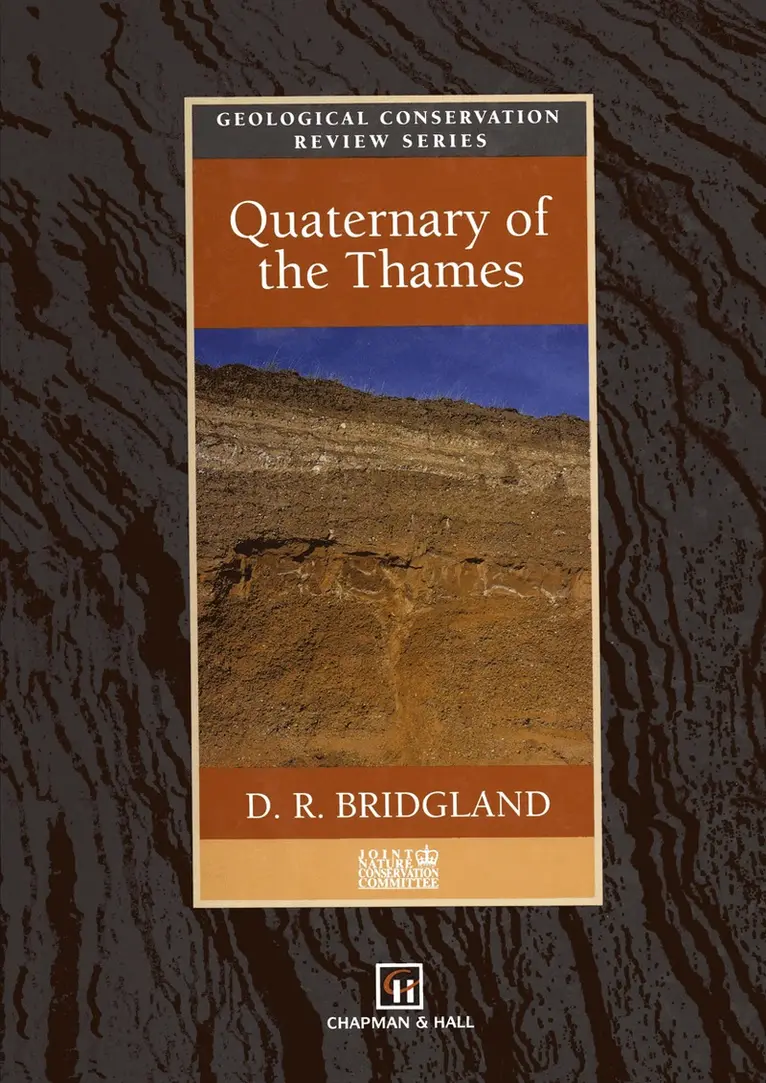
The principal aim of this volume is to provide descriptions of Sites of Special Scientific Interest, selected as part of the Geological Conservation Review, that yield evidence for the Pleistocene history of the River Thames and its tributaries. Although defined thematically, the volume covers all Pleistocene GCR sites in the Thames valley. A number of sites in southern East Anglia are also included because they provide important evidence bearing on the history of the Thames system. The justification for a GCR volume devoted to the Thames lies in the special importance of the river in the British Quaternary. The volume is con cerned with the history of Britain over approximately the last two million years of geological time, during the repeated glacial phases of the Quaternary 'Ice Age' and the warmer intervals between them. Many such climatic fluctuations are recorded in the deposits of the Thames, which can be shown to have existed as the predominant west to east drainage line in south-eastern England throughout the Pleistocene. The Thames has left a detailed record of its earlier presence in the form of deposits, which comprise fluvially aggraded floodplain sediments (predominantly gravels) preserved on the valley sides, where they form geomorphological terrace features. The oldest deposits are at the highest levels, forming a terrace 'staircase' that records successive stages in the evolution of the valley.
Late Quaternary Environmental Change in North-west Europe: Excavations at Holywell Coombe, South-east England
Excavations at Holywell Coombe, South-east England
Häftad, Engelska, 2012
1 589 kr
Skickas inom 10-15 vardagar
Holywell Coombe, an embayment in the chalk scarp overlooking Folkestone, Kent, was designated a geological Site of Special Scientific Interest in 1985 because it contains richly fossiliferous Late Quaternary sediments providing a unique archive of the last 13,000 years. The construction of the Channel Tunnel across the Holywell Coombe SSSI brought about a major rescue excavation, funded by Eurotunnel, that set an important precedent in Earth Science conservation. This multidisciplinary investigation has added enormously to our understanding of the environment and natural history of the Late-glacial and Holocene. The climatic complexity of the Late-glacial is recorded in the nature of the sediments, the fossils recovered from them and the soils developed within them. From the Neolithic, and especially during the Early Bronze Age, the slopes were destabilized as a result of forest clearance, leading to the accumulation of hillwash. Archaeological excavations in the hillwash have revealed evidence of prehistoric occupation and agricultural activity in the coombe. Eurotunnel also funded biological surveys of the local terrestrial and aquatic habitats. Combining these with the fossil evidence, it has been possible to document the pedigree of our present fauna and flora, providing one of the most detailed and comprehensive studies of its kind. With contributions from eminent Quaternary scientists from several countries, this work will be an important resource for researchers, lecturers and postgraduate students in Quaternary sciences - geology, geography, biology, ecology and archaeology - as well as for government bodies concerned with nature conservation and environmental protection.