Duncan Kelly - Böcker
Visar alla böcker från författaren Duncan Kelly. Handla med fri frakt och snabb leverans.
7 produkter
7 produkter
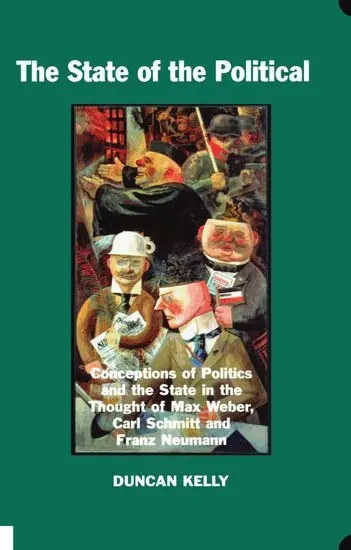
The State of the Political
Conceptions of Politics and the State in the Thought of Max Weber, Carl Schmitt, and Franz Neumann
Inbunden, Engelska, 2003
1 311 kr
Skickas inom 7-10 vardagar
The State of the Political offers a broad-ranging re-interpretation of the understanding of politics and the state in the writings of three major German thinkers, Max Weber, Carl Schmitt, and Franz Neumann. It rejects the typical separation of these writers on the basis of their allegedly incompatible ideological positions, and suggests instead that once properly located in their historical context, the tendentious character of these interpretative boundaries becomes clear.The book interprets the conceptions of politics and the state in the writings of these three thinkers by means of an investigation of their adaptation and modification of particular German traditions of thinking about the state, or Staatsrechtslehre. Indeed, when the theoretical considerations of this state-legal theory are combined with their contemporary political criticism, a richer and more deeply textured account of the issues that engaged the attention of Weber, Schmitt and Neumann is possible. Thus, the broad range of subjects discussed in this book include parliamentarism and democracy in Germany, academic freedom and political economy, political representation, cultural criticism and patriotism, and the relationship between rationality, law, sovereignty and the constitution.The State of the Political is based on extensive consideration of primary and secondary materials, and is held together by a general focus on the importance to these authors of distilling an adequate account of the state and the political - largely because this could bolster their subsequent criticisms of contemporary politics. The study attempts to restore a sense of proportion to discussion of their writings, focusing on the extensive ideas that they shared rather than insisting on their necessary ideological separation. It is a detailed re-appraisal of a crucial moment in modern intellectual history, and highlights the profound importance of Max Weber, Carl Schmitt and Franz Neumann for the history of European ideas.
Del 155 - Proceedings of the British Academy
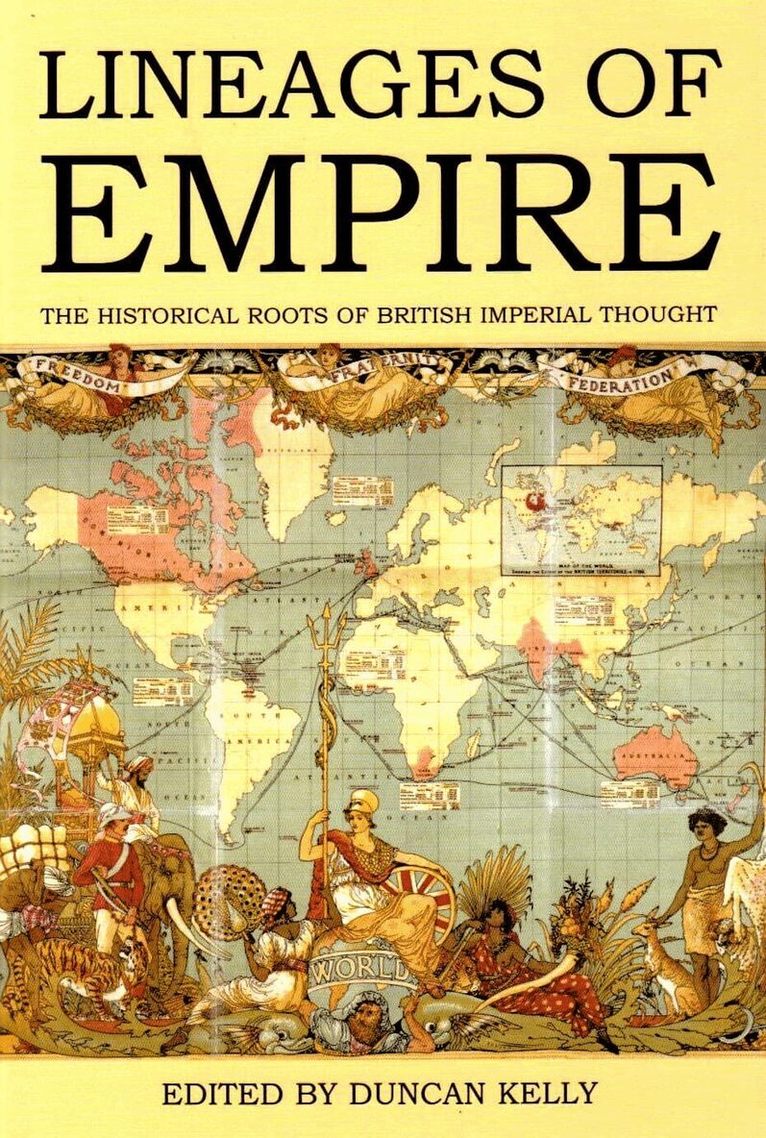
Lineages of Empire
The Historical Roots of British Imperial Thought
Inbunden, Engelska, 2009
931 kr
Skickas inom 7-10 vardagar
Recently there has been an explosion of academic and popular interest in the history of how Britons have thought about their Empire. This volume focuses on the ways in which the intellectual history and political thought of modern Britain have been saturated with imperial concerns.Chapters address thematic questions about size and scale, race, colonial emigration, and the ideological uses of the classical tradition, questions that are crucial for understanding the historical roots of British imperial thought. There are also studies of figures central to understanding the character of intellectual debates about the British Empire from the 18th to the 20th centuries: Edmund Burke, James Steuart, Adam Smith, and Harold Laski.This volume also shows how an awareness of these histories of the imperial past can provide numerous lessons for understanding the strengths and weaknesses of much contemporary political thinking about empire and imperialism. In fact, whilst there are many studies of the British Empire, as well as innumerable volumes on the imperial cast of much modern history, the thematic and chronological coherence of this volume makes it a unique statement of the latest thinking about these questions from internationally acclaimed political theorists and intellectual historians.
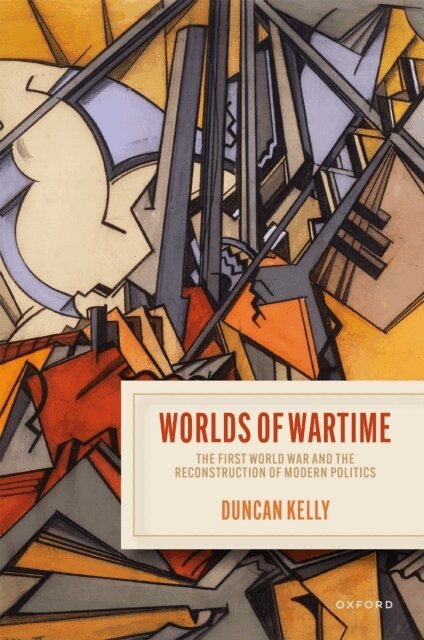
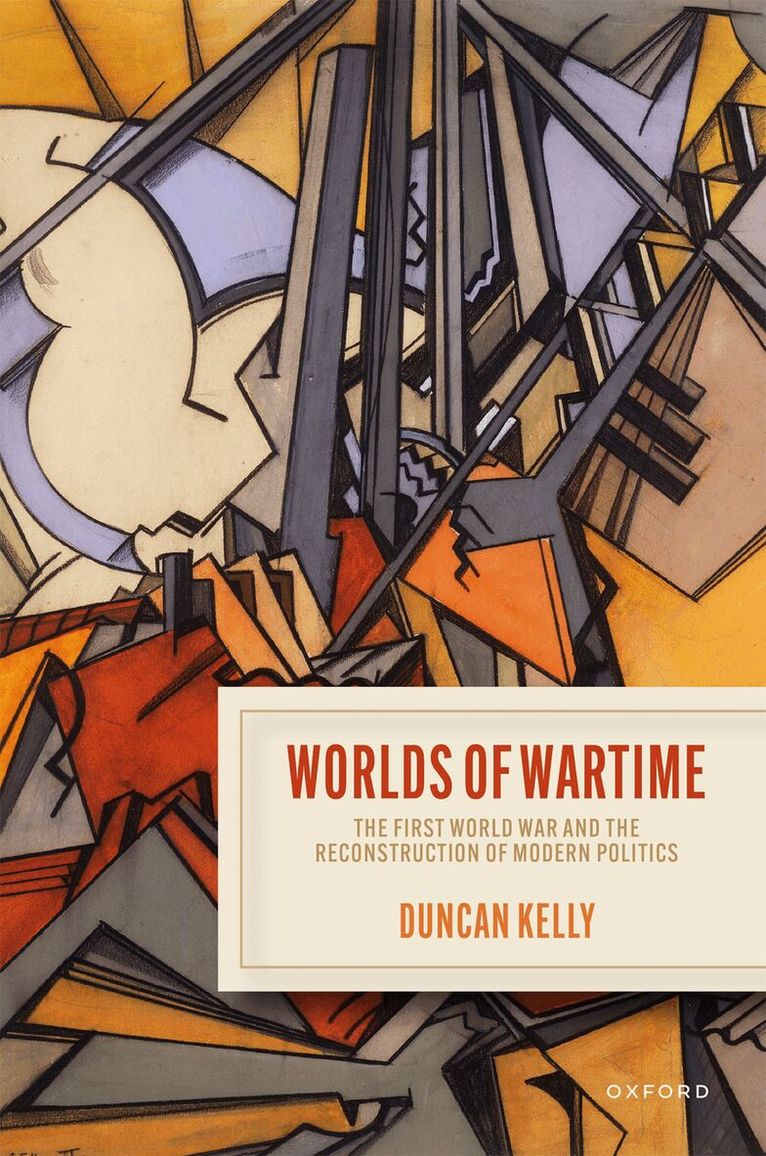
Worlds of Wartime
The First World War and the Reconstruction of Modern Politics
Inbunden, Engelska, 2025
546 kr
Skickas inom 5-8 vardagar
The First World War hardly ended with the formal Armistice in Europe on November 11, 1918, amid the continuing violence of blockades and epidemics, amid numerous forms of reconstruction and revolution. Its legacies, in fact, resonate deeply in our present. Nor is it obvious that it only began on July 28, 1914, just a month after the assassination of the Archduke Franz Ferdinand, in Sarajevo. Rather than these formal legal openings and closings, the beginnings and endings of wartime are many, depending upon the questions we ask, and the frames of reference we provide. For many at the time, the outbreak of what would become the First World War was an inevitability, the result of rising tensions over decades, whether due to the dynamics and systems of international politics within Europe, or a result of the competitive logic of imperial politics as practised by Europe outside its borders, rebounding back upon it. This resulted in equally persistent ideas down to our own time, about the inevitability that followed from victory; namely, that to be successful and realistic, modern politics and economics must necessarily be fixed in the form of a democratic nation-state. But this new world of democracy, forged in war, could easily become its own sort of intellectual prison-house, curating and limiting political and economic possibilities just as securely as any form of tyranny. That the tyranny of victory was a danger recognized by many of the leading analysts of the First World War at the time, helped to foster a continued search for ideas that might keep the worlds of politics and economics open to alternative futures, rather than being closed by the force of a few great powers or the presentational fiat of democracy. Those hopes paved the way for the wide variety of anti-imperial, federal, diasporic, and revolutionary forms of political and economic arrangements, which were designed to challenge the seemingly inevitable rise of the nation-state. Worlds of Wartime: The First World War and the Reconstruction of Modern Politics provides a new intellectual history of the many and varied ideas about politics and economics that were made, and remade, through wartime and revolution, by political and economic thinkers working across the globe, from the 1880s to the 1930s. Spanning continents, connecting networks of people, power, and possibilities, in new and often experimental ways, the worlds of wartime saw histories of modern politics and economics revised and updated, used as well as abused, in myriad attempts to interpret, explain, understand, explore, and indeed to win, the war. This book takes the measure of a great many of these overlapping visions, and it does so by trying to learn some of the lessons that literary and artistic modernism can teach us about the complexities of political and economic ideas, their contingency and uncertainty, and how they are fixed into focus only at very particular moments. Moving from the stylised narratives of European and American political theory and intellectual history, through to the futurist politics of revolutionaries in Ireland, India, Ottoman-Turkey, and Russia, this book also tracks arguments and strategies for Pan-African diasporic federation, alongside German and American debates about federal pasts and federal futures. From the invention of the world economy, to the reality of multiple war economies, from revolutionary conjunctures to ideas of democracy and climate catastrophe in the Anthropocene today, Worlds of Wartime tells the story of just how strongly modern politics in general, and modern ideas about political and economic possibility, were fixed by the intellectual turbulence wrought during the First World War.
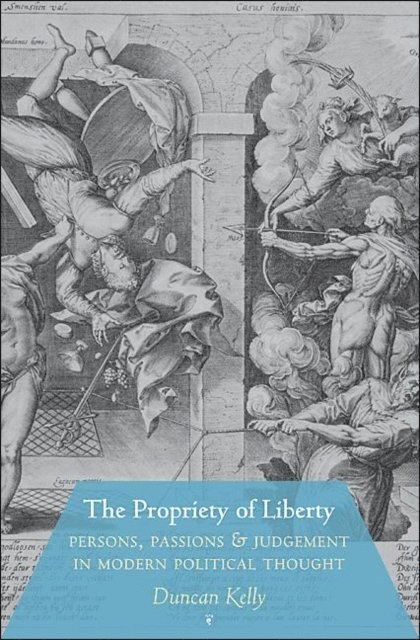
Propriety of Liberty
Persons, Passions, and Judgement in Modern Political Thought
Inbunden, Engelska, 2010
551 kr
Skickas inom 7-10 vardagar
In this book, Duncan Kelly excavates, from the history of modern political thought, a largely forgotten claim about liberty as a form of propriety. By rethinking the intellectual and historical foundations of modern accounts of freedom, he brings into focus how this major vision of liberty developed between the seventeenth and the nineteenth centuries. In his framework, celebrated political writers, including John Locke, Montesquieu, Adam Smith, John Stuart Mill, and Thomas Hill Green pursue the claim that freedom is best understood as a form of responsible agency or propriety, and they do so by reconciling key moral and philosophical claims with classical and contemporary political theory. Their approach broadly assumes that only those persons who appropriately regulate their conduct can be thought of as free and responsible. At the same time, however, they recognize that such internal forms of self-propriety must be judged within the wider context of social and political life.Kelly shows how the intellectual and practical demands of such a synthesis require these great writers to consider freedom as part of a broader set of arguments about the nature of personhood, the potentially irrational impact of the passions, and the obstinate problems of individual and political judgement. By exploring these relationships, "The Propriety of Liberty" not only revises the intellectual history of modern political thought, but also sheds light on contemporary debates about freedom and agency.
603 kr
Skickas inom 7-10 vardagar
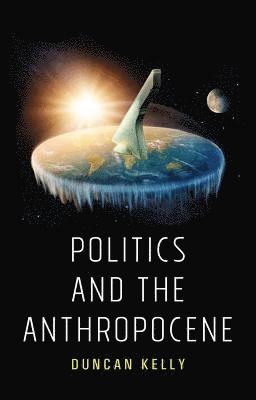
The Anthropocene has become central to understanding the intimate connections between human life and the natural environment, but it has fractured our sense of time and possibility. What implications does that fracturing have for how we should think about politics in these new times? In this cutting-edge intervention, Duncan Kelly considers how this new geological era could shape our future by engaging with the recent past of our political thinking. If politics remains a short-term affair governed by electoral cycles, could an Anthropocenic sense of time, value and prosperity be built into it, altering long-established views about abundance, energy and growth? Is the Anthropocene so disruptive that it is no more than a harbinger of ecological doom, or can modern politics adapt by rethinking older debates about states, territories, and populations? Kelly rejects both pessimistic fatalism about humanity’s demise, and an optimistic fatalism that makes the Anthropocene into a problem too big for politics, best left to the market or technology to solve. His skilful defence of the potential for democratic politics to negotiate this challenge is an indispensable guide to the ideas that matter most to understanding this epochal transformation.
206 kr
Skickas inom 7-10 vardagar
The Anthropocene has become central to understanding the intimate connections between human life and the natural environment, but it has fractured our sense of time and possibility. What implications does that fracturing have for how we should think about politics in these new times? In this cutting-edge intervention, Duncan Kelly considers how this new geological era could shape our future by engaging with the recent past of our political thinking. If politics remains a short-term affair governed by electoral cycles, could an Anthropocenic sense of time, value and prosperity be built into it, altering long-established views about abundance, energy and growth? Is the Anthropocene so disruptive that it is no more than a harbinger of ecological doom, or can modern politics adapt by rethinking older debates about states, territories, and populations? Kelly rejects both pessimistic fatalism about humanity’s demise, and an optimistic fatalism that makes the Anthropocene into a problem too big for politics, best left to the market or technology to solve. His skilful defence of the potential for democratic politics to negotiate this challenge is an indispensable guide to the ideas that matter most to understanding this epochal transformation.
208 kr
Kommande