Duncan Lindsey – författare
Visar alla böcker från författaren Duncan Lindsey. Handla med fri frakt och snabb leverans.
11 produkter
11 produkter
E-bok
Engelska, 2003430 kr
Läs direkt efter köp
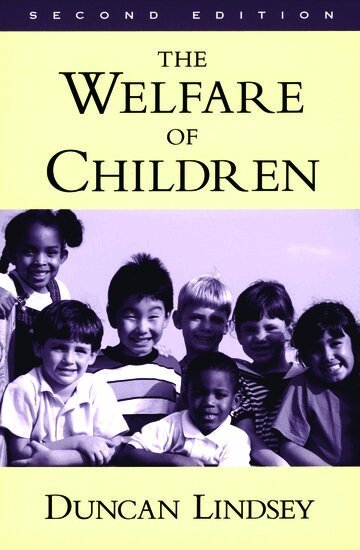
According to the United Nations'' latest data, the United States has more children living in poverty than any other industrialized nation in the world. More than a fifth of all children grow up in poverty. The poverty rates for African-American and Latino children often exceeds 40 percent. Furthermore, the United States--a country that once pioneered strategies to prevent child abuse and that now spends more money fighting child abuse than any other industrialized country--also has the highest rate of child abuse in the industrialized world. Against this background, Duncan Lindsey, a leading authority on child welfare, takes a critical look at the current welfare system. He traces the transformation of child welfare into child protective services, arguing that the current focus on abuse has produced a system that is designed to protect children from physical and sexual abuse and therefore functions as a last resort for only the worst and most dramatic cases in child welfare. In a close analysis of the process of investigating child abuse, Linsey finds that there is no evidence that the transformation into protective services has reduced child abuse fatalities or provided a safter environment for children. He makes a compelling argument for the criminal justice system to assume responsibility for the problem of child abuse in order for the child welfare system to be able to adequately address the well-being of a much larger number of children now growing up in poverty. This new edition of The Welfare of Children takes into account a major legislative change since the publication of the first edition: the welfare reform legislation of 1996. This legislation has fundamentally altered the public child welfare system as broadly understood, and Lindsey thoroughly examines its implications on policy and practice, refuting the claim that welfare reform has actually reduced child poverty. The Welfare of Children, 2nd Edition is a compassionate blueprint for the comprehensive reform of the current child welfare system to one that administers to the economic security of the larger number of disadvantaged and impoverished children. Concrete policy proposals such as a Child''s Future Security account, similar to the Social Security program for older citizens, will spark serious debate on a major public policy issue facing our society.
E-bok
Engelska, 2008601 kr
Läs direkt efter köp
Research has already been a significant factor in child welfare policy in recent years, but this essential new volume demonstrates that it has taken a leading role in the field to spur and guide change. In the incisive chapters gathered here, some of the field''s top investigators present their work and assess its effect on the full spectrum of child welfare services. Future generations of researchers, as well as students, practitioners, and service providers, will find the resulting text indispensable. Edited by Duncan Lindsey and Aron Shlonsky, two of the discipline''s most articulate voices, the book covers every base. The opening chapters situate child welfare research in the modern context; they are followed by discussions of evidence-based practice in the field, arguably its most pressing concern now. Recent years have seen historic rises in the number of children adopted through public agencies and, accordingly, permanent placement and family ties are critical topics that occupy the book''s core, along with chapters broaching the thorny questions that surround decision-making and risk assessment. The urgent need for a more effective use of research and evidence is highlighted again with looks at the future of child protection and how concrete data can influence policy and help children. Finally, in recognition of the growing importance of a global view, closing chapters address international issues in child welfare research, including an examination of policies from abroad and a multinational comparison of the economic challenges facing single mothers and their children. With its insightful treatment of child welfare services in terms of the broader welfare system and acknowledgment of the myriad problems child welfare agencies face, this exceptional compendium offers a rich understanding of the social conditions that influence contemporary child welfare and enables the field to move ahead without losing sight of valuable lessons that have been learned.
E-bok
Engelska, 2008397 kr
Läs direkt efter köp
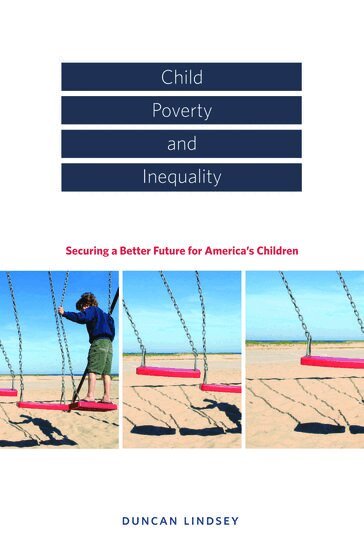
One of the United States great promises is that all children will be given the opportunity to work to achieve a comfortable standard of living. That promise has faded profoundly for children who grow up in poverty, particularly black and Hispanic children, and many of the deepening fault lines in the social order are traceable to this disparity. In recent years the promise has also begun to fade for children of the middle class. Education and hard work, once steady paths to economic success, no longer lead as far as they once did. But that doesn''t have to be the case, as Duncan Lindsey shows in this articulate, impassioned volume. We can provide true opportunity to all children, insuring them against a lifetime of inequality, and when we do, the walls dividing the country by race, ethnicity, and wealth will begin to crumble. Long a voice for combating child poverty, Lindsey takes a balanced approach that begins with a history of economic and family policy from the Great Depression and the development of Social Security and moves onward. He details the shocking extent of economic inequality in the U.S., pointing out that this wealthiest of countries also has the largest proportion of children living in poverty. Calling for reform, Lindsey proposes several viable universal income security policies for vulnerable children and families, strategies that have worked in other advanced democracies and also respect the importance of the market economy. They aim not just to reduce child poverty, but also to give all children meaningful economic opportunity. Just as Social Security alleviates the sting of poverty in old age, asset-building policies can insulate children from the cumulative effects of disadvantage and provide them with a strong foundation from which to soar. Politicians, pundits, and parents always say that children are the future, but as long as so many grow up poor or without opportunity, that slogan will sound hollow. Duncan Lindseys book should be read by anyone who wants to know how we can take real action to brighten the future for children and for society as a whole.
Inbunden, Engelska, 2004
1 080 kr
Skickas inom 5-8 vardagar
According to the United Nations' latest data, the United States has more children living in poverty than any other industrialized nation in the world. More than a fifth of all children grow up in poverty. The poverty rates for African-American and Latino children often exceeds 40 percent. Furthermore, the United States--a country that once pioneered strategies to prevent child abuse and that now spends more money fighting child abuse than any other industrialized country--also has the highest rate of child abuse in the industrialized world. Against this background, Duncan Lindsey, a leading authority on child welfare, takes a critical look at the current welfare system. He traces the transformation of child welfare into child protective services, arguing that the current focus on abuse has produced a system that is designed to protect children from physical and sexual abuse and therefore functions as a last resort for only the worst and most dramatic cases in child welfare. In a close analysis of the process of investigating child abuse, Lindsey finds that there is no evidence that the transformation into protective services has reduced child abuse fatalities or provided a safer environment for children. He makes a compelling argument for the criminal justice system to assume responsibility for the problem of child abuse in order for the child welfare system to be able to adequately address the well-being of a much larger number of children now growing up in poverty. This new edition of The Welfare of Children takes into account a major legislative change since the publication of the first edition: the welfare reform legislation of 1996. This legislation has fundamentally altered the public child welfare system as broadly understood, and Lindsey thoroughly examines its implications on policy and practice, refuting the claim that welfare reform has actually reduced child poverty. The Welfare of Children, 2nd Edition is a compassionate blueprint for the comprehensive reform of the current child welfare system to one that administers to the economic security of the larger number of disadvantaged and impoverished children. Concrete policy proposals such as a Child's Future Security account, similar to the Social Security program for older citizens, will spark serious debate on a major public policy issue facing our society.
Häftad, Engelska, 2003
482 kr
Skickas inom 5-8 vardagar
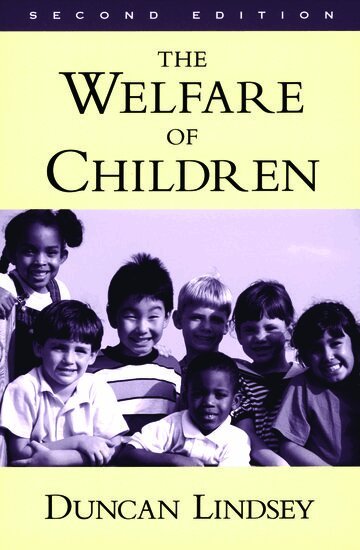
According to the United Nations' latest data, the United States has more children living in poverty than any other industrialized nation in the world. More than a fifth of all children grow up in poverty. The poverty rates for African-American and Latino children often exceeds 40 percent. Furthermore, the United States--a country that once pioneered strategies to prevent child abuse and that now spends more money fighting child abuse than any other industrialized country--also has the highest rate of child abuse in the industrialized world. Against this background, Duncan Lindsey, a leading authority on child welfare, takes a critical look at the current welfare system. He traces the transformation of child welfare into child protective services, arguing that the current focus on abuse has produced a system that is designed to protect children from physical and sexual abuse and therefore functions as a last resort for only the worst and most dramatic cases in child welfare. In a close analysis of the process of investigating child abuse, Linsey finds that there is no evidence that the transformation into protective services has reduced child abuse fatalities or provided a safter environment for children. He makes a compelling argument for the criminal justice system to assume responsibility for the problem of child abuse in order for the child welfare system to be able to adequately address the well-being of a much larger number of children now growing up in poverty.This new edition of The Welfare of Children takes into account a major legislative change since the publication of the first edition: the welfare reform legislation of 1996. This legislation has fundamentally altered the public child welfare system as broadly understood, and Lindsey thoroughly examines its implications on policy and practice, refuting the claim that welfare reform has actually reduced child poverty. The Welfare of Children, 2nd Edition is a compassionate blueprint for the comprehensive reform of the current child welfare system to one that administers to the economic security of the larger number of disadvantaged and impoverished children. Concrete policy proposals such as a Child's Future Security account, similar to the Social Security program for older citizens, will spark serious debate on a major public policy issue facing our society.
Inbunden, Engelska, 2008
753 kr
Skickas inom 5-8 vardagar
During the last decade there have been major advances in research in child welfare, the largest specialty within social work. The focus of this research has been on improving current child welfare practices and programs that protect children from abuse and neglect. The major policy and program changes in the child welfare system have been guided by these research studies, spurred by federal and state emphasis on monitoring child welfare outcomes and identifying best practices. This landmark collection gathers those research developments- and how they have been translated into policies, programs, and practice- in a single volume for the first time. Duncan Lindsey, one of the nation's foremost child welfare scholars, and Aron Shlonsky have assembled a case of the giants in the field who analyze developments in adoption, foster care, risk assessment, CPS work, welfare reform, poverty, decision making, and epidemiological studies. The final section of the book details new approaches to programs designed to combat child maltreatment and child poverty. This volume, with its unparalled breadth, depth, and up-to-date content, will define the state of the field and serve as an invaluable reference for child welfare scholars and practitioners alike.
Inbunden, Engelska, 2008
477 kr
Skickas inom 5-8 vardagar
One of the United States great promises is that all children will be given the opportunity to work to achieve a comfortable standard of living. That promise has faded profoundly for children who grow up in poverty, particularly black and Hispanic children, and many of the deepening fault lines in the social order are traceable to this disparity. In recent years the promise has also begun to fade for children of the middle class. Education and hard work, once steady paths to economic success, no longer lead as far as they once did. But that doesn't have to be the case, as Duncan Lindsey shows in this articulate, impassioned volume. We can provide true opportunity to all children, insuring them against a lifetime of inequality, and when we do, the walls dividing the country by race, ethnicity, and wealth will begin to crumble. Long a voice for combating child poverty, Lindsey takes a balanced approach that begins with a history of economic and family policy from the Great Depression and the development of Social Security and moves onward. He details the shocking extent of economic inequality in the U.S., pointing out that this wealthiest of countries also has the largest proportion of children living in poverty. Calling for reform, Lindsey proposes several viable universal income security policies for vulnerable children and families, strategies that have worked in other advanced democracies and also respect the importance of the market economy. They aim not just to reduce child poverty, but also to give all children meaningful economic opportunity. Just as Social Security alleviates the sting of poverty in old age, asset-building policies can insulate children from the cumulative effects of disadvantage and provide them with a strong foundation from which to soar. Politicians, pundits, and parents always say that children are the future, but as long as so many grow up poor or without opportunity, that slogan will sound hollow. Duncan Lindseys book should be read by anyone who wants to know how we can take real action to brighten the future for children and for society as a whole.
E-bok
PDF, Engelska, 1994172 kr
Läs direkt efter köp
Today the United States has more children living in poverty than any other industrialized nation. Some 2.1 million children are left undersupervised before and after school due to inadequate child care available to working parents. Furthermore, the U.S., a country which once pioneered strategies to prevent child abuse and which now spends more money fighting child abuse than any other industrialized country, has the world''s highest rate of child abuse. Against this background, Duncan Lindsey, a leading authority on child welfare, takes a critical look at the current child welfare system. He traces the transformation of child welfare into child protective services. The current focus on abuse has produced a system that is designed to protect children from physical and sexual abuse and therefore functions as a last resort for only the worst and most dramatic cases in child welfare. In a close analysis of the process of investigating and handling child abuse, Lindsey finds that there is no evidence that the transformation to protective services has reduced child abuse fatalities or provided a safer environment for children. He makes a compelling argument for the criminal justice system to assume responsibility for the problem of child abuse in order that the child welfare system can address the well- being of a much larger number of children. The Welfare of Children is a compassionate blueprint for comprehensive reform of the child welfare system to one that administers to the economic security of the large number of disadvantaged and impoverished children. Concrete policy proposals such as a Child''s Future Security Account, similar to the Social Security Program for older citizens, will spark serious debate on a major public policy issue facing our society.
E-bok
PDF, Engelska, 2003430 kr
Läs direkt efter köp
According to the United Nations'' latest data, the United States has more children living in poverty than any other industrialized nation in the world. More than a fifth of all children grow up in poverty. The poverty rates for African-American and Latino children often exceeds 40 percent. Furthermore, the United States--a country that once pioneered strategies to prevent child abuse and that now spends more money fighting child abuse than any other industrialized country--also has the highest rate of child abuse in the industrialized world. Against this background, Duncan Lindsey, a leading authority on child welfare, takes a critical look at the current welfare system. He traces the transformation of child welfare into child protective services, arguing that the current focus on abuse has produced a system that is designed to protect children from physical and sexual abuse and therefore functions as a last resort for only the worst and most dramatic cases in child welfare. In a close analysis of the process of investigating child abuse, Linsey finds that there is no evidence that the transformation into protective services has reduced child abuse fatalities or provided a safter environment for children. He makes a compelling argument for the criminal justice system to assume responsibility for the problem of child abuse in order for the child welfare system to be able to adequately address the well-being of a much larger number of children now growing up in poverty. This new edition of The Welfare of Children takes into account a major legislative change since the publication of the first edition: the welfare reform legislation of 1996. This legislation has fundamentally altered the public child welfare system as broadly understood, and Lindsey thoroughly examines its implications on policy and practice, refuting the claim that welfare reform has actually reduced child poverty. The Welfare of Children, 2nd Edition is a compassionate blueprint for the comprehensive reform of the current child welfare system to one that administers to the economic security of the larger number of disadvantaged and impoverished children. Concrete policy proposals such as a Child''s Future Security account, similar to the Social Security program for older citizens, will spark serious debate on a major public policy issue facing our society.
E-bok
PDF, Engelska, 2008601 kr
Läs direkt efter köp
Research has already been a significant factor in child welfare policy in recent years, but this essential new volume demonstrates that it has taken a leading role in the field to spur and guide change. In the incisive chapters gathered here, some of the field''s top investigators present their work and assess its effect on the full spectrum of child welfare services. Future generations of researchers, as well as students, practitioners, and service providers, will find the resulting text indispensable. Edited by Duncan Lindsey and Aron Shlonsky, two of the discipline''s most articulate voices, the book covers every base. The opening chapters situate child welfare research in the modern context; they are followed by discussions of evidence-based practice in the field, arguably its most pressing concern now. Recent years have seen historic rises in the number of children adopted through public agencies and, accordingly, permanent placement and family ties are critical topics that occupy the book''s core, along with chapters broaching the thorny questions that surround decision-making and risk assessment. The urgent need for a more effective use of research and evidence is highlighted again with looks at the future of child protection and how concrete data can influence policy and help children. Finally, in recognition of the growing importance of a global view, closing chapters address international issues in child welfare research, including an examination of policies from abroad and a multinational comparison of the economic challenges facing single mothers and their children. With its insightful treatment of child welfare services in terms of the broader welfare system and acknowledgment of the myriad problems child welfare agencies face, this exceptional compendium offers a rich understanding of the social conditions that influence contemporary child welfare and enables the field to move ahead without losing sight of valuable lessons that have been learned.
E-bok
PDF, Engelska, 2008397 kr
Läs direkt efter köp
One of the United States great promises is that all children will be given the opportunity to work to achieve a comfortable standard of living. That promise has faded profoundly for children who grow up in poverty, particularly black and Hispanic children, and many of the deepening fault lines in the social order are traceable to this disparity. In recent years the promise has also begun to fade for children of the middle class. Education and hard work, once steady paths to economic success, no longer lead as far as they once did. But that doesn''t have to be the case, as Duncan Lindsey shows in this articulate, impassioned volume. We can provide true opportunity to all children, insuring them against a lifetime of inequality, and when we do, the walls dividing the country by race, ethnicity, and wealth will begin to crumble. Long a voice for combating child poverty, Lindsey takes a balanced approach that begins with a history of economic and family policy from the Great Depression and the development of Social Security and moves onward. He details the shocking extent of economic inequality in the U.S., pointing out that this wealthiest of countries also has the largest proportion of children living in poverty. Calling for reform, Lindsey proposes several viable universal income security policies for vulnerable children and families, strategies that have worked in other advanced democracies and also respect the importance of the market economy. They aim not just to reduce child poverty, but also to give all children meaningful economic opportunity. Just as Social Security alleviates the sting of poverty in old age, asset-building policies can insulate children from the cumulative effects of disadvantage and provide them with a strong foundation from which to soar. Politicians, pundits, and parents always say that children are the future, but as long as so many grow up poor or without opportunity, that slogan will sound hollow. Duncan Lindseys book should be read by anyone who wants to know how we can take real action to brighten the future for children and for society as a whole.