Duncan McLaren – författare
Visar alla böcker från författaren Duncan McLaren. Handla med fri frakt och snabb leverans.
7 produkter
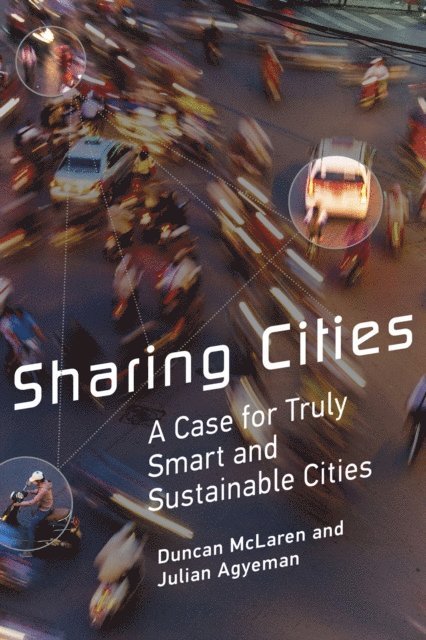
Sharing Cities
Av Julian Agyeman, Duncan McLaren
E-bok, 2015
294 kr
Lägg i varukorg
How cities can build on the “sharing economy” and smart technology to deliver a “sharing paradigm” that supports justice, solidarity, and sustainability. The future of humanity is urban, and the nature of urban space enables, and necessitates, sharing—of resources, goods and services, experiences. …
Rise and Progress of Whiskey-Drinking in Scotland, and the Working of the 'Public-Houses (Scotland) ACT', Commonly Called the Forbes McKenzie ACT
E-bok, 2016
89 kr
Lägg i varukorg
Many of the earliest books, particularly those dating back to the 1900s and before, are now extremely scarce and increasingly expensive. We are republishing these classic works in affordable, high quality, modern editions, using the original text and artwork.
Tomorrow's World
Britain's share in a sustainable future
Av Duncan McLaren, Simon Bullock m. fl.
Inbunden, 2009
2306 kr
Lägg i varukorg
20 per cent of the Earth's population currently consumes over 80 per cent of available resources. Whilst most Westerners lead lives of unprecedented material comfort fuelled by spiralling consumption patterns, 1.3 billion people exist on less than US$1 per day. As the first industrial nation and a …
Tomorrow's World
Britain's share in a sustainable future
Av Duncan McLaren, Simon Bullock m. fl.
Häftad, 1997
924 kr
Lägg i varukorg
20 per cent of the Earth's population currently consumes over 80 per cent of available resources. Whilst most Westerners lead lives of unprecedented material comfort fuelled by spiralling consumption patterns, 1.3 billion people exist on less than US$1 per day. As the first industrial nation and a …
Sharing Cities
A Case for Truly Smart and Sustainable Cities
Av Duncan McLaren, Julian Agyeman
Häftad, 2017
234 kr
Tillfälligt slut