Dustin Condren - Böcker
Visar alla böcker från författaren Dustin Condren. Handla med fri frakt och snabb leverans.
2 produkter
2 produkter
148 kr
Skickas
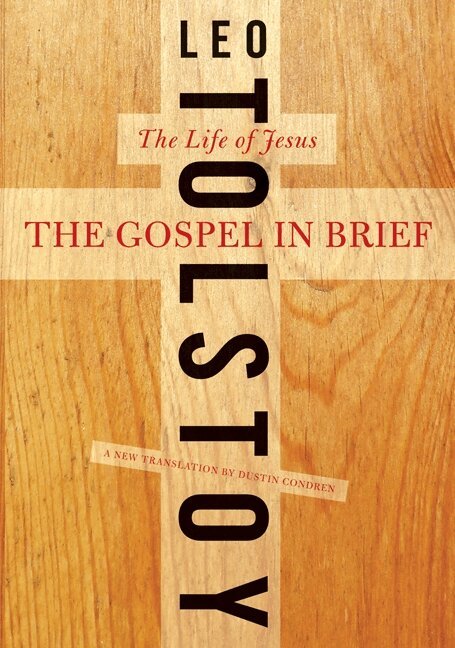
The four Gospels that begin the Bible's New Testament tell the life of Jesus. But each Gospel relates a slightly different version of events. Some stories appear only in one Gospel, while certain other stories are different in each. What Leo Tolstoy sought to do in "The Gospel In Brief" was to apply his tremendous skills as a writer to tell the life of Jesus in one seamless narrative, thus integrating the four Gospels. The result is a work that reads like a novel, complete with twelve chapters. The project was very important to Tolstoy. With "The Gospel In Brief", he sought to democratize access to the Gospel, making the life of Jesus accessible to everyone. (He particularly had in mind the Russian peasantry.) Tolstoy based his translation on his study of the original Greek versions of the Bible. Unfortunately the Russian Orthodox Church viewed the book as sacrilegious. How dare he re-write the sacred texts? The Church worked to suppress "The Gospel In Brief", and in 1901, it permanently excommunicated Tolstoy, Russia's greatest novelist.
654 kr
Skickas inom 10-15 vardagar
An Imaginary Cinema is the first systematic study of Sergei Eisenstein's unrealized films as well as a deeply informed historical and theoretical inquiry into the role and meaning of the unmade in his oeuvre. Eisenstein directed some of the twentieth century's most important films, from the early classic of montage, Battleship Potemkin, to his late masterpiece, Ivan the Terrible. Alongside these, however, the Soviet filmmaker also toiled over a compelling array of unrealized projects, from ideas that never grew beyond complex, passionate notebook scrawls and sketches to productions that were mounted and shot to some degree of completion without ever being finished. Working from the archival remnants of several of the director's most fascinating unrealized projects—from his bold vision to film Marx's Das Kapital to his time in Hollywood struggling to adapt Dreiser's An American Tragedy—Dustin Condren's book reveals new aspects of Eisenstein's genius, showing the filmmaker in a constant state of process, open to working toward impossible and sometimes utopian ends, and committed to the pursuit of creative and theoretical discovery. Condren's analysis of these unrealized projects in An Imaginary Cinema reveals Eisenstein at crucial moments of his personal and artistic biography, and it also tells the wider story of a canonical artist negotiating the political labyrinths of Stalinist Russia, the economic pitfalls of Hollywood, and the technological shifts of early cinema.