E. Burke Rochford - Böcker
Visar alla böcker från författaren E. Burke Rochford. Handla med fri frakt och snabb leverans.
3 produkter
3 produkter
370 kr
Skickas inom 5-8 vardagar
You have seen them dancing and chanting on street corners or soliciting donations in airports. Their shaven heads, long robes, and sense for the dramatic set them apart from others around them and generate curiosity, sometimes mistrust, wherever they appear. Sociologist E. Burke Rochford, Jr., began his study of the Hare Krishna movement in America in the mid-1970s, only to find himself increasingly drawn into the movement even as he struggled to maintain a critical distance. Convinced to wear beads, chant, and take part in religious ceremonies, as well as to move in for occasional stays, Rochford found his new form of devotion a cause of concern for his family, friends, and colleagues. Participation in the movement's activities, however, enabled him to experience from within the forces at play between a society often intolerant of religious deviation and a religion dedicated to the continual recruitment of new followers. Rochford uses several different sociological approaches--the life history of a single devotee, analysis of male-female recruitment patterns, surveys of members, and extensive field notes--to present he reader with a vivid portrait of the Hare Krishna movement as it has developed and changed in the first twenty years of its existence.
954 kr
Skickas inom 10-15 vardagar
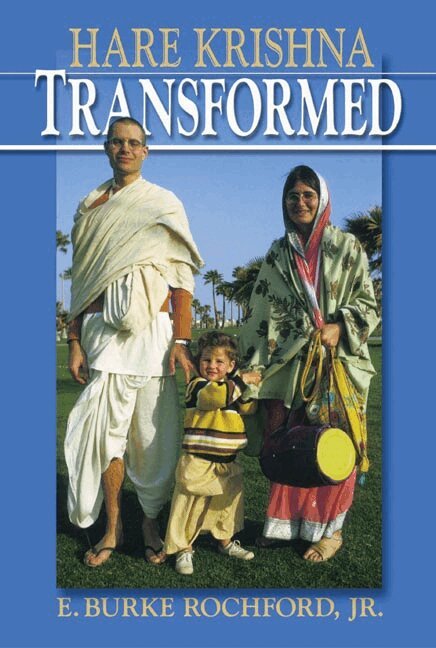
Most widely known for its adherents chanting "Hare Krishna" and distributing religious literature on the streets of American cities, the Hare Krishna movement was founded in New York City in 1965 by A. C. Bhaktivedanta Swami Prabhupada. Formally known as the International Society for Krishna Consciousness, or ISKCON, it is based on the Hindu Vedic scriptures and is a Western outgrowth of a popular yoga tradition which began in the 16th century.In its first generation ISKCON actively deterred marriage and the nuclear family, denigrated women, and viewed the raising of children as a distraction from devotees' spiritual responsibilities. Yet since the death of its founder in 1977, there has been a growing women's rights movement and also a highly publicized child abuse scandal. Most strikingly, this movement has transformed into one that now embraces the nuclear family and is more accepting of both women and children, steps taken out of necessity to sustain itself as a religious movement into the next generation. At the same time, it is now struggling to contend with the consequences of its recent outreach into the India-born American Hindu community.Based on three decades of in-depth research and participant observation, Hare Krishna Transformed explores dramatic changes in this new religious movement over the course of two generations from its founding.
362 kr
Skickas inom 7-10 vardagar
Most widely known for its adherents chanting "Hare Krishna" and distributing religious literature on the streets of American cities, the Hare Krishna movement was founded in New York City in 1965 by A. C. Bhaktivedanta Swami Prabhupada. Formally known as the International Society for Krishna Consciousness, or ISKCON, it is based on the Hindu Vedic scriptures and is a Western outgrowth of a popular yoga tradition which began in the 16th century.In its first generation ISKCON actively deterred marriage and the nuclear family, denigrated women, and viewed the raising of children as a distraction from devotees' spiritual responsibilities. Yet since the death of its founder in 1977, there has been a growing women's rights movement and also a highly publicized child abuse scandal. Most strikingly, this movement has transformed into one that now embraces the nuclear family and is more accepting of both women and children, steps taken out of necessity to sustain itself as a religious movement into the next generation. At the same time, it is now struggling to contend with the consequences of its recent outreach into the India-born American Hindu community.Based on three decades of in-depth research and participant observation, Hare Krishna Transformed explores dramatic changes in this new religious movement over the course of two generations from its founding.