Earl Shorris - Böcker
Visar alla böcker från författaren Earl Shorris. Handla med fri frakt och snabb leverans.
9 produkter
9 produkter
260 kr
Skickas inom 7-10 vardagar
The movement transcends political parties, has no formal structure, no acknowledged leaders, and no sworn loyalty except to God, whose will it interprets according to its fears and desires. Yet it is not an abstraction. It elects our presidents and legislatures and informs their decisions while in office.The movement started at the end of World War II when nuclear weapons, the Holocaust, and then the Cold War led to the fear of mass death that infected American views of justice, ethics, and global politics. It gradually replaced the New Deal.As conversations with religious and political leaders, churchgoers, and pollsters make clear, after 9/11 the nation became increasingly pessimistic. Americans more than ever embraced simplistic, self-serving solutions to questions of personal and national destiny.To regain the best in the American character, we must recognize the existence of a new national movement, define it, and learn how it grows. This book is a first step.
232 kr
Tillfälligt slut
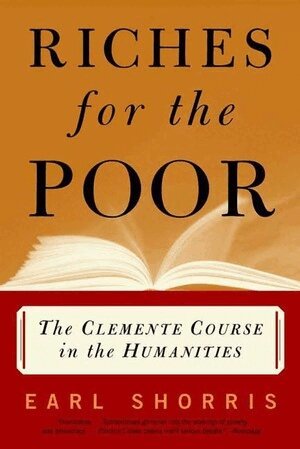
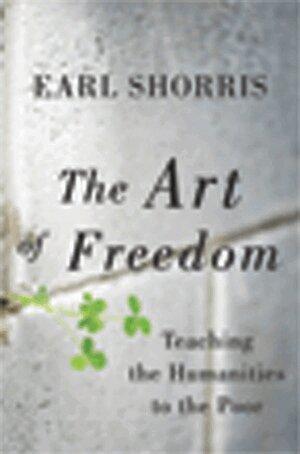
Seeking answers to the toughest questions about poverty in the United States, Earl Shorris had looked everywhere. At last, one resounding answer came from a conversation with a woman in a maximum-security prison: the difference between rich and poor is the humanities. Shorris took that idea and started a course at the Clemente Family Guidance Center in New York. With a faculty of friends, he began teaching the great works of literature and philosophy—from Plato to Kant, from Cervantes to Garcia Marquez—at the college level to dropouts, immigrants, and ex-prisoners. From that first class came two dentists, a nurse, two PhDs, a fashion designer, a drug counselor, and other successes.Over the course of seventeen years the course expanded to many U.S. cities and foreign countries. Now Earl Shorris has written the stories of those who teach and those who study the humanities—a tribute to the courage of people rising from unspeakable poverty to engage in dialogue with professors from great universities around the world.This year, in a high school on the South Side of Chicago, a Clemente Course has begun that may change the character of public education in America and perhaps the world.
469 kr
Skickas inom 5-8 vardagar
Told from the point of view of an ancient shaman, this is the dark and mystical story of Mexico's greatest revolutionary general, Pancho Villa. Shedding the Hollywood mantle of the drunken, womanizing bandit-turned-hero, the Villa who comes to life in this extraordinary novel is part man and part myth, part visionary hoodlum and part brilliant general.A troubled childhood--marked by his father's early death in the fields and his sister's rape by a local landowner--and a prophetic dream propel young Villa through a period of lawlessness and drifting and into life as a military leader. The story moves convincingly through the events of Villa's life, showing him to be a man of fierce passions and moral conviction, a natural leader for the rebellion.
278 kr
Skickas inom 5-8 vardagar
"Rich people learn the humanities; you didn't. . . . It is generally accepted in America that the liberal arts and humanities in particular belong to the elite. I think you're the elite." In this groundbreaking work, Shorris examines the nature of poverty in America today. Why are people poor, and why do they stay poor? Shorris argues that they lack politics, or the ability to participate fully in the public world; knowing only the immediacy and oppression of force, the poor remain trapped and isolated. To test his theory, Shorris creates an experimental school teaching the humanities to poor people, giving them the means to reflect and negotiate rather than react. The results are nothing short of astonishing. Originally published in hardcover under the title New American Blues.
392 kr
Skickas inom 5-8 vardagar
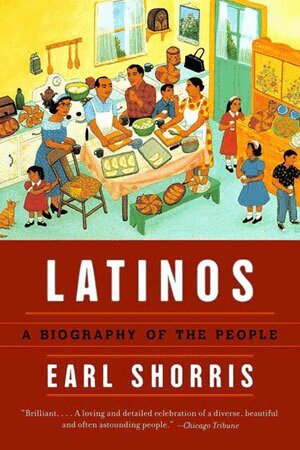
They are sometimes called the people who died twice, once at the hands of the Spaniards and their brutal process of civilization, then at the hands of Anglos, practicing a subtler exploitation. They are Latinos, the fastest-growing minority in the United States. Earl Shorris's deeply moving narrative—enlivened by biographical sketches of Mexican Americans, Cuban Americans, Puerto Ricans, and many others struggling with the burden of a rich and terrible history—illuminates every aspect of the Latino experience in America, from language to education to social and political organization. "[A] powerful, beautifully-written and thoughtful book...likely to remain unequaled in its sweep and profundity for some time to come."—J. Jorge Klor de Alva, The New York Times Book Review "A smart, perceptive and wonderfully readable book.... Should be required reading for anyone who would hope to understand America."—Gerald Volgenau, Boston Globe
In the Language of Kings: An Anthology of Mesoamerican Literature, Pre-Columbian to the Present
Häftad, Engelska, 2002
534 kr
Skickas inom 3-6 vardagar
234 kr
Tillfälligt slut
The Life and Times of Mexico is a grand narrative driven by 3,000 years of history: the Indian world, the Spanish invasion, Independence, the 1910 Revolution, the tragic lives of workers in assembly plants along the border, and the experiences of millions of Mexicans who live in the United States. Mexico is seen here as if it were a person, but in the Aztec way; the mind, the heart, the winds of life; and on every page there are portraits and stories: artists, shamans, teachers, a young Maya political leader; the rich few and the many poor. Earl Shorris is ingenious at finding ways to tell this story: prostitutes in the Plaza Loreto launch the discussion of economics; we are taken inside two crucial elections as Mexico struggles toward democracy; we watch the creation of a popular "telenovela" and meet the country's greatest living intellectual. The result is a work of magnificent scope and profound insight into the divided soul of Mexico.
299 kr
Skickas inom 5-8 vardagar
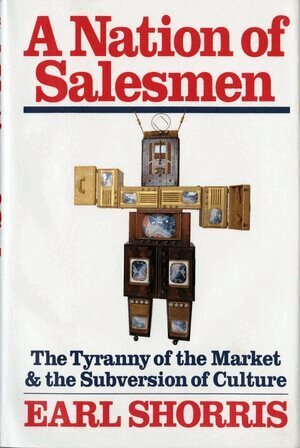
In this groundbreaking book on the nature and meaning of the sale, Earl Shorris takes us on a journey that starts in Eden and comes at last to a consideration of where we are and what we have become by the late twentieth-century, when selling finally became the dominant human activity. Shorris focuses on the perfection of this particular art in America, where the vast frontier with its isolated settlements cast the salesman in a heroic role: he was literally the bearer of culture, the source of a panoply of needed and wanted items, everything from parasols to plowshares. He was Prometheus.All of this changed dramatically in the years following World War II, when it dawned on manufacturers and sellers that the American economy was producing more goods than people wanted or needed. Demand would have to be created in order to sustain the expansion of markets, and then, as the economy became oversold, the role of the salesman changed: his task was now to kill the competition.The argument of this brilliant work draws on classical philosophy, contemporary politics, psychology, and economics; it is grounded in the author's long experience as an advertising executive and consultant to major corporations. His firsthand observations and interviews with salesmen of every description form the anecdotal bedrock of the narrative, which is further enlivened by a series of fictions in which salesmen practice aspects of their trade. Out of these stories and insights emerges a chilling new paradigm of human life in our times: that of Homo vendens. Shorris shows us how America became a nation of salesmen, and what this means to our economy, our politics, our culture, and our character—especially our freedom to live as dignified persons.
305 kr
Skickas inom 5-8 vardagar
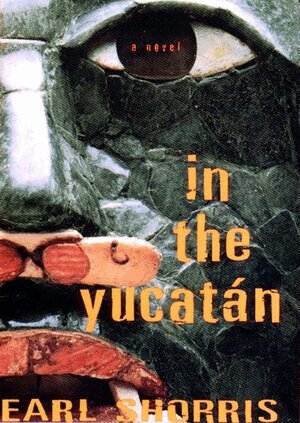
In the central Yucatan a group of Maya Indian workers revolt against the corrupt oligarchy of government, business, the official union, and the press. Two young men—a traditional Maya leader and a Mexican-American lawyer—are drawn into ever deeper commitment to the struggle. When they are caught in a trap and thrown into jail, the lawyer declares a hunger strike. The story of the Maya workers, and of their village, is narrated in a series of vivid flashbacks that alternate with the grim deprivations and interrogations in the prison. Day by day, the young lawyer approaches death, and in his discussions with his friend and cell mate, there emerge two different definitions of love, loyalty, and courage, each man's version determined by the culture from which he springs. One of the chief delights of this rich, intense storytelling is the introduction it provides to the Maya understanding of time, medicine, and proper behavior. Although everything that happens in the novel could have appeared in the latest news stories out of Mexico, nothing happens quite as expected, and the startling conclusion could only have taken place in the Yucatan.