Ece Özlem Atikcan - Böcker
Visar alla böcker från författaren Ece Özlem Atikcan. Handla med fri frakt och snabb leverans.
2 produkter
2 produkter
393 kr
Skickas inom 5-8 vardagar
Research Methods in the Social Sciences is a comprehensive yet compact A-Z for undergraduate and postgraduate students undertaking research across the social sciences, featuring 71 entries that cover a wide range of concepts, methods, and theories.Each entry begins with an accessible introduction to a method, using real-world examples from a wide range of academic disciplines, before discussing the benefits and limitations of the approach, its current status in academic practice, and finally providing tips and advice for readers on when and how to apply the method in their own research. Wide ranging and interdisciplinary, the text covers both well-established concepts and emerging ideas, such as big data and network analysis, for qualitative and quantitative research methods.All entries feature extensive cross-referencing, providing ease of navigation and, pointing readers to related concepts, and to help build their overall understanding of research methods.
394 kr
Skickas inom 10-15 vardagar
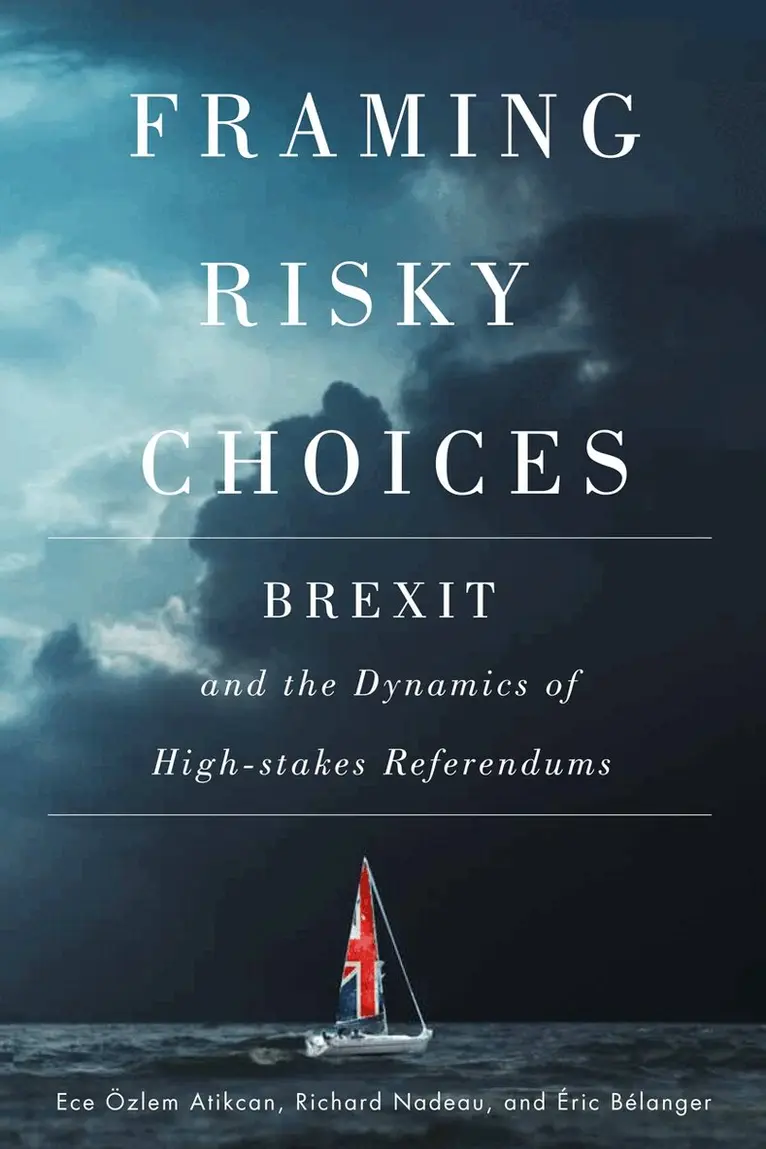
The majority of policymakers, academics, and members of the general public expected British citizens to vote to remain in the European Union in the 2016 referendum. This perception was based on the well-established idea that voters don't like change or uncertainty. So why did the British public vote to take such a major economic risk? Framing Risky Choices addresses this question by placing the Brexit vote in the bigger picture of EU and Scottish independence referendums. Drawing from extensive interviews and survey data, it asserts that the framing effect – mobilizing voters by encouraging them to think along particular lines – matters, but not every argument is equally effective. Simple, evocative, and emotionally compelling frames that offer negativity are especially effective in changing people's minds. In the Brexit case, the Leave side neutralized the economic risks of Brexit and proposed other risks relating to remaining in the EU, such as losing control of immigration policy and a lack of funding for the National Health Service. These concrete, impassioned arguments struck an immediate and familiar chord with voters. Most intriguingly, the Remain side was silent on these issues, without an emotional case to present. Framing Risky Choices presents a multi-method, comparative, state-of-the-art analysis of how the Brexit campaign contributed to the outcome. Uncovering the core mechanism behind post-truth politics, it shows that the strength of an argument is not its empirical validity but its public appeal.