Ed Bates - Böcker
Visar alla böcker från författaren Ed Bates. Handla med fri frakt och snabb leverans.
4 produkter
4 produkter
788 kr
Skickas inom 5-8 vardagar
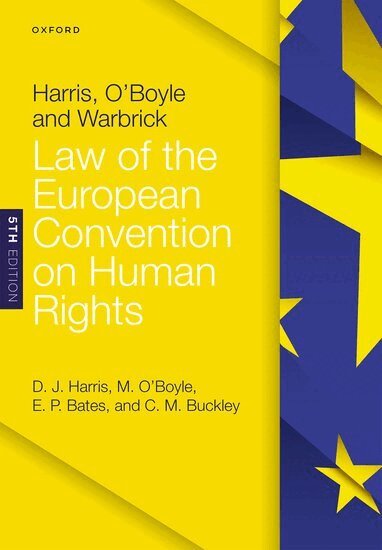
Now in its fifth edition, Harris, O'Boyle, and Warbrick: Law of the European Convention on Human Rights remains an indispensable resource for undergraduates, postgraduates, and practitioners alike. The new edition builds on the strengths of previous editions, providing an up-to-date, clear, and comprehensive account of Strasbourg case law and its underlying principles. It sets out and critically analyses each Convention article (including those addressed by relevant Protocols), and thoroughly examines the system of supervision. The book also addresses the pressures and challenges facing the Strasbourg system in the twenty-first century.Digital formatsThis fifth edition is available for students and institutions to purchase in a variety of formats.The e-book offers a mobile experience and convenient access along with functionality tools, navigation features, and links that offer extra learning support: www.oxfordtextbooks.co.uk/ebooks
The Evolution of the European Convention on Human Rights
From Its Inception to the Creation of a Permanent Court of Human Rights
Inbunden, Engelska, 2010
3 059 kr
Skickas inom 5-8 vardagar
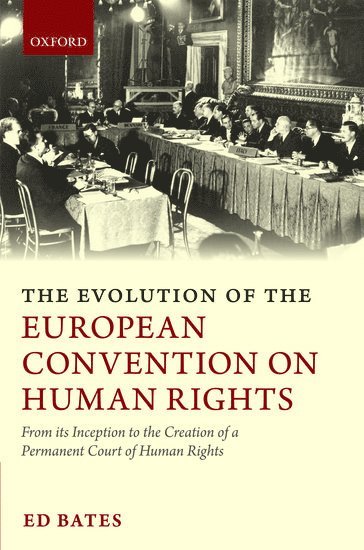
The European Convention on Human Rights underwent a spectacular evolution over the first fifty years of its life. In recent times the European Court of Human Rights has been compared to a quasi-constitutional court for Europe in the field of human rights, and for some time the Convention has been viewed as a European Bill of Rights. The 'coming of age' of the ECHR system in the late 1990s was marked by the entry into force of Protocol 11, creating a new, full time Court. By contrast those who first proposed a European human rights guarantee were driven by an ambition to put in place a collective pact to prevent the re-emergence of totalitarianism in 'free' Europe. They were motivated by grisly memories of human rights abuse associated with World War Two, and the protection of 'human rights' was seen in that light. When the Convention was opened for signature in 1950 it was viewed by many with scepticism and disappointment. The Convention system took many years to get established. In the mid-1960s doubts were expressed as to whether the Court had a future and in the 1970s the Convention system of control faced a number of serious challenges.This book examines the story of the evolution of the Convention over its first 50 years (1948-1998). It reflects on the Convention's origins and charts the slow progress that it made over the 1950s and 1960s, before, in the late 1970s, the European Court of Human Rights delivered a series of landmark judgments which proved to be the foundation stones for the European Bill of Rights that we know today.
Russia, the Council of Europe and the European Convention on Human Rights
A Troubled Membership and Its Legacy
Inbunden, Engelska, 2025
1 032 kr
Skickas inom 7-10 vardagar
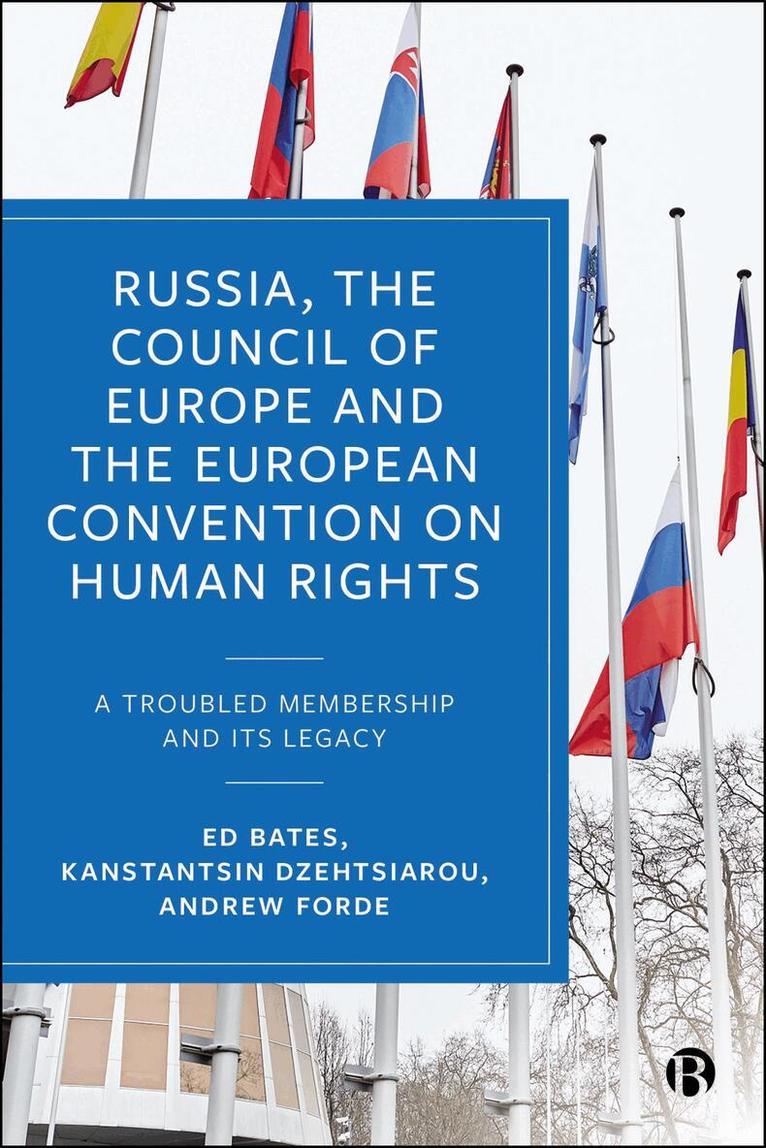
In March 2022, following the invasion of Ukraine, Russia was expelled from the Council of Europe after 26 years as a member. This timely and in-depth analysis explores Russia's tumultuous relationship with the Council of Europe and European Court of Human Rights. It examines Russia’s membership record and the profound impacts of its expulsion for Europe’s human rights system. The authors provide valuable insights for future policy to safeguard the integrity of international human rights institutions. The book fills an important gap in legal scholarship by exploring the legality and legitimacy of Russia’s membership and expulsion, and represents a key reference in understanding the challenge of protecting human rights in the face of rising authoritarianism.
Russia, the Council of Europe and the European Convention on Human Rights
A Troubled Membership and Its Legacy
Häftad, Engelska, 2025
331 kr
Skickas
In March 2022, following the invasion of Ukraine, Russia was expelled from the Council of Europe after 26 years as a member. This timely and in-depth analysis explores Russia's tumultuous relationship with the Council of Europe and European Court of Human Rights. It examines Russia’s membership record and the profound impacts of its expulsion for Europe’s human rights system. The authors provide valuable insights for future policy to safeguard the integrity of international human rights institutions. The book fills an important gap in legal scholarship by exploring the legality and legitimacy of Russia’s membership and expulsion, and represents a key reference in understanding the challenge of protecting human rights in the face of rising authoritarianism.