Ed Douglas – författare
Visar alla böcker från författaren Ed Douglas. Handla med fri frakt och snabb leverans.
11 produkter
11 produkter
229 kr
Skickas inom 5-8 vardagar
246 kr
Skickas inom 5-8 vardagar
347 kr
Skickas inom 5-8 vardagar
227 kr
Skickas inom 3-6 vardagar
163 kr
Skickas
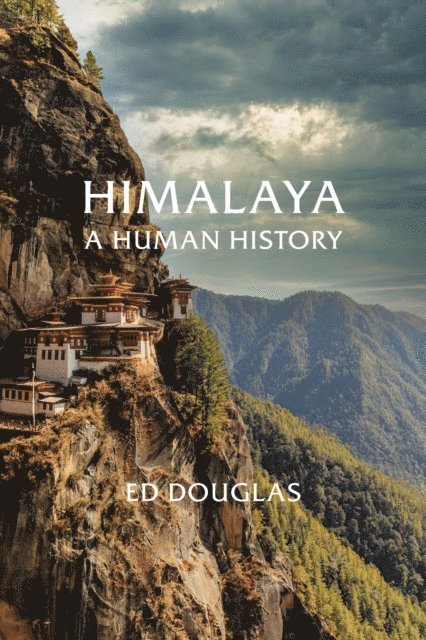
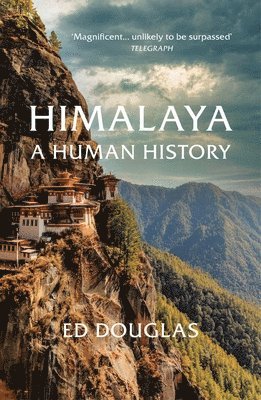
Empires, explorers and sacred summits - an epic story of the roof of the world.In Himalaya, award-winning writer and climber Ed Douglas traces the intertwined histories of the mountains and their people. From Buddhist pilgrims and imperial explorers to mountaineers and freedom fighters, he reveals how these peaks have shaped spirituality, science and geopolitics for millennia.Drawing on years of travel and meticulous research, Douglas combines geography, biography and adventure into a sweeping narrative of conflict, resilience and wonder across the most dramatic landscape on Earth.‘Magnificent… unlikely to be surpassed’ Telegraph ‘A magisterial account of the complex human history of the Himalaya’ The Times
252 kr
Skickas inom 10-15 vardagar
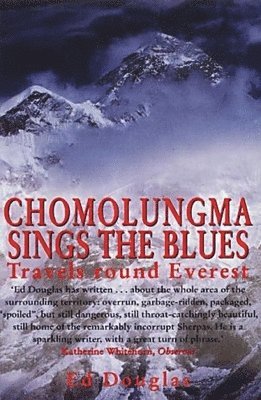
If there is one mountain that is known across the whole world, it must be the highest - Everest. To the people who live at its feet she is Chomolungma, Goddess Mother of the World. The disappearance of George Mallory and Andrew Irvine close to the summit in 1924 lent the mountain a tragic romanticism, of young men risking everything for a dream. When Norgay Tenzing and Ed Hillary became the first men to stand on the summit in 1953, it was the crowning glory for the coronation of Elizabeth II.But nearly fifty years on, there are scores of ascents nearly every season. There are stories of bodies and heaps of garbage abandoned on the slopes, of the loss of cultural identity among the Sherpas and Tibetans who live at the foot of Everest. Ed Douglas spent parts of 1995 and 1996 travelling in Nepal and Tibet, talking to politicians and environmentalists, to mountaineers and local people. He found a poor region struggling to develop, and encountering environmental problems far greater than rubbish left by climbers. Local people are resourceful and cultured, reliant on the work the mountaineers and the mountain provide, but striving to find a balance between the new and the old.
266 kr
Kommande
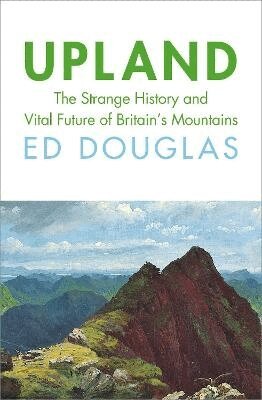
The first complete history of Britain’s mountains, capturing the beauty, tragedy and pivotal role of these dramatic landscapes in the nation’s past and futureBritain’s mountains are our grandest and wildest places, their vast openness providing inspiration and escape. But they are now so revered that we overlook the many peoples who long inhabited them and the dramatic history of plunder and dispossession that explains how strangely empty these regions have actually become.From the earliest Britonnic tribes to present-day tensions between farmers, tourists and ecological activists, Upland repopulates Britain’s mountains with the kings and monks, soldiers and poets, engineers and industrialists, visionaries and campaigners who made them what they are. Derided for centuries as uncivilised wastes, Britain’s uplands in fact hosted richly cultured, distinctive and resilient populations. And yet by the time Romantic poets ‘discovered’ the beauty of these places and industrial workers sought escape in them, the land itself had been denuded by clearances, famine and the needs of sheep and landowners. The creation of national parks has since ensured their preservation, but as activists now see mountains as a logical place to begin restoring biodiversity, Britain’s uplands have once again become sites of conflict.As the poet Waldo Williams wrote, mountains are rich in their poverty. As Upland shows, the tension between upland communities and those who wish to control them is as old as the hills. To appreciate that richness and to understand that tension, this book provides the history of Britain from a fresh perspective: the view from the mountains. There has never been more urgent need for it.
168 kr
Skickas
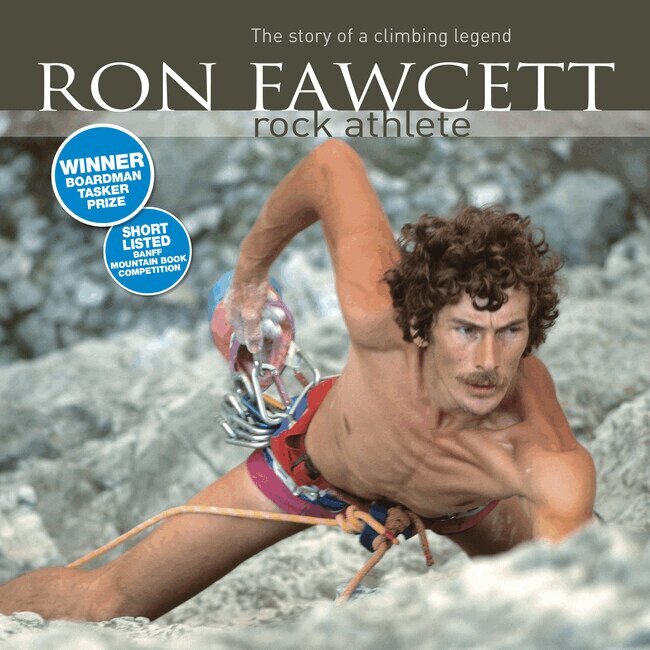
WINNER - The Boardman Tasker Prize for Mountain Literature. Ron Fawcett is a natural-born climber. In 1969, while still at school in his native Yorkshire, he tied into a climbing rope for the first time and was instantly hooked. From that moment on, it seemed nothing else in his life mattered nearly as much as his next vertical fix.Ten years later, Fawcett was the most famous rock climber in Britain and among the best in the world, part of a new wave whose dedication to training transformed the sport, pushing standards further and faster than ever before – or since. His legacy of new climbs ranks him alongside the very best in the history of the sport.He was also the first to style himself a professional rock climber, starring in the landmark television documentary Rock Athlete, and appearing on the covers of magazines around the world. But far from enjoying the fame, Fawcett found the pressures of the limelight too much to bear, and at the end of the 1980s he faded from view.Now, for the first time, he tells his extraordinary story, of how his love of nature and the outdoors developed into a passion for climbing that took him to the top – and almost consumed him.
254 kr
Skickas
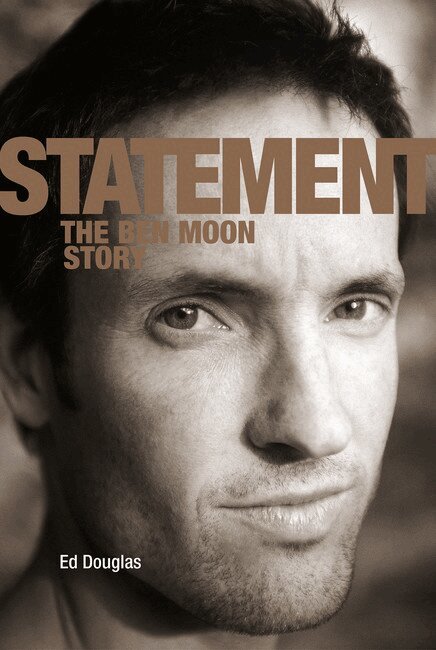
'Ever since I first set foot on rock at the tender age of seven years, climbing has been the most important thing in my life. In fact I would go so far as to say it is my reason for living and as long as I am able to climb I hope I will. It is from climbing I draw my inspiration for life.' On 14 June 1990, at Raven Tor in the Derbyshire Peak District, twenty-four-year-old Ben Moon squeezed his feet into a pair of rock shoes, tied in to his rope, chalked his fingers and pulled on to the wickedly overhanging, zebra-striped wall of limestone. Two minutes later he had made rock-climbing history with the first ascent of Hubble, now widely recognised as the world's first F9a. Born in the suburbs of London in 1966, Moon started rock climbing on the sandstone outcrops of Kent and Sussex. A pioneer in the sport-climbing revolution of the 1980s and a bouldering legend in the 1990s, he is one of the most iconic rock climbers in the sport's history, In Statement, Moon's official biography, award-winning writer Ed Douglas paints a portrait of a climbing visionary and dispels the myth of Moon as an anti-traditional climbing renegade.Interviews with Moon are complemented with insights from family and friends and extracts from magazines and personal diaries and letters.
Magician's Glass
Character and fate: eight essays on climbing and the mountain life
Häftad, Engelska, 2017
191 kr
Skickas inom 5-8 vardagar
'How much risk is worth taking for so beautiful a prize?’The Magician’s Glass by award-winning writer Ed Douglas is a collection of eight recent essays on some of the biggest stories and best-known personalities in the world of climbing.In the title essay, he writes about failure on Annapurna III in 1981, one of the boldest attempts in Himalayan mountaineering on one of the most beautiful lines – a line that remains unclimbed to this day.Douglas writes about bitter controversies, like that surrounding Ueli Steck’s disputed solo ascent of the south face of Annapurna, the fate of Toni Egger on Cerro Torre in 1959 – when Cesare Maestri claimed the pair had made the first ascent, and the rise and fall of Slovenian ace Tomaz Humar. There are profiles of two stars of the 1980s: the much-loved German Kurt Albert, the father of the ‘redpoint’, and the enigmatic rock star Patrick Edlinger, a national hero in his native France who lost his way.In Crazy Wisdom, Douglas offers fresh perspectives on the impact mountaineering has on local communities and the role climbers play in the developing world. The final essay explores the relationship between art and alpinism as a way of understanding why it is that people climb mountains.
254 kr
Skickas
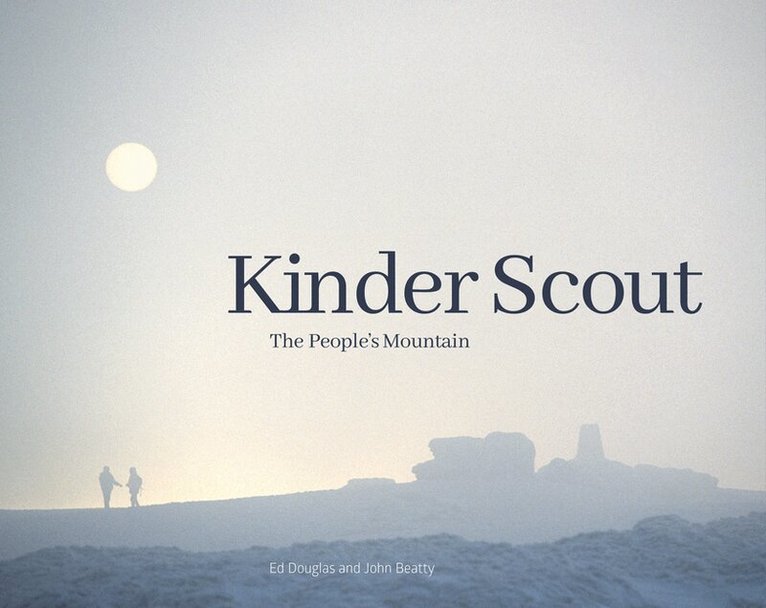
'An exceptional book.' Robert Macfarlane, author of The Lost Words, Landmarks and Mountains of the Mind‘We made Kinder Scout, not just metaphorically, or metaphysically, not just with our stories and our battles, but literally changed its shape, from the peat washing off its summit, to the drystone walls that turn the hillside into a harmonious grid, the trees that are and more often aren’t there, to the creatures that we’ve allowed to remain and those we’ve done away with. It’s our mountain.’In 1951 the Peak District was designated the UK’s first national park: a commitment to protect and preserve our countryside and wild places. Sandwiched between Manchester and Sheffield, and sitting at the base of the Pennines, it is home to Kinder Scout, Britain’s most popular ‘mountain’, a beautiful yet featureless and disorientating plateau which barely scrapes the 600-metre contour, whose lower slopes bore witness in 1932 to a movement of feet, a pedestrian rebellion, which helped shape modern access legislation: the Kinder Mass Trespass.But Kinder Scout’s story is about much more than the working class taking on the elite. Marked by the passage of millions of feet and centuries of farming, a graveyard for lost souls and doomed aircraft, this much-loved mountain is a sacred canvas on which mankind has scratched and scraped its likeness for millennia. It is a record of our social and political history, of conflict and community.Writer Ed Douglas and photographer John Beatty are close friends and have a shared history with Kinder going back decades. In this unique collaboration they reveal the social, political, cultural and ecological developments that have shaped the physical and human landscape of this enigmatic and treasured hill.Kinder Scout: The People’s Mountain is a celebration of a northern English mountain and our role in its creation.