Ed. Regis - Böcker
Visar alla böcker från författaren Ed. Regis. Handla med fri frakt och snabb leverans.
9 produkter
9 produkter
185 kr
Skickas inom 5-8 vardagar
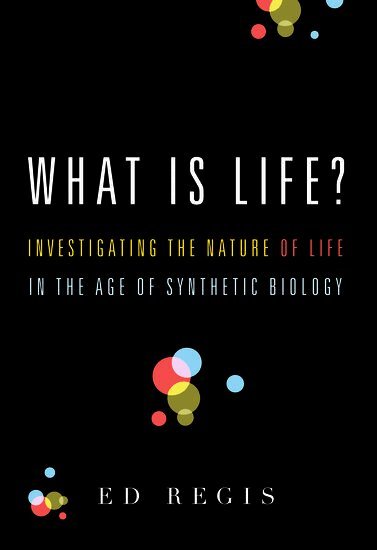
Erwin Schrödinger's 1944 classic What Is Life? is a small book that occupies a large place among the great written works of the twentieth century. It is said that it helped launch the modern revolution in biology and genetics, and inspired a generation of scientists, including Watson and Crick, to explore the riddle of life itself. Now, more than sixty years later, science writer Ed Regis offers an intriguing look at where this quest stands today. Regis ranges widely here, illuminating many diverse efforts to solve one of science's great mysteries. He examines the genesis of Schrödinger's great book--which first debuted as three public lectures in Dublin--and details the fantastic reception his ideas received, both in Europe and America. Regis also introduces us to the work of a remarkable group of scientists who are attempting literally to create life from scratch, starting with molecular components that they hope to assemble into the world's first synthetic living cell. The book also examines how scientists have unlocked the "three secrets of life," describes the key role played by ATP ("the ultimate driving force of all life"), and outlines the many attempts to explain how life first arose on earth, a puzzle that has given birth to a wide range of theories (which Francis Crick dismissed as "too much speculation running after too few facts"), from the primordial sandwich theory, to the theory that life arose in clay, in deep-sea vents, or in oily bubbles at the seashore, right up to Freeman Dyson's "theory of double origins." Written in a lively and accessible style, and bringing together a wide range of cutting-edge research, What is Life? makes an illuminating contribution to this ancient and ever-fascinating debate.
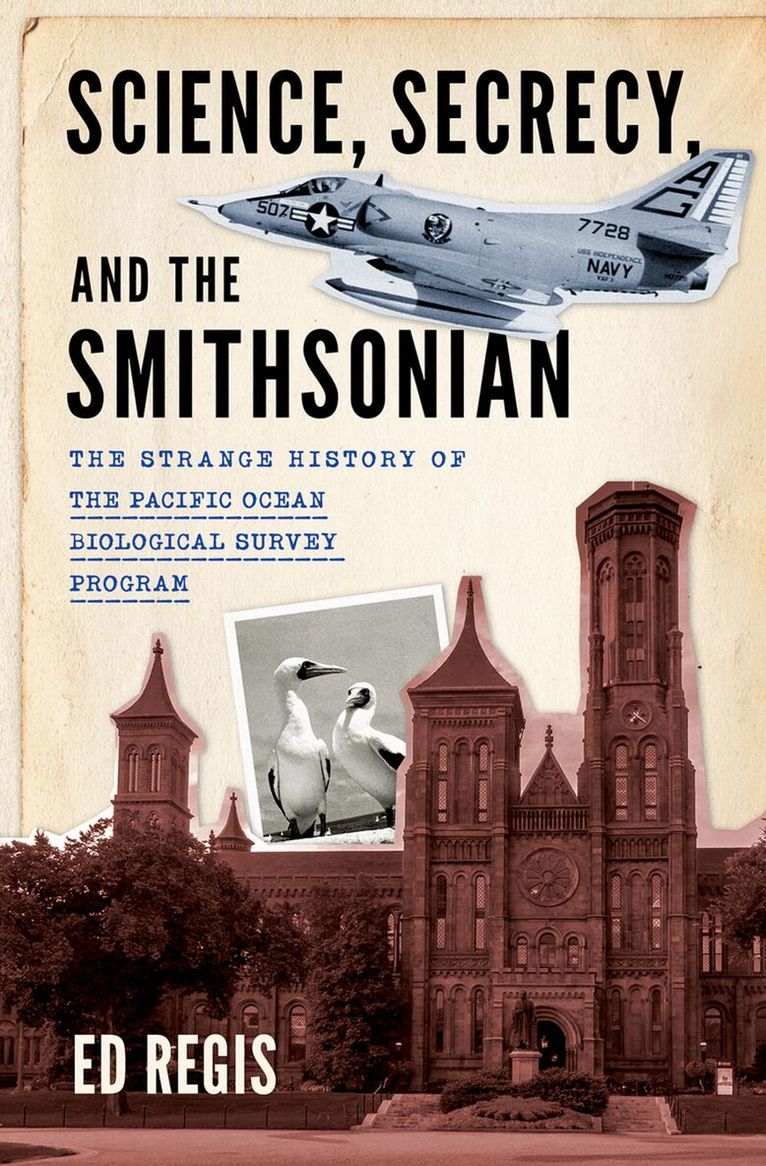
Science, Secrecy, and the Smithsonian
The Strange History of the Pacific Ocean Biological Survey Program
Inbunden, Engelska, 2023
350 kr
Skickas inom 5-8 vardagar
This is the story of how the Smithsonian Institute became intertwined in a secret biological warfare project.During the 1960s, the Smithsonian Institution undertook a large-scale biological survey of a group of uninhabited tropical islands in the Pacific. It was one of the largest and most sweeping biological survey programs of all time, a six-year-long enterprise during which Smithsonian personnel banded 1.8 million birds, captured live specimens and took blood samples, and catalogued the avian, mammalian, reptile, and plant life of 48 Pacific islands. But there was a twist. The study had been initiated, funded, and was overseen by the U.S. Biological Laboratories at Fort Detrick, Maryland. The home of the American biological warfare program. In signing the contract to perform the survey, the Smithsonian became a literal subcontractor to a secret biological warfare project. And by participating in the survey, the Smithsonian scientists were paving the way for top-secret biological warfare tests in the Pacific. Critics charged the Smithsonian with having entered into a Faustian bargain that made the institution complicit in the sordid business of biological warfare, a form of combat which, if it were ever put into practice and used against human populations, could cause mass disease, suffering, and death. The Smithsonian had no proper role in any such activities, said the critics, and should never have undertaken the survey. Science, Secrecy, and the Smithsonian: The Strange History of the Pacific Ocean Biological Survey Program explores the workings of the survey program, places it in its historical context, describes the military tests that followed, and evaluates the critical objections to the Smithsonian's participation in the project.
Who Got Einstein's Office?: Eccentricity and Genius at the Institute for Advanced Study
Häftad, Engelska, 1988
286 kr
Skickas inom 3-6 vardagar
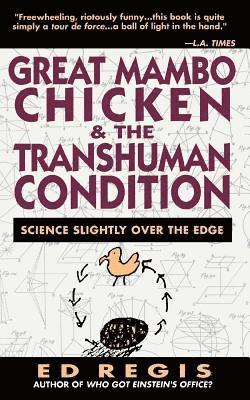
Great Mambo Chicken and the Transhuman Condition: A Season at a Hard Luck Horse Track
Häftad, Engelska, 1991
286 kr
Skickas inom 3-6 vardagar
520 kr
Skickas inom 5-8 vardagar
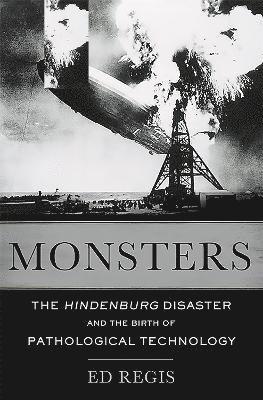
Oh, the humanity!" Radio reporter Herbert Morrison's words on witnessing the destruction of the Hindenburg are etched in our collective memory. Yet, while the Hindenburg ,like the Titanic ,is a symbol of the technological hubris of a bygone era, we seem to have forgotten the lessons that can be learned from the infamous 1937 zeppelin disaster.Zeppelins were steerable balloons of highly flammable, explosive gas, but the sheer magic of seeing one of these behemoths afloat in the sky cast an irresistible spell over all those who saw them. In Monsters , Ed Regis explores the question of how a technology now so completely invalidated (and so fundamentally unsafe) ever managed to reach the high-risk level of development that it did. Through the story of the zeppelin's development, Regis examines the perils of what he calls pathological technologies",inventions whose sizeable risks are routinely minimized as a result of their almost mystical allure.Such foolishness is not limited to the industrial age: newer examples of pathological technologies include the US government's planned use of hydrogen bombs for large-scale geoengineering projects the phenomenally risky, expensive, and ultimately abandoned Superconducting Super Collider and the exotic interstellar propulsion systems proposed for DARPA's present-day 100 Year Starship project. In case after case, the romantic appeal of foolishly ambitious technologies has blinded us to their shortcomings, dangers, and costs.Both a history of technological folly and a powerful cautionary tale for future technologies and other grandiose schemes, Monsters is essential reading for experts and citizens hoping to see new technologies through clear eyes.
247 kr
Skickas inom 7-10 vardagar
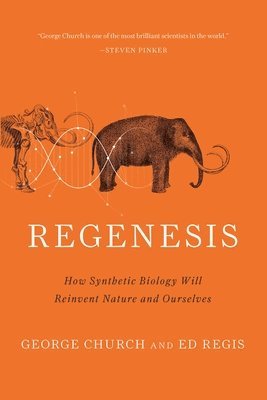
Bold and provocative, Regenesis tells of recent advances that may soon yield endless supplies of renewable energy, increased longevity and the return of long-extinct species.", New Scientist In Regenesis , Harvard biologist George Church and science writer Ed Regis explore the possibilities,and perils,of the emerging field of synthetic biology. Synthetic biology, in which living organisms are selectively altered by modifying substantial portions of their genomes, allows for the creation of entirely new species of organisms. These technologies,far from the out-of-control nightmare depicted in science fiction,have the power to improve human and animal health, increase our intelligence, enhance our memory, and even extend our life span. A breathtaking look at the potential of this world-changing technology, Regenesis is nothing less than a guide to the future of life.
265 kr
Skickas inom 3-6 vardagar
322 kr
Skickas inom 7-10 vardagar
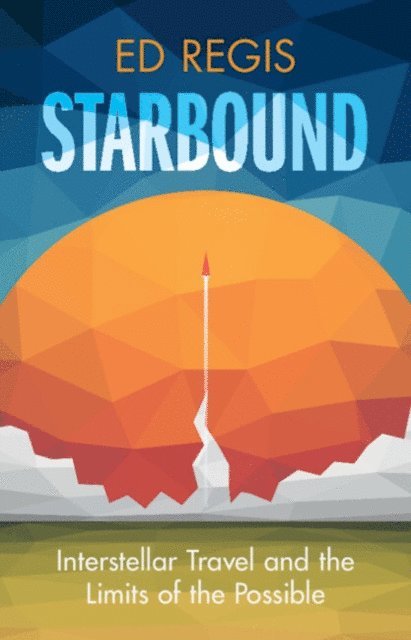
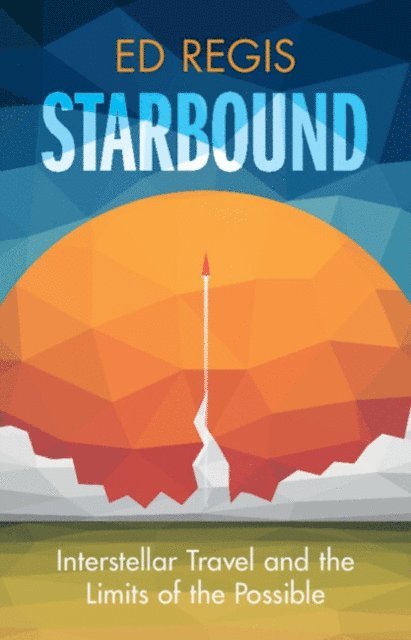
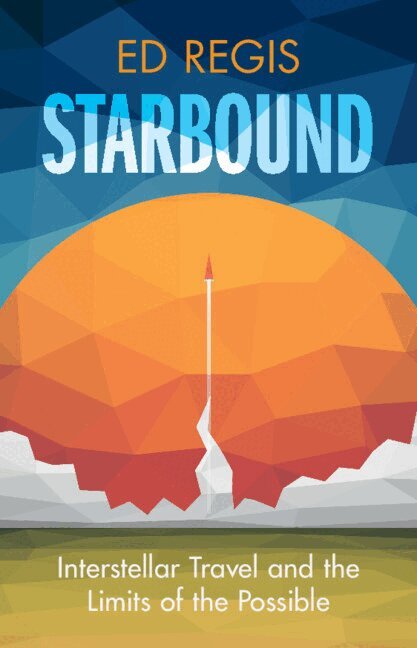
This book is for anyone enthralled by the romantic dream of a voyage 'to the stars.' From our current viewpoint in the twenty-first century, crewed interstellar travel will be an exceptionally difficult undertaking. It will require building a spacecraft on a scale never before attempted, at vast cost, relying on unproven technologies. Yet somehow, through works of science fiction, TV and movies, the idea of human interstellar travel being easy or even inevitable has entered our popular consciousness. In this book, Ed Regis critically examines whether humankind is bound for distant stars, or if instead we are bound to our own star, for the indefinite future. How do we overcome the main challenge that even the nearest stars are unimaginably far away? He explores the proposed technologies and the many practical aspects of undertaking an interstellar journey, finishing with his reflections on whether such a journey should be planned for.
309 kr
Skickas inom 7-10 vardagar
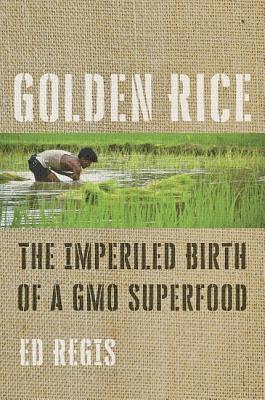
The first book to tell the shocking story of Golden Rice, a genetically modified grain that provides essential Vitamin A and can save lives in developing countries—if only they were allowed to grow it.Ordinary white rice is nutrient poor; it consists of carbohydrates and little else. About one million people who subsist on rice become blind or die each year from vitamin A deficiency. Golden Rice, which was developed in the hopes of combatting that problem by a team of European scientists in the late '90s, was genetically modified to provide an essential nutrient that white rice lacks: beta-carotene, which is converted into vitamin A in the body. But twenty years later, this potentially sight- and life-saving miracle food still has not reached the populations most in need—and tens of millions of people in India, China, Bangladesh, and throughout South and Southeast Asia have gone blind or have died waiting. Supporters claim that the twenty-year delay in Golden Rice's introduction is an unconscionable crime against humanity. Critics have countered that the rice is a "hoax," that it is "fool's gold" and "propaganda for the genetic engineering industry." Here, science writer Ed Regis argues that Golden Rice is the world's most controversial, maligned, and misunderstood GMO. Regis tells the story of how the development, growth, and distribution of Golden Rice was delayed and repeatedly derailed by a complex but outdated set of operational guidelines and regulations imposed by the governments and sabotaged by anti-GMO activists in the very nations where the rice is most needed. Writing in a conversational style, Regis separates hyperbole from facts, overturning the myths, distortions, and urban legends about this uniquely promising superfood. Anyone interested in GMOs, social justice, or world hunger will find Golden Rice a compelling, sad, and maddening true-life science tale.