Ed Simon – författare
Visar alla böcker från författaren Ed Simon. Handla med fri frakt och snabb leverans.
17 produkter
17 produkter
317 kr
Skickas inom 7-10 vardagar
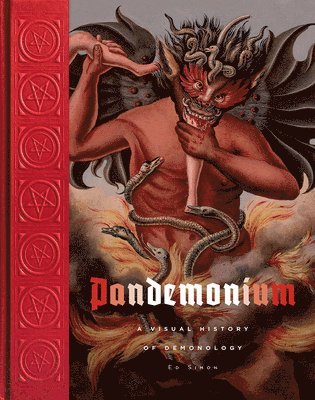
Pandemonium: An Illustrated History of Demonology presents for this first time Satan’s family tree, providing a history and analysis of his fellow fallen angels from Asmodeus to Ziminiar. Throughout there will be short entries on individual demons, but Pandemonium will be more than just a visual encyclopedia. It will also focus on the influence of figures like Beelzebub, Azazel, Lilith, and Moloch on Western religion, literature, and art. Ranging from the earliest scriptural references to demons in the New Testament through the Enlightenment and Romantic eras when our devils took on a subtler form, Pandemonium functions as a compendium of Lucifer’s subjects from Dante’s The Divine Comedy to John Milton’s Paradise Lost, and all points in between.Containing rarely seen illustrations of very old treatises on demonology as well as more well-known works by the great masters of Western painting, this book will celebrate the art of hell like never before!
134 kr
Skickas
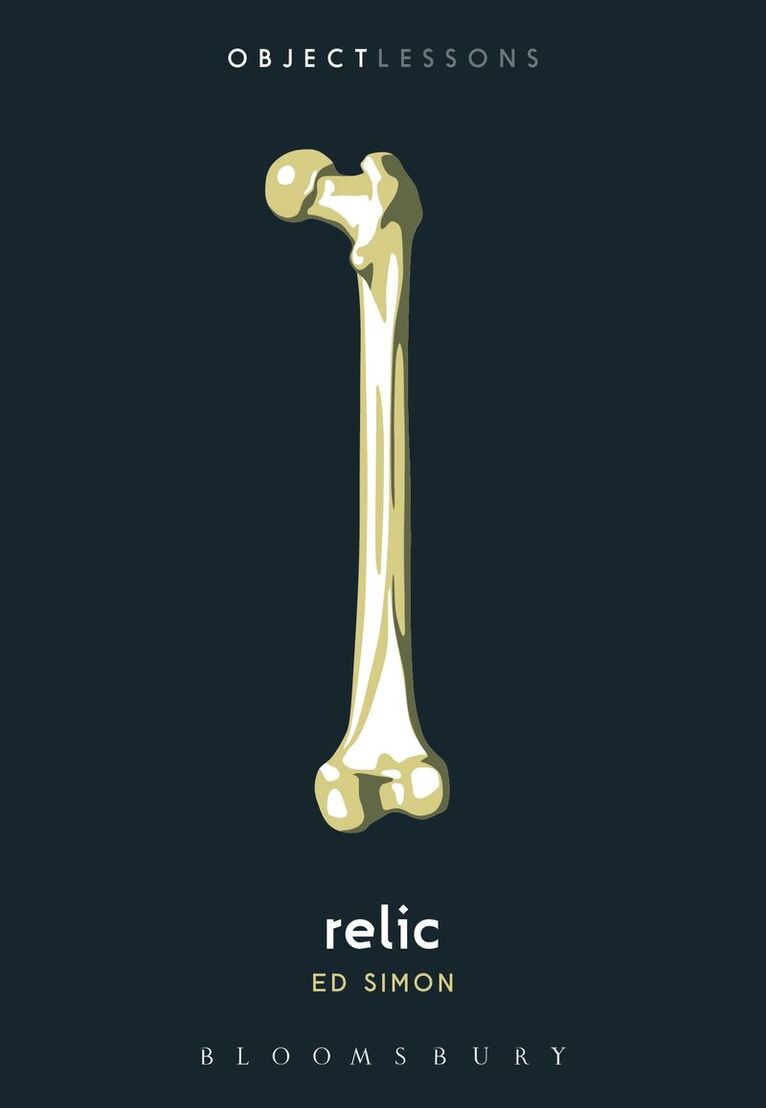
Object Lessons is a series of short, beautifully designed books about the hidden lives of ordinary things.Every culture, every religion, every era has enshrined otherwise regular objects with a significance which stretches beyond their literal importance. Whether the bone of a Catholic martyr, the tooth of a Buddhist lama, or the cloak of a Sufi saint, relics are material conduits to the immaterial world. Yet relics aren't just a feature of religion. The exact same sense of the transcendent animates objects of political, historical, and cultural significance.From Abraham Lincoln's death mask to Vladimir Lenin's embalmed corpse, Emily Dickinson's envelopes to Jimi Hendrix's guitar pick, relics are the objects which the faithful understand as being more than just objects. Material things of sacred importance, relics are indicative of a culture's deepest values. Object Lessons is published in partnership with an essay series in The Atlantic.
In Praise of Purple Prose
A Guide to Writing with Elegance, Opulence, and Indulgence
Inbunden, Engelska, 2027
934 kr
Kommande
A playful and irreverent argument for—and practical guide to—writing in a rich and extraordinary styleWhen it comes to literary style, the commonplace wisdom of composition classrooms, newsrooms, and editorial offices has long been that less is more. Students are taught that the best prose is that which eschews ornamentation and rhetorical flourish. But what if sometimes more is more? In Praise of Purple Prose playfully and cheekily contests a century worth of convention that rejects the baroque and byzantine as “purple prose,” making the case that fun and joy in language can be as important as concision and comprehension. Part style guide and part manifesto, the book rewrites the rules on writing.Ed Simon encourages writers to embrace the extraordinary, to call upon the classical rhetorical devices, and to relish in the richness of description and the erudition of allusion. He demonstrates that serpentine syntax, eccentric diction, and idiosyncratic punctuation, when used judiciously, can express the complexity of experience, bring out the pleasures of language, and help readers develop a unique voice in a world where AI threatens to make everyone sound alike. To illustrate its arguments, the book features examples of extraordinary prose from dozens of writers, including John Donne, Virginia Woolf, Joan Didion, Salman Rushdie, Marilynne Robison, and Zadie Smith.Playful and provocative, In Praise of Purple Prose will leave readers with a new appreciation for fancy prose and inspire writers to draw on all of the liveliest and most powerful resources of English in their work.
In Praise of Purple Prose
A Guide to Writing with Elegance, Opulence, and Indulgence
Häftad, Engelska, 2027
210 kr
Kommande
A playful and irreverent argument for—and practical guide to—writing in a rich and extraordinary styleWhen it comes to literary style, the commonplace wisdom of composition classrooms, newsrooms, and editorial offices has long been that less is more. Students are taught that the best prose is that which eschews ornamentation and rhetorical flourish. But what if sometimes more is more? In Praise of Purple Prose playfully and cheekily contests a century worth of convention that rejects the baroque and byzantine as “purple prose,” making the case that fun and joy in language can be as important as concision and comprehension. Part style guide and part manifesto, the book rewrites the rules on writing.Ed Simon encourages writers to embrace the extraordinary, to call upon the classical rhetorical devices, and to relish in the richness of description and the erudition of allusion. He demonstrates that serpentine syntax, eccentric diction, and idiosyncratic punctuation, when used judiciously, can express the complexity of experience, bring out the pleasures of language, and help readers develop a unique voice in a world where AI threatens to make everyone sound alike. To illustrate its arguments, the book features examples of extraordinary prose from dozens of writers, including John Donne, Virginia Woolf, Joan Didion, Salman Rushdie, Marilynne Robison, and Zadie Smith.Playful and provocative, In Praise of Purple Prose will leave readers with a new appreciation for fancy prose and inspire writers to draw on all of the liveliest and most powerful resources of English in their work.
317 kr
Skickas inom 7-10 vardagar
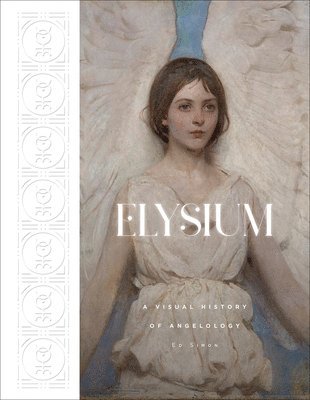
A gloriously illustrated overview of angels across art, religion, and literatureIneffable, invisible, inscrutable—angels are enduring creatures across Judaism, Christianity, and Islam, and human experiences of the divine as mediated by spiritual emissaries are an aspect of almost every religious tradition. In popular culture, angels are often reduced to the most gauzy, sentimental, and saccharine of images: fat babies with wings and guardians with robes, halos, and harps. By contrast, in scripture whenever one of the heavenly choirs appears before a prophet or patriarch, they first declare “Fear not!” for terror would be the most appropriate initial reaction to these otherworldly beings. Angels are often not what we’d expect, but it’s precisely in that transcendent encounter that something of the strangeness of existence can be conveyed. Elysium: A Visual History of Angelology is a follow-up volume to Pandemonium: A Visual History of Demonology, and like the earlier title, this book offers an account of the angelic hierarchies as they’ve been understood across centuries and cultures and of the individual personages, such as the archangels Michael, Gabriel, and Uriel, who have marked the mythology of the West.
320 kr
Skickas inom 7-10 vardagar
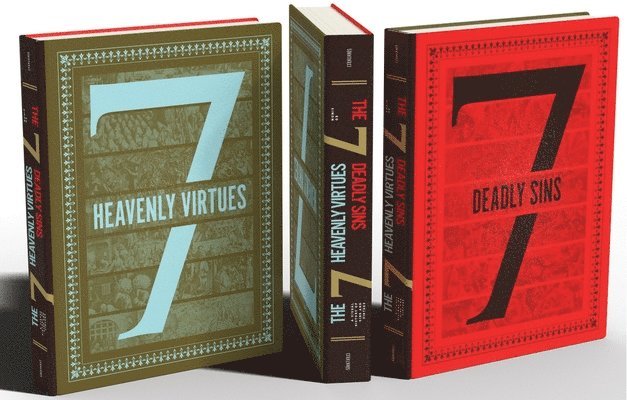
The Seven Deadly Sins and Seven Heavenly Virtues: A Visual History is a richly illustrated, large‑format exploration of how humanity has attempted to understand morality, self‑control, and spiritual struggle through art, religion, and philosophy.Presented as a substantial hardcover volume with extensive color imagery throughout, the book brings together visual history and cultural analysis in a form designed for browsing as much as reading.Written by scholar and cultural critic Ed Simon, the book examines the enduring symbolic power of the seven deadly sins and their corresponding virtues—concepts that have shaped ethical thought and artistic expression for centuries. Unlike angels bound to obedience or demons consigned to rebellion, human beings occupy an unsettled moral terrain, defined by competing impulses toward excess and restraint, vice and virtue.Across its generously illustrated pages, the book draws on a wide range of visual material, including religious art, painting, manuscript imagery, and later cultural representations. Each chapter situates a sin and its corresponding virtue within theological, philosophical, and historical contexts, showing how these moral categories have evolved over time—from tools of instruction and warning to frameworks for interpreting human behavior and social order.Designed as both a visual reference and a cultural history, the book invites readers to linger over imagery while tracing the shifting meanings of concepts such as pride and humility, greed and generosity, lust and chastity. The result is a volume that captures humanity at its most aspirational and most flawed, through illustrations as compelling as the ideas they reflect.Completing a thematic trilogy with Pandemonium: A Visual History of Demonology and Elysium: A Visual History of Angelology, The Seven Deadly Sins and Seven Heavenly Virtues turns its focus squarely toward humanity itself—offering a visually immersive meditation on moral imagination across art, religion, and history.
184 kr
Skickas inom 5-8 vardagar
253 kr
Skickas inom 3-6 vardagar
252 kr
Skickas inom 5-8 vardagar
154 kr
Skickas inom 5-8 vardagar
113 kr
Skickas inom 5-8 vardagar
244 kr
Skickas inom 3-6 vardagar
342 kr
Skickas inom 5-8 vardagar
235 kr
Skickas
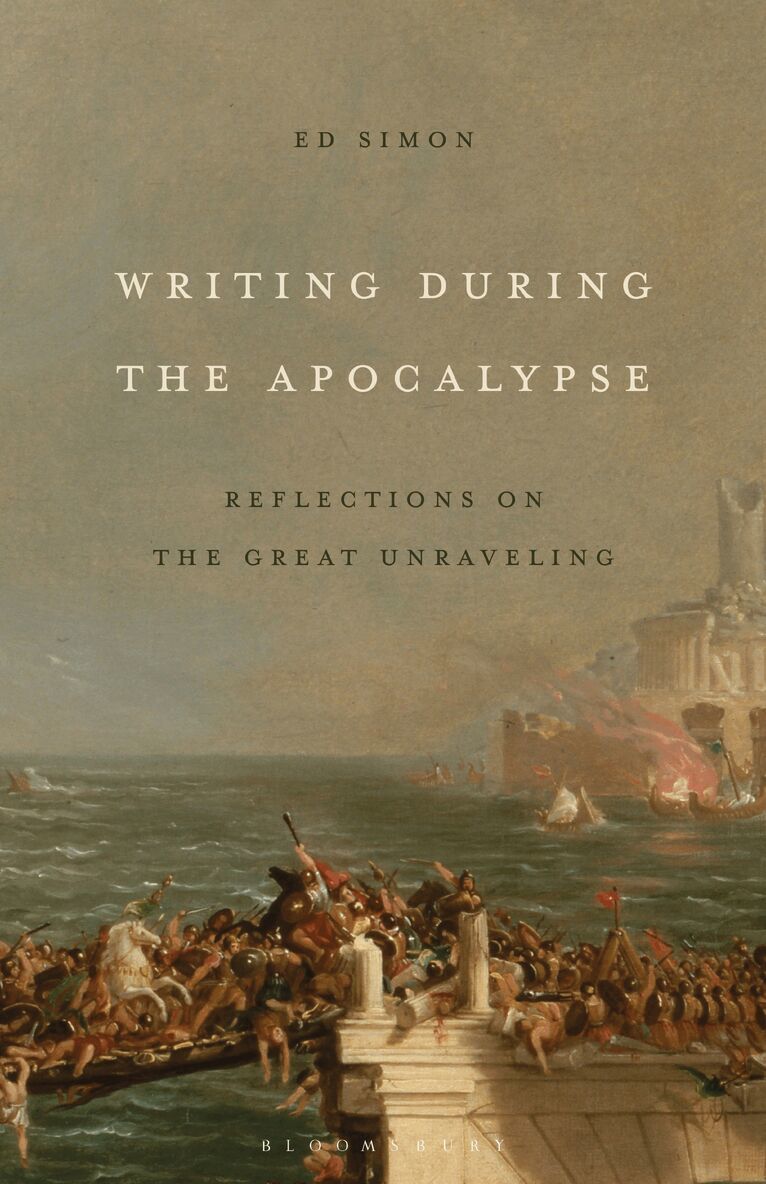
All of American literature is a tragedy. What we’re living through now isn’t a tragedy, however – it’s a horror novel. Why bother writing when the world’s on fire? Rising authoritarianism. Covid. Inflation. Wealth disparity. War. Climate change. While every time period is marked by apocalyptic fears, it certainly seems like our current anxieties aren’t ill placed. And yet, art and literature persist. In captivating and culturally savvy prose, Ed Simon grapples with the notion that writers and their work ought to distract readers from the dire situation we face in these fetid days of the Anthropocene. He also addresses the wider question of what it's like to write during what could be the last decades of human civilization, arguing that to craft imaginative spaces through the magic of words isn’t superfluous. Instead it exists at the core of human experience – as it always has and always will. Examining creativity as it has manifested in similarly dire circumstances in human history – in a broad range of authors and texts, such as the Bible, Boccaccio’s Decameron, Voltaire, Octavia Butler’s Parable of the Sower, and Stephen King’s The Stand – Writing During the Apocalypse eschews the easy defeatism of nihilism. Instead, it offers a hopeful perspective on the various ways that literary expression can endow a meaningless world with meaning and generate a spark in the darkness. With the infamous four horsemen as its guide, Writing During the Apocalypse honors the literary life even during the end of the world.
893 kr
Skickas
All of American literature is a tragedy. What we’re living through now isn’t a tragedy, however – it’s a horror novel. Why bother writing when the world’s on fire? Rising authoritarianism. Covid. Inflation. Wealth disparity. War. Climate change. While every time period is marked by apocalyptic fears, it certainly seems like our current anxieties aren’t ill placed. And yet, art and literature persist. In captivating and culturally savvy prose, Ed Simon grapples with the notion that writers and their work ought to distract readers from the dire situation we face in these fetid days of the Anthropocene. He also addresses the wider question of what it's like to write during what could be the last decades of human civilization, arguing that to craft imaginative spaces through the magic of words isn’t superfluous. Instead it exists at the core of human experience – as it always has and always will. Examining creativity as it has manifested in similarly dire circumstances in human history – in a broad range of authors and texts, such as the Bible, Boccaccio’s Decameron, Voltaire, Octavia Butler’s Parable of the Sower, and Stephen King’s The Stand – Writing During the Apocalypse eschews the easy defeatism of nihilism. Instead, it offers a hopeful perspective on the various ways that literary expression can endow a meaningless world with meaning and generate a spark in the darkness. With the infamous four horsemen as its guide, Writing During the Apocalypse honors the literary life even during the end of the world.
269 kr
Skickas inom 5-8 vardagar
285 kr
Skickas