Edmund Stewart - Böcker
Visar alla böcker från författaren Edmund Stewart. Handla med fri frakt och snabb leverans.
3 produkter
3 produkter
1 684 kr
Skickas inom 7-10 vardagar
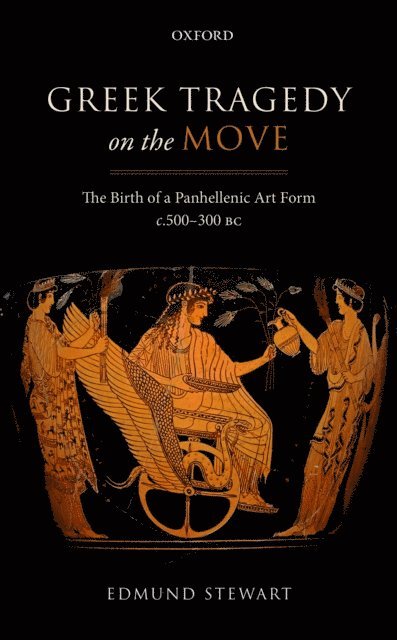
Greek tragedy is one of the most important cultural legacies of the classical world, with a rich and varied history and reception, yet it appears to have its roots in a very particular place and time. The authors of the surviving works of Greek tragic drama-Aeschylus, Sophocles, and Euripides-were all from one city, Athens, and all lived in the fifth century BC; unsurprisingly, it has often been supposed that tragic drama was inherently linked in some way to fifth-century Athens and its democracy. Why then do we refer to tragedy as 'Greek', rather than 'Attic' or 'Athenian', as some scholars have argued? This volume argues that the story of tragedy's development and dissemination is inherently one of travel and that tragedy grew out of, and became part of, a common Greek culture, rather than being explicitly Athenian. Although Athens was a major panhellenic centre, by the fifth century a well-established network of festivals and patrons had grown up to encompass Greek cities and sanctuaries from Sicily to Asia Minor and from North Africa to the Black Sea. The movement of professional poets, actors, and audience members along this circuit allowed for the exchange of poetry in general and tragedy in particular, which came to be performed all over the Greek world and was therefore a panhellenic phenomenon even from the time of the earliest performances. The stories that were dramatized were themselves tales of travel-the epic journeys of heroes such as Heracles, Jason, or Orestes- and the works of the tragedians not only demonstrated how the various peoples of Greece were connected through the wanderings of their ancestors, but also how these connections could be sustained by travelling poets and their acts of retelling.
1 265 kr
Skickas inom 7-10 vardagar
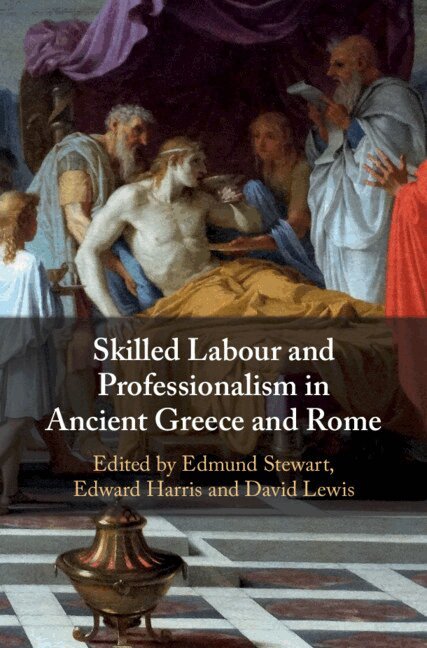
This book is a history of ancient Greek and Roman professionals: doctors, seers, sculptors, teachers, musicians, actors, athletes and soldiers. These individuals were specialist workers deemed to possess rare skills, for which they had undergone a period of training. They operated in a competitive labour market in which proven expertise was a key commodity. Success in the highest regarded professions was often rewarded with a significant income and social status. Rivalries between competing practitioners could be fierce. Yet on other occasions, skilled workers co-operated in developing associations that were intended to facilitate and promote the work of professionals. The oldest collegial code of conduct, the Hippocratic Oath, a version of which is still taken by medical professionals today, was similarly the creation of a prominent ancient medical school. This collection of articles reveals the crucial role of occupation and skill in determining the identity and status of workers in antiquity.
Departing the Polis
Travel and Travellers in the Extant Plays and Fragments of Greek Drama
Inbunden, Engelska, 2025
1 667 kr
Skickas inom 7-10 vardagar
This is the first study of travel, or mobility, and the ancient Greek theatre. The essays collected here, by leading figures in the field of ancient drama, examine both historical travel (the actual mobility of audiences and performers who attended the dramatic contests) and the character of the traveller as it is imagined in the surviving texts and fragments of Greek tragedy, satyr play and comedy. This subject has relevance for two major areas of study: the historical context of theatrical performance and the performances themselves, most particularly the use or creation of dramatic space. And yet this volume also breaks new ground: we build on recent research that has emphasised the Panhellenic aspects of the context of Greek drama and, furthermore, show how this interconnected world is reflected in the plays themselves. In the process we argue that the postmodern ‘spatial turn’, as it has manifested in scholarship on ancient drama, has missed, almost completely, the key importance of movement within that space. This book reinserts travellers back into ancient dramatic space, as they move on distant journeys beyond the polis.