Edna G. Bay - Böcker
Visar alla böcker från författaren Edna G. Bay. Handla med fri frakt och snabb leverans.
8 produkter
8 produkter
2 088 kr
Skickas inom 10-15 vardagar
This collection of articles grows out of a symposium on the subject of women and work in Africa held on the Urbana-Champaign campus of the University of Illinois in the spring of 1979. The organizing committee for that program sought first, to update the field of economic studies of women in Africa and second, to provide a forum for the exchange and stimulation of ideas among scholars and professionals concerned for women in Africa. The publication here of the majority of the symposium papers represents a logical final step in the fulfillment of the objectives of the symposium program committee.
617 kr
Skickas inom 10-15 vardagar
This collection of articles grows out of a symposium on the subject of women and work in Africa held on the Urbana-Champaign campus of the University of Illinois in the spring of 1979. The organizing committee for that program sought first, to update the field of economic studies of women in Africa and second, to provide a forum for the exchange and stimulation of ideas among scholars and professionals concerned for women in Africa. The publication here of the majority of the symposium papers represents a logical final step in the fulfillment of the objectives of the symposium program committee.
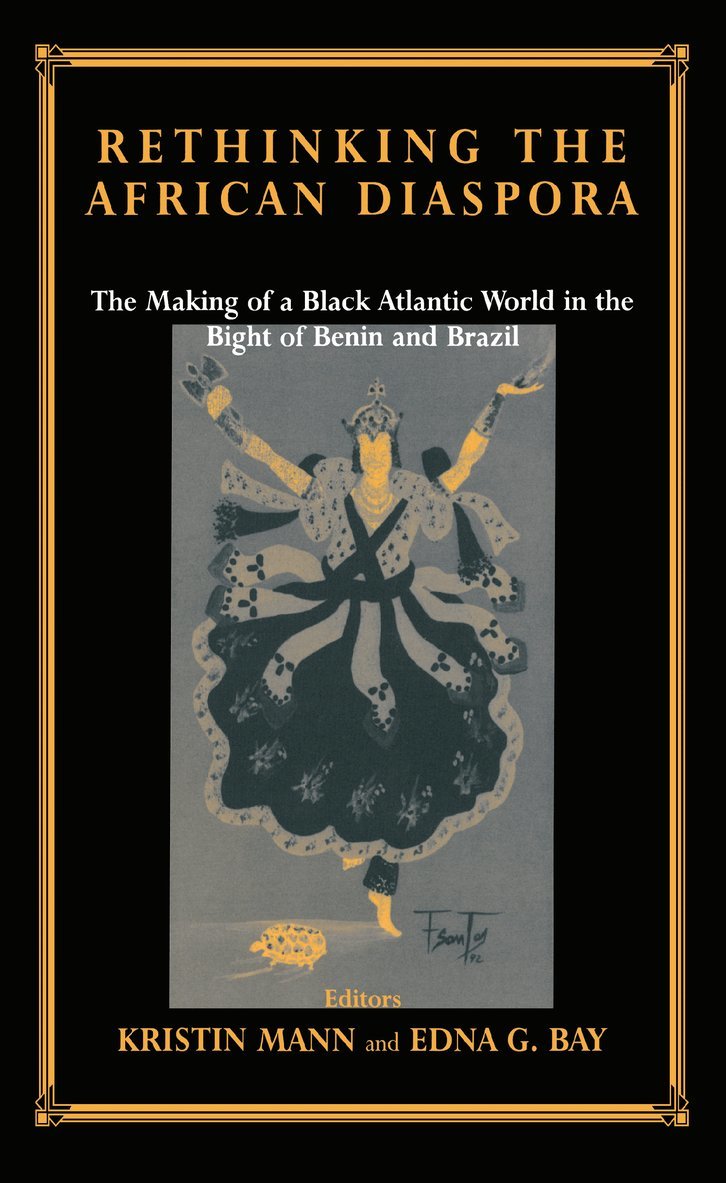
Rethinking the African Diaspora
The Making of a Black Atlantic World in the Bight of Benin and Brazil
Inbunden, Engelska, 2001
2 150 kr
Skickas inom 10-15 vardagar
As a result of new research, we can now paint a more complex picture of peoples and cultures in the south Atlantic, from the earliest period of the slave trade up to the present. The nine papers in this volume indicate that a dynamic and continuous movement of peoples east as well as west across the Atlantic forged diverse and vibrant re-inventions and re-interpretations of the rich mix of cultures represented by Africans and peoples of African descent on both continents.
Rethinking the African Diaspora
The Making of a Black Atlantic World in the Bight of Benin and Brazil
Häftad, Engelska, 2001
750 kr
Skickas inom 10-15 vardagar
As a result of new research, we can now paint a more complex picture of peoples and cultures in the south Atlantic, from the earliest period of the slave trade up to the present. The nine papers in this volume indicate that a dynamic and continuous movement of peoples east as well as west across the Atlantic forged diverse and vibrant re-inventions and re-interpretations of the rich mix of cultures represented by Africans and peoples of African descent on both continents.
435 kr
Skickas inom 10-15 vardagar
This collection of papers-all but one previously unpublished-presents the results of recent field research in the disciplines of history, political science, anthropology, sociology, and economics. The chief emphasis here is on change: on viewing African women as agents of change from the first arrival of Europeans to the present; and on seeking to change the perspective from which African women have been studied in the past. The papers encompass settings as diverse as eighteenth-century Senegal and contemporary Mozambique. Politically and socially, too, the local settings are various, including an Igbo village, the marketplaces of Abidjan and Accra, a development scheme in rural Tanzania, the churches of Freetown, and the streets of Mombasa.The contributors are Iris Berger, James L. Brain, George E. Brooks, Jr., Margaret Jean Hay, Barbara C. Lewis, Leith Mullings, Kamene Okonjo, Claire Robertson, Filomina Chioma Steady, Margaret Strobel, and Judith VanAllen.
642 kr
Skickas inom 10-15 vardagar
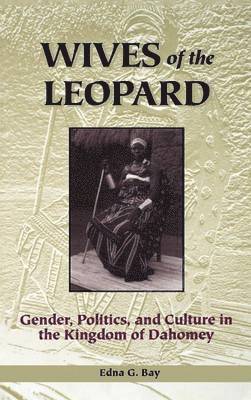
This text explores the culture of the pre-colonial West African state of Dahomey against the backdrop of the Atlantic slave trade and European imperialism. Tracing 200 years of history up to the French colonial conquest in 1894, the book follows change in the monarchy and the palace.
366 kr
Skickas inom 10-15 vardagar
Wives of the Leopard explores power and culture in a pre-colonial West African state whose army of women and practice of human sacrifice earned it notoriety in the racist imagination of late nineteenth-century Europe and America. Tracing two hundred years of the history of Dahomey up to the French colonial conquest in 1894, the book follows change in two central institutions. One was the monarchy, the coalitions of men and women who seized and wielded power in the name of the king. The second was the palace, a household of several thousand wives of the king who supported and managed state functions.Looking at Dahomey against the backdrop of the Atlantic slave trade and the growth of European imperialism, Edan G. Bay reaches for a distinctly Dahomean perspective as she weaves together evidence drawn from travelers' memoirs and local oral accounts, from the religious practices of vodun, and from ethnographic studies of the twentieth century. Wives of the Leopard thoroughly integrates gender into the political analysis of state systems, effectively creating a social history of power. More broadly, it argues that women as a whole and men of the lower classes were gradually squeezed out of access to power as economic resources contracted with the decline of the slave trade in the nineteenth century. In these and other ways, the book provides an accessible portrait of Dahomey's complex and fascinating culture without exoticizing it.
690 kr
Skickas inom 10-15 vardagar
The essayists whose work is collected here - historians, anthropologists, and political scientists - bring their diverse disciplinary perspectives to bear on various forms of violence that have plagued recent African history. Exploring violence as part of political economy and rejecting stereotypical explanations of African violence as endemic or natural to African cultures, the essays examine a continent where the boundaries on acceptable force are always shifting and the distinction between violence by the state and against the state is not always clear. Many of the essays address generational tensions through the role of African youth, which in this context is almost exclusively male. The violence perpetrated by young men stems not only from ideologies of masculinity but also from a frustration over both their own unrealized adulthood and the failure of an adult leadership whose interaction with the youth often seems limited to enlisting them in more bloodshed. Other essays examine the temptation in an atmosphere of violence to exploit the malleability of memory to construct, or reconstruct, histories in order to justify the sacrifice and shifts of power brought on by that violence. Wide-ranging but sharply focused, ""States of Violence"" takes in power struggles in Sierra Leone, nationalism in postcolonial Zimbabwe, the Bakassi boys of Nigeria, and offers probing examinations of such pivotal events as the Rwandan genocide and the Alexandra Rebellion, shedding new light on the role of each in the drama being played out in this troubled continent.