Donald L. Donham - Böcker
Visar alla böcker från författaren Donald L. Donham. Handla med fri frakt och snabb leverans.
8 produkter
8 produkter
564 kr
Skickas inom 3-6 vardagar
533 kr
Skickas inom 3-6 vardagar
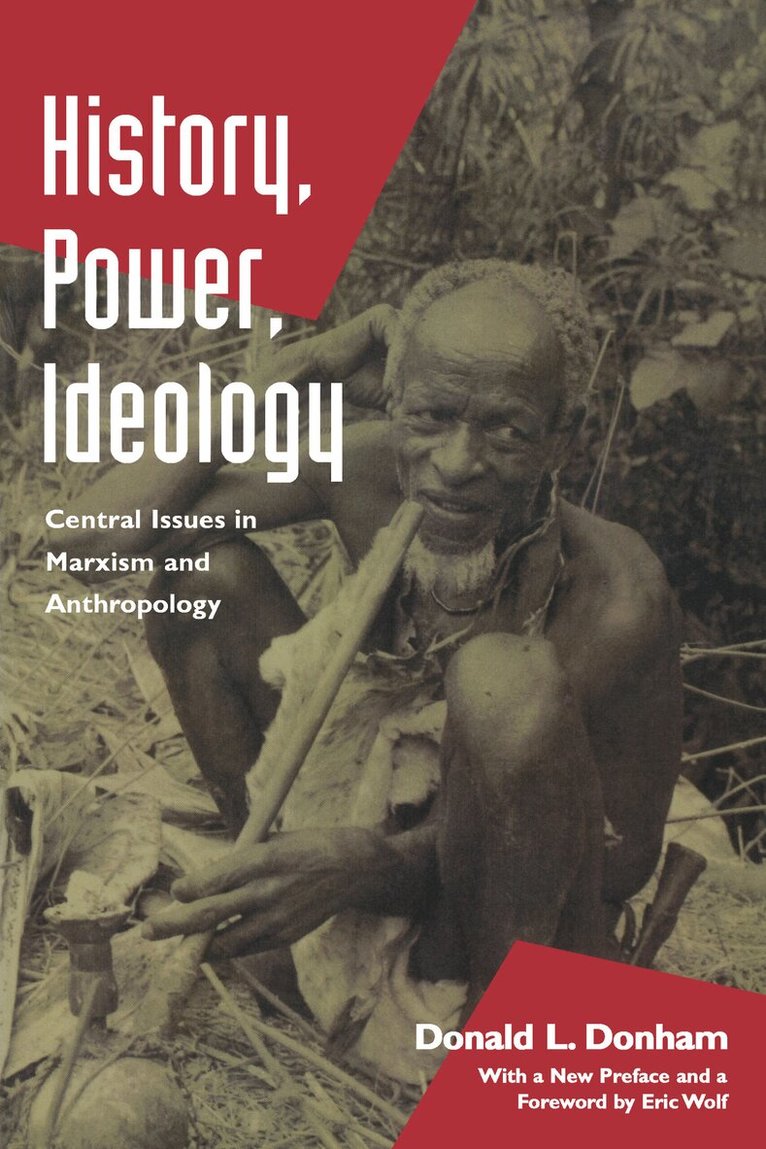
Is Marxism a reflection of the conceptual system it fights against, rather than a truly comprehensive approach to human history? Drawing on recent work in anthropology, history, and philosophy, Donald Donham confronts this problem in analyzing a radically different social order: the former Maale kingdom of southern Ethiopia. "Every once in a while there appears a book that ...opens up new ways of inquiring into the ways of the world. Donald Donham has written such a book. The style is quiet and judicious, but the effect is stunning...In putting inherited partisan approaches to the test of explaining the realities of Maale society and culture, Donham enriches anthropology and imparts new vigor to the analytical Marxian traditions. "History, Power, Ideology" embodies a major accomplishment". (From the Foreword).
504 kr
Skickas inom 3-6 vardagar
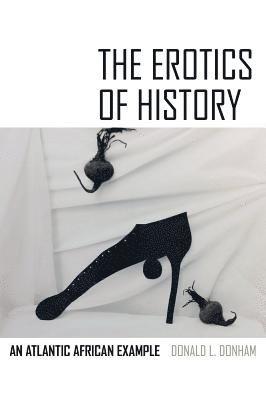
At publication date, a free ebook version of this title will be available through Luminos, University of California Press's Open Access publishing program. Visit www.luminosoa.org to learn more. The Erotics of History challenges long-standing notions of sexuality as stable and context-free--as something that individuals discover about themselves. Rather, Donald L. Donham argues that historical circumstance, local social pressure, and the cultural construction of much beyond sex condition the erotic. Donham makes this argument in relation to the centuries-old conversation on the fetish, applied to a highly unusual neighborhood in Atlantic Africa. There, local men, soon to be married to local women, are involved in long-term sexual relationships with European men. On the African side, these couplings are motivated by the pleasures of cosmopolitan connection and foreign commodities. On the other side, Europeans tend to fetishize Africans' race, while a few search to become slaves in master/ slave relationships.At its most wide ranging, The Erotics of History attempts to show that it is history, both personal and collective, in reversals and reenactments, that finally produces sexual excitement.
687 kr
Skickas inom 10-15 vardagar
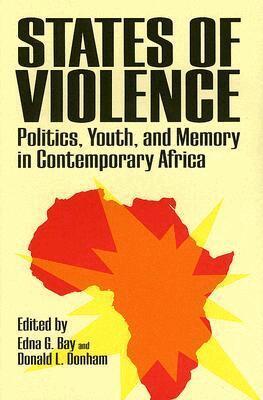
The essayists whose work is collected here - historians, anthropologists, and political scientists - bring their diverse disciplinary perspectives to bear on various forms of violence that have plagued recent African history. Exploring violence as part of political economy and rejecting stereotypical explanations of African violence as endemic or natural to African cultures, the essays examine a continent where the boundaries on acceptable force are always shifting and the distinction between violence by the state and against the state is not always clear. Many of the essays address generational tensions through the role of African youth, which in this context is almost exclusively male. The violence perpetrated by young men stems not only from ideologies of masculinity but also from a frustration over both their own unrealized adulthood and the failure of an adult leadership whose interaction with the youth often seems limited to enlisting them in more bloodshed. Other essays examine the temptation in an atmosphere of violence to exploit the malleability of memory to construct, or reconstruct, histories in order to justify the sacrifice and shifts of power brought on by that violence. Wide-ranging but sharply focused, ""States of Violence"" takes in power struggles in Sierra Leone, nationalism in postcolonial Zimbabwe, the Bakassi boys of Nigeria, and offers probing examinations of such pivotal events as the Rwandan genocide and the Alexandra Rebellion, shedding new light on the role of each in the drama being played out in this troubled continent.
446 kr
Skickas inom 5-8 vardagar
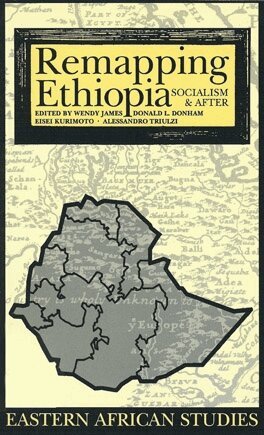
Governance everywhere is concerned with spatial relationships. Modern states "map" local communities, making them legible for the purposes of control. Ethiopia has gone through several stages of "mapping" in its imperial, revolutionary, and postrevolutionary phases.In 1986 The Southern Marches of Imperial Ethiopia, a cross-disciplinary collection edited by Don Donham and Wendy James, opened up the study of center/periphery relations in the Ethiopian empire until the fall of the monarchy in 1974. This new volume examines similar themes, taking the story forward through the major changes effected by the socialist regime from the revolution of 1974 to its overthrow in 1991, and then into the current period that has been marked by moves toward local democracy and political devolution.Topics include the changing fortunes of new and historic towns and cities, the impact of the Mengistu regime's policies of villagization and resettlement, local aspects of the struggle against Mengistu and its aftermath, and the fate of border regions. Special attention is given to developments since 1991: to new local institutions and forms of autonomy, the links between the international diasporas of Ethiopia and the fortunes of their home areas. The collection draws on the work of established scholars as well as a new generation of Ethiopian and international researchers in the disciplines of anthropology, political science, history, and geography.
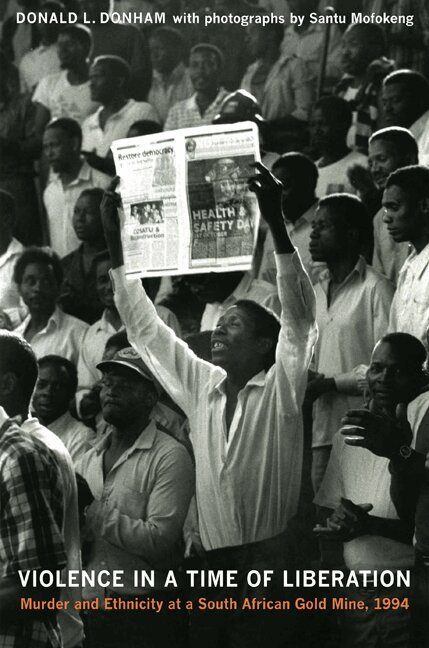
Violence in a Time of Liberation
Murder and Ethnicity at a South African Gold Mine, 1994
Häftad, Engelska, 2011
362 kr
Skickas inom 7-10 vardagar
How can we account for the apparent increase in ethnic violence across the globe? Donald L. Donham develops a methodology for understanding violence that shows why this question needs to be recast. He examines an incident that occurred at a South African gold mine at the moment of the 1994 elections that brought apartheid to a close. Black workers ganged up on the Zulus among them, killing two and injuring many more. While nearly everyone came to characterize the conflict as “ethnic,” Donham argues that heightened ethnic identity was more an outcome of the violence than its cause. Based on his careful reconstruction of events, he contends that the violence was not motivated by hatred of an ethnic other. It emerged, rather, in ironic ways, as capitalist managers gave up apartheid tactics and as black union activists took up strategies that departed from their stated values. National liberation, as it actually occurred, was gritty, contradictory, and incomplete. Given unusual access to the mine, Donham comes to this conclusion based on participant observation, review of extensive records, and interviews conducted over the course of a decade. Violence in a Time of Liberation is a kind of murder mystery that reveals not only who did it but also the ways that narratives of violence, taken up by various media, create ethnic violence after the fact.
350 kr
Skickas inom 10-15 vardagar
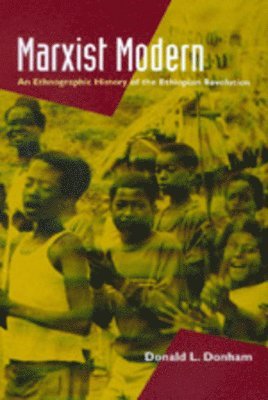
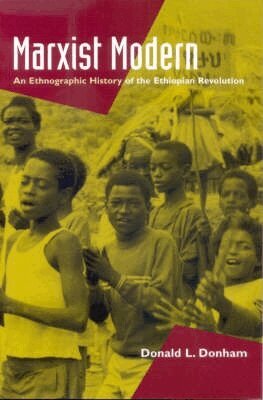
Examines the events of 1974 from Maale as well as from Addis to give a view from the margins of the state.Modernity has become a keyword in a number of intellectual debates: in marginal areas of the world as much as its centres of power and wealth. Investigating Ethiopia during the 1974 revolution, Donald Donham constructs a narrativeof upheaval and change, presenting locals' views on the events.North America: University of California Press
350 kr
Skickas inom 10-15 vardagar
A sequel to The Southern Marches of Imperial Ethiopia.This new volume examines the major changes effected by the socialist regime from the revolution of 1974 to its overthrow in 1991, and then into the current period which has been marked by moves towards local democracy and political devolution.North America: Ohio U Press; Ethiopia: Addis Ababa U Press