Eduardo J. Echeverria – författare
Visar alla böcker från författaren Eduardo J. Echeverria. Handla med fri frakt och snabb leverans.
11 produkter
11 produkter
Del 2 - Ecumenical Studies
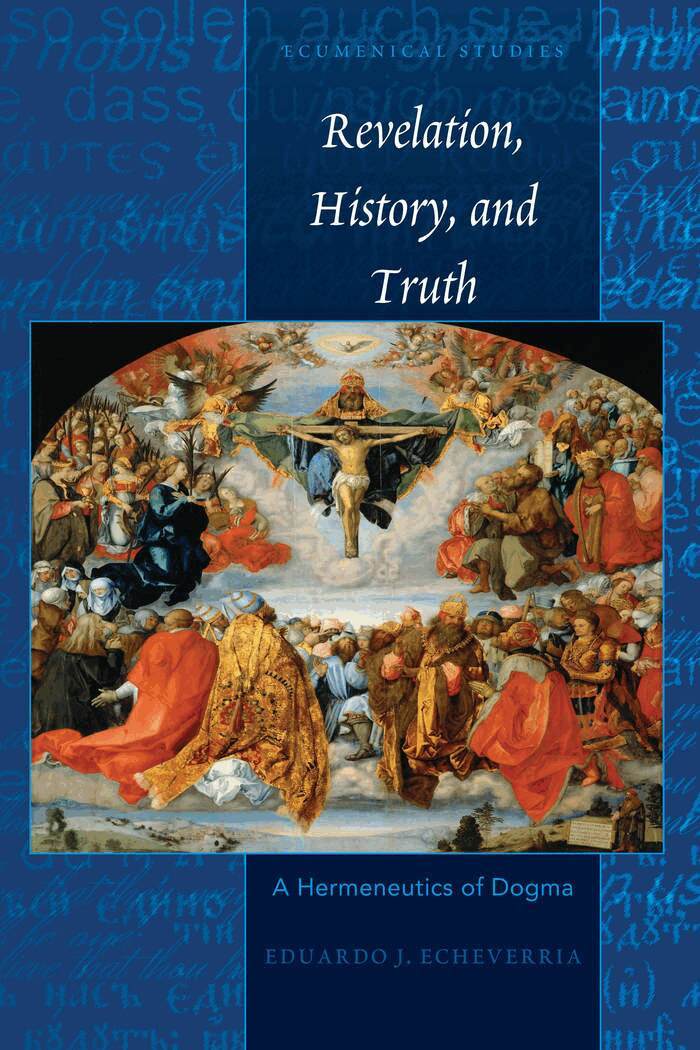
Revelation, History, and Truth
A Hermeneutics of Dogma
Inbunden, Engelska, 2017
1 195 kr
Skickas inom 5-8 vardagar
The general topic of this book concerns the ontology, epistemology, and teleology of the hermeneutics of dogma. In particular, the author addresses contemporary challenges faced by the necessity of maintaining the integrity of dogmatic truth of the Christian faith, of divine revelation and its transmission through tradition, particularly with respect to the relationship between history and doctrinal truth. The author integrates a theological hermeneutics, namely, the Lérinian hermeneutics of Vatican II, with a historically conscious hermeneutics. His aim is to show how we can consider the historical and contextual nature of dogmas, creeds and confessions while at the same time honoring their assertions of dogmatic truth that are permanent, valid and binding for all times.
Inbunden, Engelska, 2010
511 kr
Skickas inom 5-8 vardagar
Inbunden, Engelska, 2011
691 kr
Skickas inom 5-8 vardagar
E-bok
Engelska, 2010555 kr
Läs direkt efter köp
The Dialogue of Love is written from the perspective of an evangelical Catholic Ecumenist. Raised Catholic, but having responded to the Gospel at L''Abri Fellowship in 1970, Eduardo J. Echeverria''s journey took the paths of Reformed and then Anglo-Catholic Christianity on his way back to full communion with the Catholic Church in 1992. Engaging in ecumenical conversation as a committed Roman Catholic whose views have been shaped by, among others, Romano Guardini, John Paul II, and Joseph Ratzinger (Benedict XVI), the author discusses in an articulate, bracing, and constructive manner, the positions of representative thinkers in the Dutch neo-Calvinist tradition of Reformed Christianity: Herman Bavinck, G. C. Berkouwer, and Herman Dooyeweerd. Fundamental issues of ecclesiology, meaning and truth, sacramental theology, the relation between the Church and the world, nature and grace, and issues on the relation of faith and reason are examined with the aim of achieving clarification and understanding. Readers will experience ecumenical Dialogue . . . not simply [as] an exchange of ideas, but also as an ''exchange of gifts'', indeed, a dialogue of love (John Paul II).
E-bok
Engelska, 2011774 kr
Läs direkt efter köp
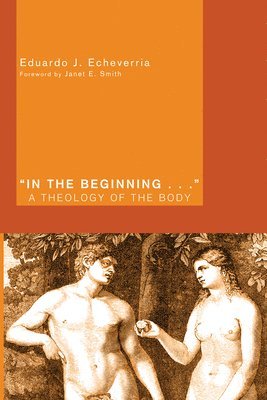
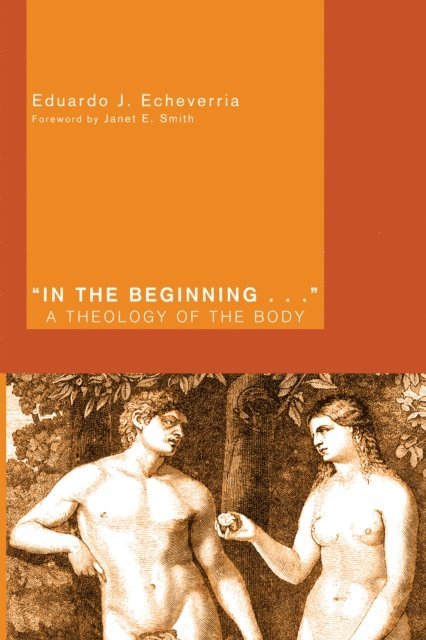
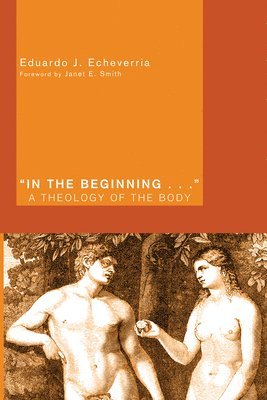
One of the most significant contributions of Pope John Paul II to the church, and arguably to the culture, was his development of a theology of the body. This theology explores the rich meaning and vocation of human embodiment, of the body-person, in light of the fundamental truths of creation, fall into sin, and redemption in Jesus Christ. In this book, Eduardo J. Echeverria inquires into the biblical, theological, and philosophical foundations of the Pope''s theology of the body. In a wide-ranging discussion of a Catholic theology of revelation, biblical hermeneutics, and a biblical perspective on the Christ-centered dynamics of the moral life, Echeverria clearly establishes the fundamental principles needed for a full understanding of John Paul II''s thought. He probes the philosophical foundations of the Pope''s thought in the context of a Catholic theology of nature, sin, and grace. The book concludes with an analysis of the normative implications of the Pope''s theology for sexual ethics and provides a novel and provocative application of the theology of the body to the morality of homosexuality. Echeverria''s study of John Paul II''s theology of the body helps us to make sense of how the pope''s theology deepens our understanding of the Catholic teaching that "the human body shares in the dignity of the ''image of God''" (Catechism of the Catholic Church, no. 364).
Inbunden, Engelska, 2016
603 kr
Skickas inom 5-8 vardagar
E-bok
Engelska, 2016622 kr
Läs direkt efter köp
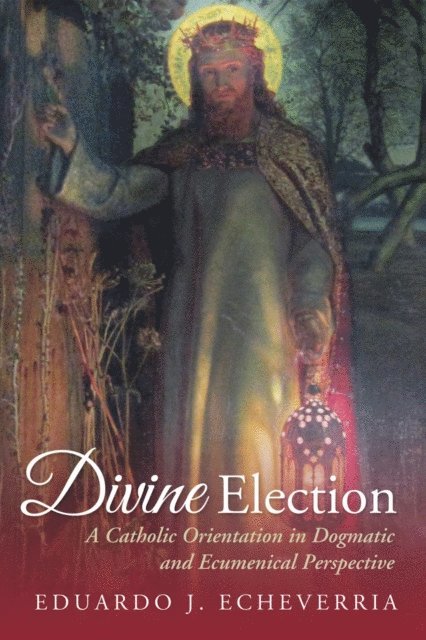
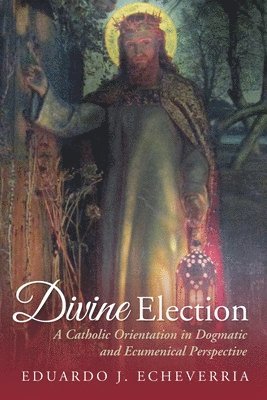
This dogmatic study addresses two perennial questions. First, how do we reconcile God''s sovereignty with human freedom, not just in general, but particularly with respect to the Church''s full understanding of God''s plan of salvation as a work of grace? Second (and equally crucial) is the question of how we reconcile God''s universal salvific will with the mystery of predestination, election, and reprobation. The author of this study does theology within the normative tradition of confessional Catholicism, and thus in the light of Catholic teaching. But this study is also an ecumenical work, indeed, a work in receptive ecumenism, and hence he listens attentively to the reflections and arguments not only of his fellow Catholic theologians (Matthias Joseph Scheeben and Hans Urs von Balthasar) but also theologians of the Evangelical and Reformed traditions (John Calvin, Herman Bavinck, Karl Barth, and G. C. Berkouwer). This book concludes with a Catholic synthesis regarding the doctrine of divine election in dogmatic and ecumenical perspective.
Häftad, Engelska, 2010
342 kr
Skickas inom 5-8 vardagar
Häftad, Engelska, 2011
432 kr
Skickas inom 5-8 vardagar
Häftad, Engelska, 2016
387 kr
Skickas inom 5-8 vardagar
Inbunden, Engelska, 2024
1 081 kr
Skickas inom 5-8 vardagar
In Roman Catholicism and Neo-Calvinism, author Eduardo Echeverria asks: what do Rome and Amsterdam have to say to each other? Is there any common ground between the traditions of Roman Catholicism and Dutch neo-Calvinism on crucial philosophical and theological topics such as faith and reason, anthropology, sexual ethics, and the development of Christian doctrine? Furthermore, beyond ecumenical engagement the author polemically engages the conflicting truth claims of these two traditions on the above topics.This book addresses these questions in the thought and work of key individuals from both sides of the divide, including St Pope John Paul II (Karol Wojtyla, 1920–2005), St Thomas Aquinas, and St Vincent of Lérins (died c. 445), on the one hand, and Herman Bavinck (1854–1921), G.C. Berkouwer (1903–1996), and Herman Dooyeweerd (1894–1977), on the other.This book is an important example of receptive ecumenism, an approach to ecumenical dialogue in which the interlocutors seek to identify and exchange the distinctive gifts of each tradition for the benefit of the whole. It will appeal to all ecumenists and to those teaching courses in ecumenical theology.