Häftad, Engelska, 2004
349 kr
Skickas inom 5-8 vardagar
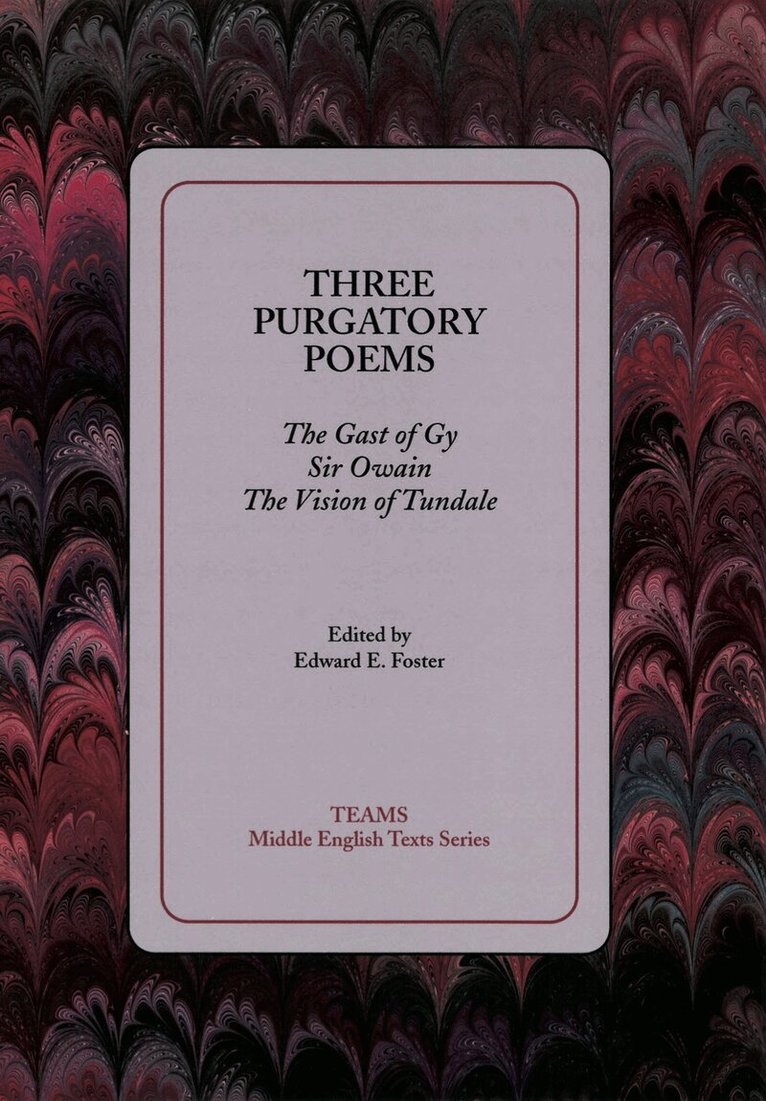
Though our modern understanding of the medieval doctrine of Purgatory is generally shaped by its presentation by Dante in the Divine Comedy, there is a lengthy history of speculation about the nature of such a place of purgation. Through these fourteenth-century Middle English poems, readers can experience something of the controversies that surfaced and resurfaced even after Aquinas had articulated his doctrine of the Communion of Saints. The Gast of Gy, as Foster notes, puts a human face on the doctrine of Purgatory, not only in the amiable, logical, and patient person of the Gast of Gy himself, . . . but also in the careful and cautious dialogue between the Gast and the Pryor who questions him. Sir Owain and The Vision of Tundale present two accounts of the purgatorial journeys of living individuals who are offered a chance to see the torments they have brought upon themselves by their less-than-perfect lives along with the opportunity to return and amend those lives. All three poems were quite popular, as was the doctrine of Purgatory itself. And why not? As Foster notes in his general introduction, it the doctrine of Purgatory had everything: adventure and adversity, suffering and excitement, and, most importantly, a profound theological warning wrapped in the joyful solace of communion with the departed and hope for our own sinful selves.