Edward H. Moseley – författare
Visar alla böcker från författaren Edward H. Moseley. Handla med fri frakt och snabb leverans.
4 produkter
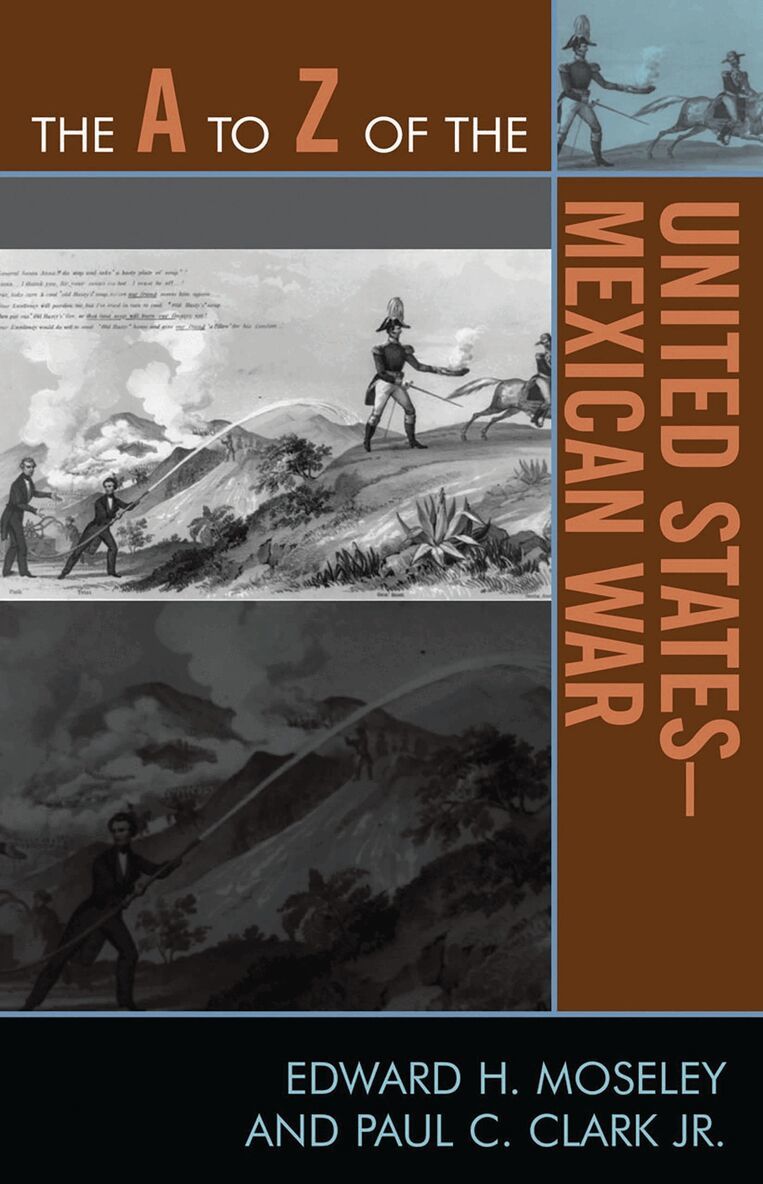
A to Z of the United States-Mexican War
Av Edward H. Moseley, Paul C. Clark Jr.
Häftad, 2009
735 kr
Lägg i varukorg
The first reference work of its kind, this volume on the United States-Mexican War encompasses the decade of the 1840s, focusing on the war years of 1846-1848. More than a dozen maps were drawn for this book, some of which depict major regions and localities over which armies of both nations moved …
A to Z of the United States-Mexican War
Av Edward H. Moseley, Paul C. Clark Jr.
E-bok, 2009
785 kr
Lägg i varukorg
The first reference work of its kind, this volume on the United States-Mexican War encompasses the decade of the 1840s, focusing on the war years of 1846-1848. More than a dozen maps were drawn for this book, some of which depict major regions and localities over which armies of both nations moved …
Yucatan in an Era of Globalization
Av Eric N. Baklanoff, Edward H. Moseley m. fl.
E-bok, 2009
668 kr
Lägg i varukorg
This work describes the profound changes to Yucatán’s society and economy following the 1982 debt crisis that prostrated Mexico’s economy. The editors have assembled contributions from seasoned “Yucatecologists”—historians, geographers, cultural students, and an economist—to chart the accelerated …
Peripheral Visions
Politics, Society, and the Challenges of Modernity in Yucatan
Av Ben W. Fallaw, Edward H. Moseley m. fl.
E-bok, 2014
648 kr
Lägg i varukorg
The essays in this collection illuminate both the processes of change and the negative reactions that they frequently elicited Yucatan has been called “a world apart”—cut off from the rest of Mexico by geography and culture. Yet, despite its peripheral location, the region experienced substantial …