Edward J. Erickson - Böcker
Visar alla böcker från författaren Edward J. Erickson. Handla med fri frakt och snabb leverans.
19 produkter
19 produkter
833 kr
Skickas inom 10-15 vardagar
No critical analysis has ever examined the specific reasons for the Ottoman defeat. Erickson's study fills this gap by studying the operations of the Ottoman Army from October 1912 through July 1913, and by providing a comprehensive explanation of its doctrines and planning procedures. This book is written at an operational level that details every campaign at the level of the army corps. More than 30 maps, numerous orders of battle, and actual Ottoman Army operations orders illustrate how the Turks planned and fought their battles. Of particular note is the inclusion of the only detailed history in English of the Ottoman X Corps' Sarkoy amphibious invasion. Also included are definitive appendix about Ottoman military aviation and a summary of the Turks' efforts to incorporate the lessons learned from the war into their military structure in 1914.The Ottoman Empire fought the Balkan Wars of 1912-1913 against the joint forces of Bulgaria, Greece, Montenegro, and Serbia—and was decisively defeated. The Ottoman Army is frequently depicted as a mob of poorly clad, faceless Turks inept in their attempts to fight a modern war. Yet by 1912, the Ottoman Army, which was constructed on the German model, was in many ways more advanced than certain European armies.
1 039 kr
Skickas inom 10-15 vardagar
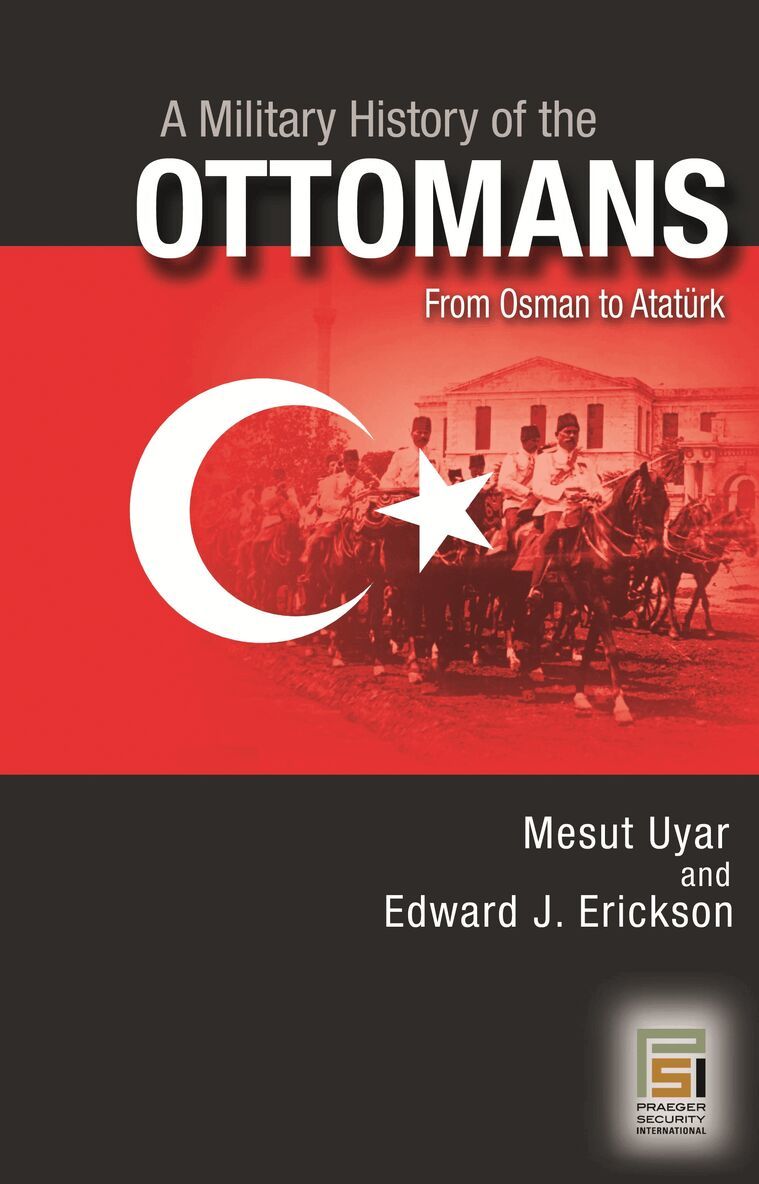
The Ottoman Army had a significant effect on the history of the modern world and particularly on that of the Middle East and Europe. This study, written by a Turkish and an American scholar, is a revision and corrective to western accounts because it is based on Turkish interpretations, rather than European interpretations, of events. As the world's dominant military machine from 1300 to the mid-1700's, the Ottoman Army led the way in military institutions, organizational structures, technology, and tactics. In decline thereafter, it nevertheless remained a considerable force to be counted in the balance of power through 1918. From its nomadic origins, it underwent revolutions in military affairs as well as several transformations which enabled it to compete on favorable terms with the best of armies of the day. This study tracks the growth of the Ottoman Army as a professional institution from the perspective of the Ottomans themselves, by using previously untapped Ottoman source materials. Additionally, the impact of important commanders and the role of politics, as these affected the army, are examined. The study concludes with the Ottoman legacy and its effect on the Republic and modern Turkish Army.This is a study survey that combines an introductory view of this subject with fresh and original reference-level information. Divided into distinct periods, Uyar and Erickson open with a brief overview of the establishment of the Ottoman Empire and the military systems that shaped the early military patterns. The Ottoman army emerged forcefully in 1453 during the siege of Constantinople and became a dominant social and political force for nearly two hundred years following Mehmed's capture of the city. When the army began to show signs of decay during the mid-seventeenth century, successive Sultans actively sought to transform the institution that protected their power. The reforms and transformations that began frist in 1606successfully preserved the army until the outbreak of the Ottoman-Russian War in 1876. Though the war was brief, its impact was enormous as nationalistic and republican strains placed increasing pressure on the Sultan and his army until, finally, in 1918, those strains proved too great to overcome. By 1923, Mustafa Kemal Atatürk emerged as the leader of a unified national state ruled by a new National Parliament. As Uyar and Erickson demonstrate, the old army of the Sultan had become the army of the Republic, symbolizing the transformation of a dying empire to the new Turkish state make clear that throughout much of its existence, the Ottoman Army was an effective fighting force with professional military institutions and organizational structures.
1 520 kr
Skickas inom 10-15 vardagar
The first general history in English of the Ottoman Army in the First World War, Ordered to Die is based on newly available Turkish archival and official sources. Outnumbered and outgunned, the Ottoman Army performed astonishingly well in the field and managed to keep fighting until the end of the war, long after many other armies had quit the field. It fought a multi-front war against sophisticated and capable enemies, including Great Britain, France, and Russia. Erickson challenges conventional thinking about Ottoman war aims, Ottoman military effectiveness, and the influence of German assistance.Written at the strategic and operational levels, this study frames the Turkish military contributions in a unitary manner by establishing linkages between campaigns and theaters. It also contains the first detailed discussion of Ottoman operations in Galicia, Romania, and Macedonia. Erickson provides a wealth of information on Ottoman Army organization, deployments, strategy, and staff procedures. He examines with particular attention the army's role in the Armenian deportations and the intelligence available to the Turks in 1914 and 1915. Appendixes include biographies of important commanders, the efforts of the Ottoman Air Force, Ottoman casualties, as well as a wartime chronology.
835 kr
Skickas inom 10-15 vardagar
This volume examines how the Ottoman Army was able to evolve and maintain a high level of overall combat effectiveness despite the primitive nature of the Ottoman State during the First World War. Structured around four case studies, at the operational and tactical level, of campaigns involving the Ottoman Empire and the British Empire: Gallipoli in 1915, Kut in 1916, Third Gaza-Beersheba in 1917, and Megiddo in 1918. For each of these campaigns, particular emphasis is placed on examining specific elements of combat effectiveness and how they affected that particular battle.The prevalent historiography attributes Ottoman battlefield success primarily to external factors - such as the presence of German generals and staff officers; climate, weather and terrain that adversely affected allied operations; allied bumbling and amateurish operations; and inadequate allied intelligence. By contrast, Edward J. Erickson argues that the Ottoman Army was successful due to internal factors, such as its organizational architecture, a hardened cadre of experienced combat leaders, its ability to organize itself for combat, and its application of the German style of war.Ottoman Army Effectiveness in World War I will be of great interest to students of the First World War, military history and strategic studies in general.
2 230 kr
Skickas inom 10-15 vardagar
This volume examines how the Ottoman Army was able to evolve and maintain a high level of overall combat effectiveness despite the primitive nature of the Ottoman State during the First World War. Structured around four case studies, at the operational and tactical level, of campaigns involving the Ottoman Empire and the British Empire: Gallipoli in 1915, Kut in 1916, Third Gaza-Beersheba in 1917, and Megiddo in 1918. For each of these campaigns, particular emphasis is placed on examining specific elements of combat effectiveness and how they affected that particular battle.The prevalent historiography attributes Ottoman battlefield success primarily to external factors - such as the presence of German generals and staff officers; climate, weather and terrain that adversely affected allied operations; allied bumbling and amateurish operations; and inadequate allied intelligence. By contrast, Edward J. Erickson argues that the Ottoman Army was successful due to internal factors, such as its organizational architecture, a hardened cadre of experienced combat leaders, its ability to organize itself for combat, and its application of the German style of war.Ottoman Army Effectiveness in World War I will be of great interest to students of the First World War, military history and strategic studies in general.
3 378 kr
Skickas inom 10-15 vardagar
This handbook is an innovative recasting and reinterpretation of modern Turkish history centered on war and society. It covers much neglected conflicts and wars and provides new insights about its complex politics, military, diplomacy, and people.The Turkish Republic was born after a series of wars which dismantled the Ottoman Empire and left the foundation of a state with new and reduced borders. Turkey's foreign policy has been characterized for the last century by Mustafa Kemal Atatürk's principle of "peace at home, peace in the world", but in practice, it has had to fight foreign wars outside of its geography and battle counterinsurgency inside its borders against various rebel movements. Although wars and conflicts were instrumental in shaping Turkey, they have received very little scholarly attention, and they are mostly absent in western studies of modern Turkey. Rather than advocating for a single accepted interpretation of Turkish history, this book aims to highlight the complexity of modern Turkish history and the diversity in interpretations.Presenting a coherent and condensed history of modern Turkey in a reader-friendly way, this handbook offers students and general readers the sound background to better understand Turkey within its international and transnational context.
1 422 kr
Skickas inom 10-15 vardagar
Covering the period from 1878-1915, Ottomans and Armenians is a military history of the Ottoman army and the counterinsurgency campaigns it waged in the last days of the Ottoman empire.
1 516 kr
Skickas inom 10-15 vardagar
Covering the period from 1878-1915, Ottomans and Armenians is a military history of the Ottoman army and the counterinsurgency campaigns it waged in the last days of the Ottoman empire.
1 433 kr
Skickas inom 11-20 vardagar
Covering the period from 1878-1915, Ottomans and Armenians is a military history of the Ottoman army and the counterinsurgency campaigns it waged in the last days of the Ottoman empire. Although Ottomans were among the most active practitioners of counterinsurgency campaigning in the late-nineteenth and early-twentieth centuries, in the vast literature available on counterinsurgency in the early twenty-first century, there is very little scholarly analysis of how Ottomans reacted to insurgency and then went about counterinsurgency. This book presents the thesis that the Ottoman government developed an evolving, 35-year, empire-wide array of counterinsurgency practices that varied in scope and execution depending on the strategic importance of the affected provinces.
420 kr
Skickas inom 10-15 vardagar
Relocation as a strategy and operational approach in war has reappeared in various forms from the late 18th century to the present day. In A Global History of Relocation in Counterinsurgency Warfare, Edward J Erickson brings together a distinguished cast of contributors to present a chronological survey of the major relocations of people conducted as deliberate operational approaches to modern conflicts.Each chapter covers a different case study, including the removal of Native Americans in the USA, La Reconcentracion in Cuba, the American internment of Filipinos after the Balangiga Massacre, the deportation of the Boer population in South Africa and the relocation of Ottoman Armenians and Russian Jews. Bringing together the threads of the separate case studies, the conclusion reaffirms relocation as a deliberate operational approach used by major powers in warfare against real or perceived threats. This is a vital volume for academics and students interested in military history, counterinsurgency and strategic studies.
157 kr
Tillfälligt slut
The campaigns fought by the Ottomans against the British in Palestine are often neglected in accounts of the Great War, yet they are fascinating from the point of view of military history and critically important because of their impact upon the modern Middle East. Edward Erickson's authoritative and absorbing account of the four-year struggle for control of Palestine between 1914 and 1918 of the battles fought for Suez, Sinai, Gaza, Jordan and Syria opens up this little-understood aspect of the global conflict and it does so in a strikingly original way, by covering the fighting from the Ottoman perspective. Using Turkish official histories and military archives, he recounts the entire course of the campaigns, from the initial attack by German-led Ottoman forces on Sinai and the Suez Canal, the struggle for Gaza and the outbreak of the Arab Revolt to the British offensives, the battle for Jerusalem, the Ottoman defeat at Megiddo and the rapid British advance which led to the capture of Damascus and Aleppo in 1918.
970 kr
Skickas inom 10-15 vardagar
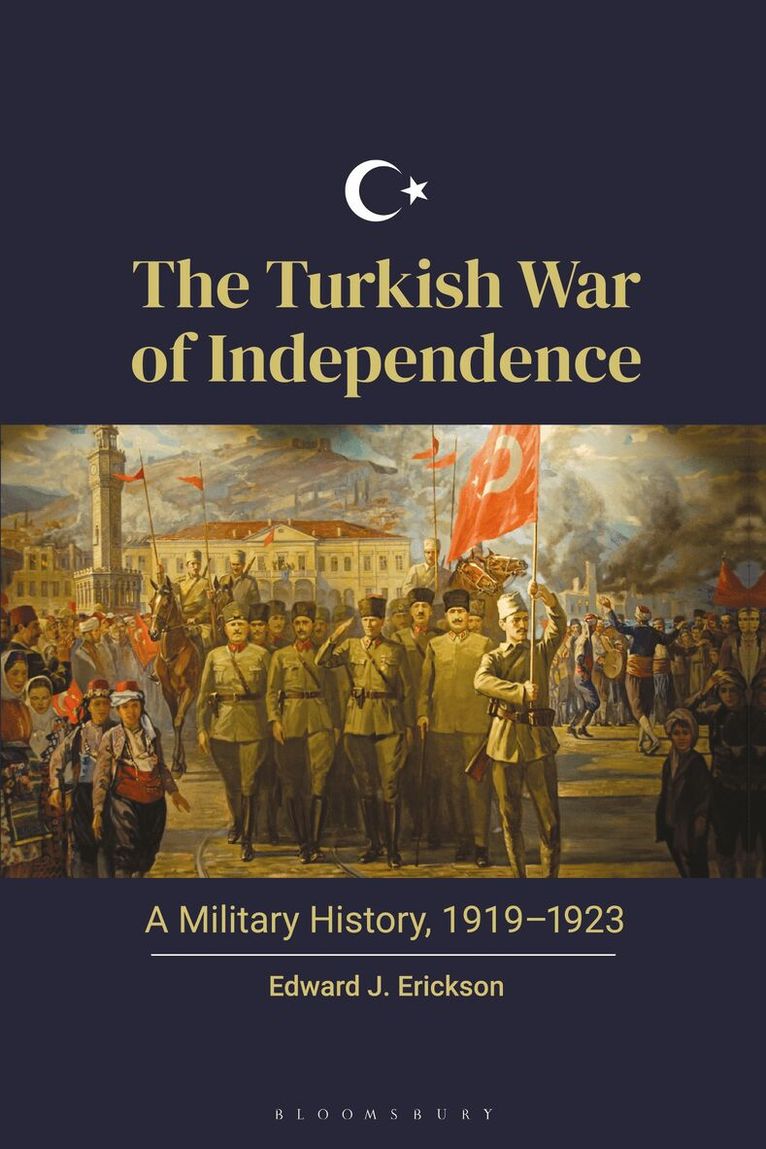
The dramatic story of the turbulent birth of modern Turkey, which rose out of the ashes of the Ottoman Empire to fight off Allied occupiers, Greek invaders, and internal ethnic groups to proclaim a new republic under Mustafa Kemal (Atatürk).It is exceedingly rare to run across a major historical event that has no comprehensive English-language history, but such was the case until The Turkish War of Independence brought together all the main strands of the story, including the chaotic ending of World War I in Asia Minor and the numerous military fronts on which the Turks defied odds, fighting off several armies to create their own state from the defeated ashes of the Ottoman Empire.This important book culminates Erickson's three-part series on the early 20th-century military history of the Ottomans and Turkey. Making wide use of specialized, hard-to-find Western and Turkish memoirs and military sources, it presents a narrative of the fighting, which eventually brought the Turkish Nationalist armies to victory. Often termed the "Greco-Turkish War," an incomplete description that misses its geographic and multinational scope, this war pitted Greek, Armenian, French, British, Italian, and insurgent forces against the Nationalists; the narrative shows these conflicts to have been distinct and separate to Turkey's opponents, while the Turkish side saw them as an interconnected whole.
Emergence of Soaring in America
Warren E. Eaton and Aviation in the Interwar Era
Inbunden, Engelska, 2026
1 245 kr
Skickas inom 10-15 vardagar
The Emergence of Soaring in America: Warren E. Eaton and Aviation in the Interwar Era explores Warren E. Eaton’s legacy and his contribution to the growth of aviation in America during the Interwar era.Edward J. Erickson and Elise B. Eaton construct the book around three seminal events in Warren E. Eaton’s life: marrying Genevieve “Vieve” Jacoby, being a First World War fighter pilot, and becoming enamored with motorless flight or soaring. The authors highlight how the U.S. Army trained its fighter pilots in its advanced flight training program in France during the First World War, provide a local perspective on the rise of small-scale commercial aviation and airports during the Interwar era, explore previously unpublished eye-witness testimony and newly discovered forensics to explain the circumstances surrounding Warren Eaton’s fatal flight over Biscayne Bay in Miami, Florida, and present the story behind why, how, and when Warren Eaton’s Falcon came to be on permanent display in the National Air and Space Museum in Chantilly, Virginia. Through Eaton’s family history and secondary sources, Erickson and Eaton fill in missing and episodic gaps in Warren E. Eaton’s extant literature and his contributions to sports, military, and commercial aviation history.
175 kr
Skickas inom 10-15 vardagar
Mustafa Kemal was one of the 20th century’s greatest combat commanders.Born in Salonika to a middle-class family, this book follows the life of a great commander who served in the Italo–Turkish War of 1911–12 and the Balkan Wars of 1912–13 before taking command of the 19th Division based in Gallipoli during World War l. His sterling service led to his promotion to corps command during the fighting against the Russians in the Caucasus.Following the end of the war he took command of the nationalist forces struggling against the occupation of Turkey, and managed to defeat Greek forces that sought to occupy Smyrna, thus preserving Turkey’s territorial integrity. Labelled as the ‘Man of Destiny’ by Winston Churchill, his services in Gallipoli and the War of Independence were pivotal to the success of his armies.After leading the nationalist army to victory, he established the modern Turkish Republic and became Turkey’s first ever president taking the name Atatürk, meaning Father of the Turks, as his own.
302 kr
Skickas inom 5-8 vardagar
163 kr
Tillfälligt slut
The Ottoman Army won a historic victory over the Allied forces at Gallipoli in 1915. This was one of the most decisive and clear-cut campaigns of the Great War. Yet the performance of the Ottomans, the victors, has often received less attention than that of the Allied army they defeated. Edward Erickson, in this perceptive study, now released in PB, concentrates on the Ottoman side of the campaign. He looks in detail at the Ottoman Army - its structure, tactics and deployment - and at the conduct of the commanders who served it so well. His pioneering work complements the extensive literature on other aspects of the Gallipoli battle, in particular those accounts that have focused on the experience of the British, Australians and New Zealanders. This highly original reassessment of the campaign will be essential reading for students of the Great War, especially the conflict in the Middle East. Endorsements 'Superb new book on the Ottoman perspective of Gallipoli. Erickson has provided extensive insights into the preparations for and execution of the defense of Gallipoli. He has drawn on multiple Turkish sources, including detailed maps...[His] insights place the campaign into a clearer perspective, dousing many of the traditional views of the Ottoman Army that have been perpetrated in the English literature...Highly recommended.' Great War Forum 'Many modern and contemporary military analysts assert that the [Gallipoli] campaign was ill-fated from the start. In this crisply drafted monograph. Ed Erickson helps us understand why.' Stand To! 'This book is a must for every reader about Gallipoli...in order to see how the Ottoman Fifth Army fought a successful and prolonged campaign against an enemy with far greater resources.' The Gallipolian
420 kr
Skickas inom 10-15 vardagar
The dramatic story of the turbulent birth of modern Turkey, which rose out of the ashes of the Ottoman Empire to fight off Allied occupiers, Greek invaders, and internal ethnic groups to proclaim a new republic under Mustafa Kemal (Atatürk).It is exceedingly rare to run across a major historical event that has no comprehensive English-language history, but such was the case until The Turkish War of Independence brought together all the main strands of the story, including the chaotic ending of World War I in Asia Minor and the numerous military fronts on which the Turks defied odds, fighting off several armies to create their own state from the defeated ashes of the Ottoman Empire.This important book culminates Erickson's three-part series on the early 20th-century military history of the Ottomans and Turkey. Making wide use of specialized, hard-to-find Western and Turkish memoirs and military sources, it presents a narrative of the fighting, which eventually brought the Turkish Nationalist armies to victory. Often termed the "Greco-Turkish War," an incomplete description that misses its geographic and multinational scope, this war pitted Greek, Armenian, French, British, Italian, and insurgent forces against the Nationalists; the narrative shows these conflicts to have been distinct and separate to Turkey's opponents, while the Turkish side saw them as an interconnected whole.
406 kr
Skickas inom 10-15 vardagar
The Ottoman Army had a significant effect on the history of the modern world and particularly on that of the Middle East and Europe. This study, written by a Turkish and an American scholar, is a revision and corrective to western accounts because it is based on Turkish interpretations, rather than European interpretations, of events. As the world's dominant military machine from 1300 to the mid-1700's, the Ottoman Army led the way in military institutions, organizational structures, technology, and tactics. In decline thereafter, it nevertheless remained a considerable force to be counted in the balance of power through 1918. From its nomadic origins, it underwent revolutions in military affairs as well as several transformations which enabled it to compete on favorable terms with the best of armies of the day. This study tracks the growth of the Ottoman Army as a professional institution from the perspective of the Ottomans themselves, by using previously untapped Ottoman source materials. Additionally, the impact of important commanders and the role of politics, as these affected the army, are examined. The study concludes with the Ottoman legacy and its effect on the Republic and modern Turkish Army.This is a study survey that combines an introductory view of this subject with fresh and original reference-level information. Divided into distinct periods, Uyar and Erickson open with a brief overview of the establishment of the Ottoman Empire and the military systems that shaped the early military patterns.
The Emergence of Soaring in America: Warren E. Eaton and Aviation in the Interwar Era
Häftad, Engelska, 2027
664 kr
Kommande