Edward J. Lincoln - Böcker
Visar alla böcker från författaren Edward J. Lincoln. Handla med fri frakt och snabb leverans.
7 produkter
7 produkter
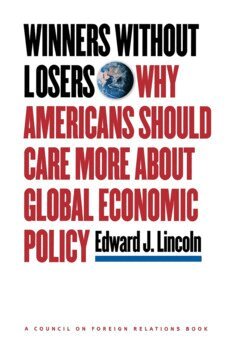
Winners Without Losers
Why Americans Should Care More About Global Economic Policy
Inbunden, Engelska, 2007
526 kr
Skickas inom 10-15 vardagar
In the two decades since the United States became the world's only superpower, policymakers in Washington have seemingly abandoned many tools of statecraft and instead now rely on U.S. military strength as the key—and sometimes the sole—element of its global strategy. Yet economists see a world in which the salience of military power has been shrinking as greater affluence and deepening interdependence transform the global economy.In Winners without Losers, Edward J. Lincoln, a highly regarded economist, contends that the best chance the United States has of ensuring peace and prosperity—for itself and for the rest of the world—will be found at conference tables rather than on the battlefield. Shining a spotlight on foreign trade policy as an agent for political change, this cogent and well-argued book urges policymakers, the business community, and citizens to find a path to increased stability by forging stronger international economic ties.Interdependence is founded on cooperation with other nations, and in particular on multilateral institutions. Over the past five years, in particular, American policy has moved strongly away from cooperation and, in a single-minded pursuit of the "war against global terror," has largely ignored economic issues. Extending the scope of his previous work, which started with the economic transformations of postwar Japan and more recently considered the evolution of economic linkages and cooperation in East Asia, Lincoln applies regional lessons to the world stage. More than a critique of current policies, Winners without Losers argues for a transformation of American foreign policy that recognizes the new realities of the globalized world-realities that America's leaders ignore at the nation's peril.
287 kr
Skickas inom 10-15 vardagar
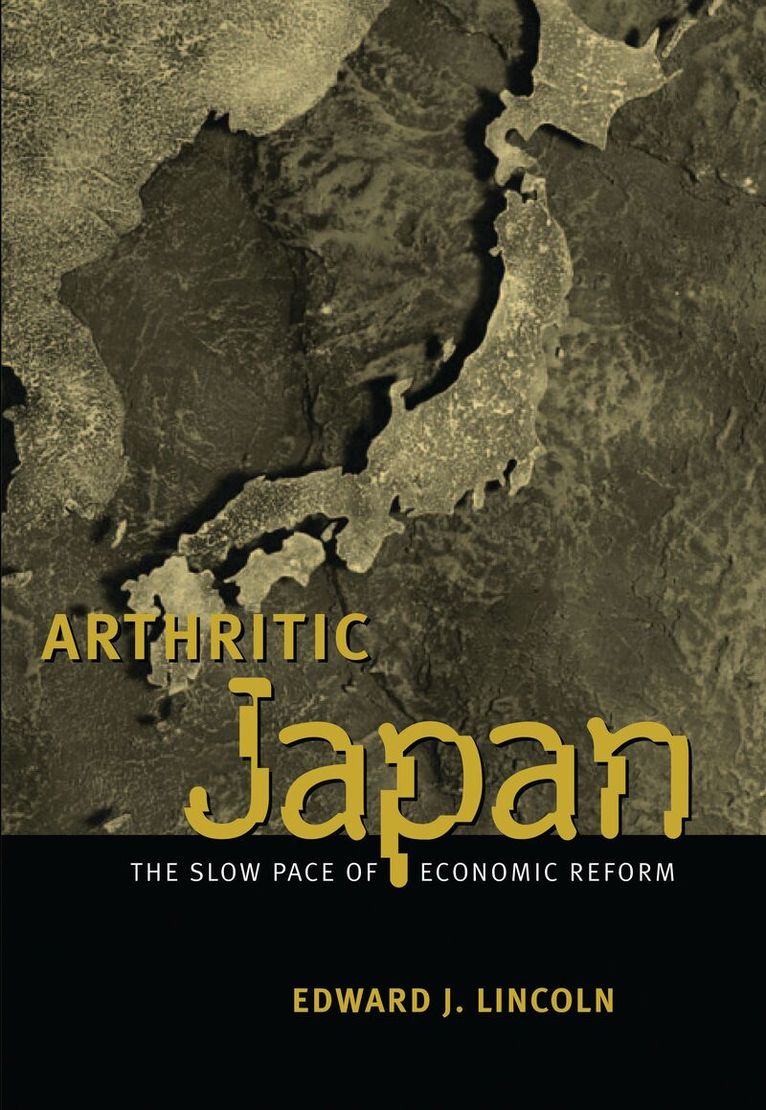
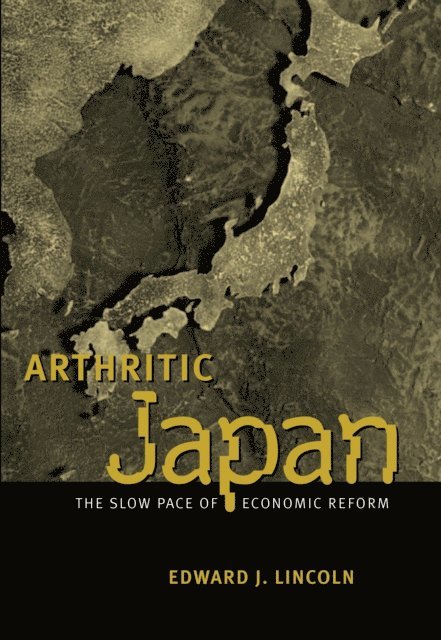
In the late 1980s, Japan's strong economic performance put it on a the verge of becoming a major player in regional and global affairs. But nearly a decade of economic stagnation, a mounting of bad debts, and a continuing stream of scandals have tarnished the country's distinctive economic model. At the turn of the millennium, the Japanese economy remained mired in a pattern of stagnation. As this disappointing condition dragged on, the government pursued policies to restore economic health. Yet Japan has been slow to embrace the systemic reform on which a robust economic recovery depends. In Arthritic Japan, Edward J. Lincoln examines the causes and implications of this weak response. Concluding that Japan is unlikely to pursue the vigorous reform necessary for economic growth, Lincoln warns of serious consequences: a stumbling economy bedeviled by recession and financial crisis, eroding leadership in economic and security issues, a continued defensive trade posture, and a disgruntled population that could turn a more nationalistic stance in foreign policy.
301 kr
Skickas inom 10-15 vardagar
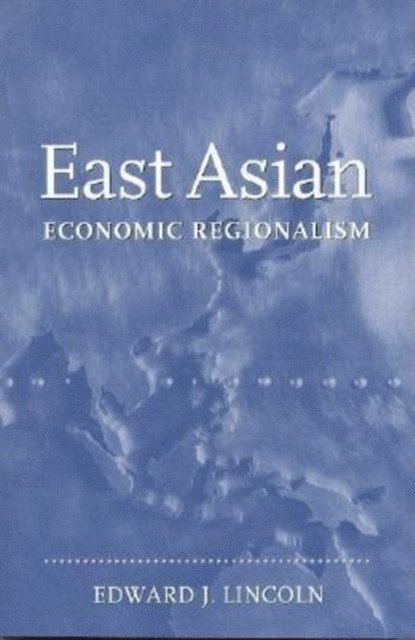
A Brookings Institution Press and the Council on Foreign Relations publicationSomething new is happening across East Asia. A region notable for its lack of internal economic links is discussing regional cooperation on trade, investment, and exchange rates. Because of negotiations elsewhere around the globe on regional tradesuch as those that led to the consolidation of the European Union, the formation of the North American Free Trade Area, and the rapid proliferation of bilateral free trade areasthe talk is not surprising. Nevertheless, East Asia's past inertia with regard to forming a regional partnership raises many questions about its emerging regionalism. Why has the region suddenly shifted from taking a global approach to economic issues to discussing a regional bloc? How fast and how far will the new regionalism progress? Will the region become a version of the European Union, or something far less? What is the probable impact on American economic and strategic interestsare the likely developments something that the U.S. government should encourage or discourage? Edward Lincoln takes up these questions, exploring what is happening to regional trade and investment flows and what sort of regional arrangements are the most sensible.Lincoln argues that an exclusive grouping is unlikely. Free trade negotiations have brought some economies in the region together, but they also have led to links with nations outside the region. Some regional governments most notably Japan, continue to have difficulty embracing the concept of free trade, even with favored regional partners. In the wake of the Asian financial crisis, governments also have looked at cooperating on exchange rates, but they have done little to move forward.The U.S. government must decide how to respond to these developments in East Asia. An exclusively Asian form of regionalism could run counter to American economic interests, and the U.S. government has reacted negatively to some of these proposals in the past. Because trade and investment links between the co
274 kr
Skickas inom 10-15 vardagar
Since 1980, Japan's international economic position has undergone a historic transformation that is now having significant consequences for Japan, the United States, Europe, and other countries around the world. In this book, Edward J. Lincoln analyzes the major economic changes that occurred in Japan during the 1980s, including macroeconomic shifts, financial deregulation, yen appreciation, rising labor costs brought on by long-term demographic changes, and technological success.Since 1945, the Japanese have shied away from active involvement in most of the complications and problems of the international community. Now, however, a surge in outward foreign investment, particularly direct investment, has involved the nation, more intimately with the outside world than in the past. As a result, Japan has had to cope with some difficult new questions: how to participate meaningfully in the work of the major multilateral economic institutions and the United Nations, how to expand or change the country's foreign aid program, how to take part in the intentional debate on environmental policy, and how deeply to become involved in solving the world's political problems.Lincoln asserts that overcoming the string of insularity and passivism for the years since 1945 will not be easy. He proposes several specific policies that would lead Japan toward a more productive international engagement and suggests that these changes will also serve the objectives of American foreign policy.The 1993 elections and the new coalition government in Japan offer a greater possibility of domestic change; the mood of the nation has shifted away from continued acceptance of the policies of the past. There is now a greater opportunity for the American government to engage in a productive dialogue that can encourage Japan toward a more open and active global role.
282 kr
Skickas inom 10-15 vardagar
Japan is the great economic success story of the postwar period, growing at unprecedented rates to become one of the world's most advanced industrial nations. But since the early 1970s, Asia's economic giant has had to contend with many of the problems encountered by Western economies--slower growth, increased unemployment, rapid changes in the financial and industrial sectors--problems that have permanently transformed its economy and pose crucial challenges for its leaders.In this book, Edward J. Lincoln discusses Japan's burst of growth and the complex interplay of demographic, cultural, economic, and political forces that shaped the subsequent emergence of large domestic imbalances. The motivation and impact of Tokyo's successive attempts to deal with slower growth receive special attention: ballooning government deficits that supported domestic growth in the late 1970s, a determined switch to austerity measures in the 1980s as a surging current-account surplus conveniently buoyed the economy, and as yet uncertain responses to the recent appreciation of the yen that has capped the external surpluses.Lincoln focuses on the changes experienced by Japan's financial institutions and their implications for international economic transactions. Slower growth and altered monetary flows have brought increasing domestic and international pressures for deregulating financial institutions, and the government has responded cautiously. The study analyzes the resulting tensions and crosscurrents within Japan and the strains that have developed in relations with the United States. It concludes with a lucid presentation of Japan's options for stimulating domestic demand through reducing private-sector savings, increasing investment, and raising government spending, as well as appropriate U.S. policies to promote these outcomes. Whatever policy decisions Japan makes in the next few years will be shaped by the economic forces and institutional framework Lincoln outlines.
282 kr
Skickas inom 10-15 vardagar
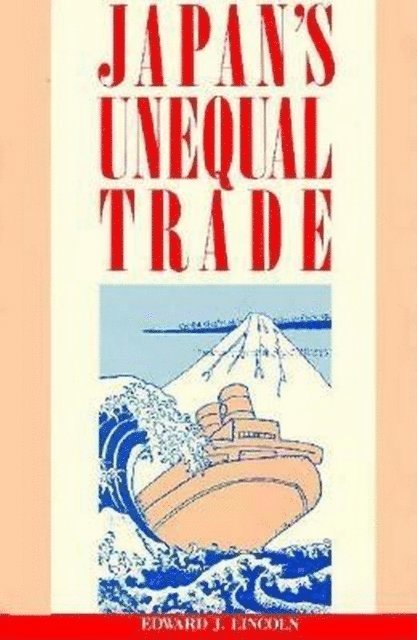
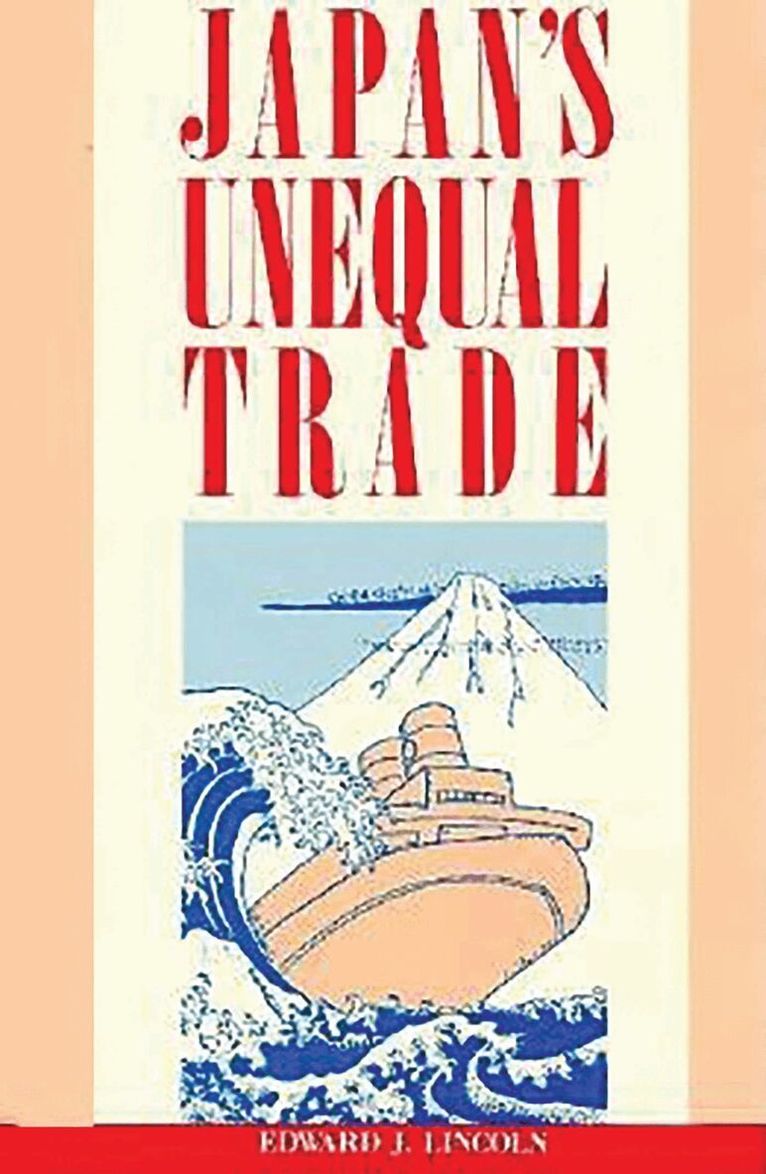
With all the rapid economic success in Japan, it is easy to forget just how insular the nation has been, and how strikingly different its trading patterns remain from those of other industrialized nations. Japan is moving into an era of greater interaction with the world, but Lincoln contends that this does not mean the United States and other nations can end their pressure on Japan to continue opening its markets. ""Now is the time to bring Japan into the fold,"" Lincoln writes in his introduction.Lincoln focuses on the question of access to Japanese markets, Japan's pattern of trade on imports, and the consequences of large trade and current-account imbalances. He argues against the United States abandoning its free-trade ideal and offers suggestions for applying pressure to encourage greater real access to Japanese markets.
252 kr
Skickas inom 10-15 vardagar
In this book, Edward J. Lincoln tackles the thorny issue of U.S. trade relations with Japan, the subject of so much tension in the 1990s. In so doing, he builds on his earlier Brookings book, Japan's Unequal Trade. Lincoln argues that statistical evidence shows only modest progress in diminishing Japan's ""distinctiveness."" Despite an upturn in the mid-1990s, import penetration, intra-industry trade, and inward foreign direct investment all remain low relative to most other nations. High profile negotiating efforts by both the Bush and Clinton administrations made progress in chipping away at protectionist barriers but fundamental problems remain. While Lincoln offers suggestions on what needs to be done by both sides, the most important lesson drawn from recent experience is that expectations should be lowered. Any feasible approach to making markets more open in Japan is likely to yield slow progress. Such realism--not to be confused with defeatism--is the only approach that has any chance of realizing gains over time.