Edward J. McCaffery – författare
Visar alla böcker från författaren Edward J. McCaffery. Handla med fri frakt och snabb leverans.
7 produkter
7 produkter
Häftad, Engelska, 2012
282 kr
Skickas inom 5-8 vardagar
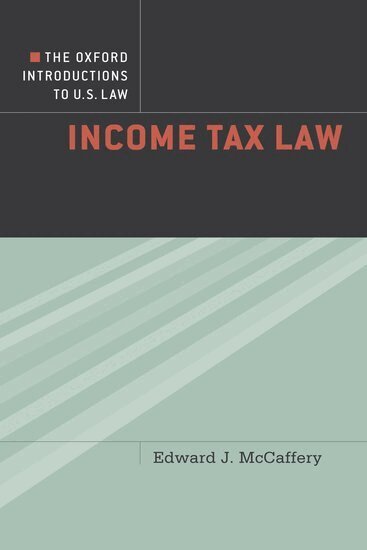
In The Oxford Introductions to U.S. Law: Income Tax Law, Edward McCaffery presents an accessible introduction to the major topics in the field of federal income taxation, such as income, deductions, and recognition of gains and losses. After discussing central rules and doctrines individually, Edward McCaffery offers a very sophisticated yet clear explanation of the interplay among them, carefully describing how they work together to carry out the policy goals of the U.S. tax system.Professor McCaffery describes, for example, how the current income tax in the United States has increasingly become a wage tax that favors those with capital rather than those whose money comes from labor. In explaining the consequences of tax policy on individuals, he also considers important possible alternatives for income taxation in the U.S. The Oxford Introductions to U.S. Law: Income Tax Law sets forth the 'who,' 'what,' 'when,' and 'why' of income tax law and describes the essential concepts of the field in a clear and concise manner that helps students and non-experts increase their understanding of the policies behind modern tax law and the ways in which these policies affect different types of individuals.
Inbunden, Engelska, 2027
1 088 kr
Kommande
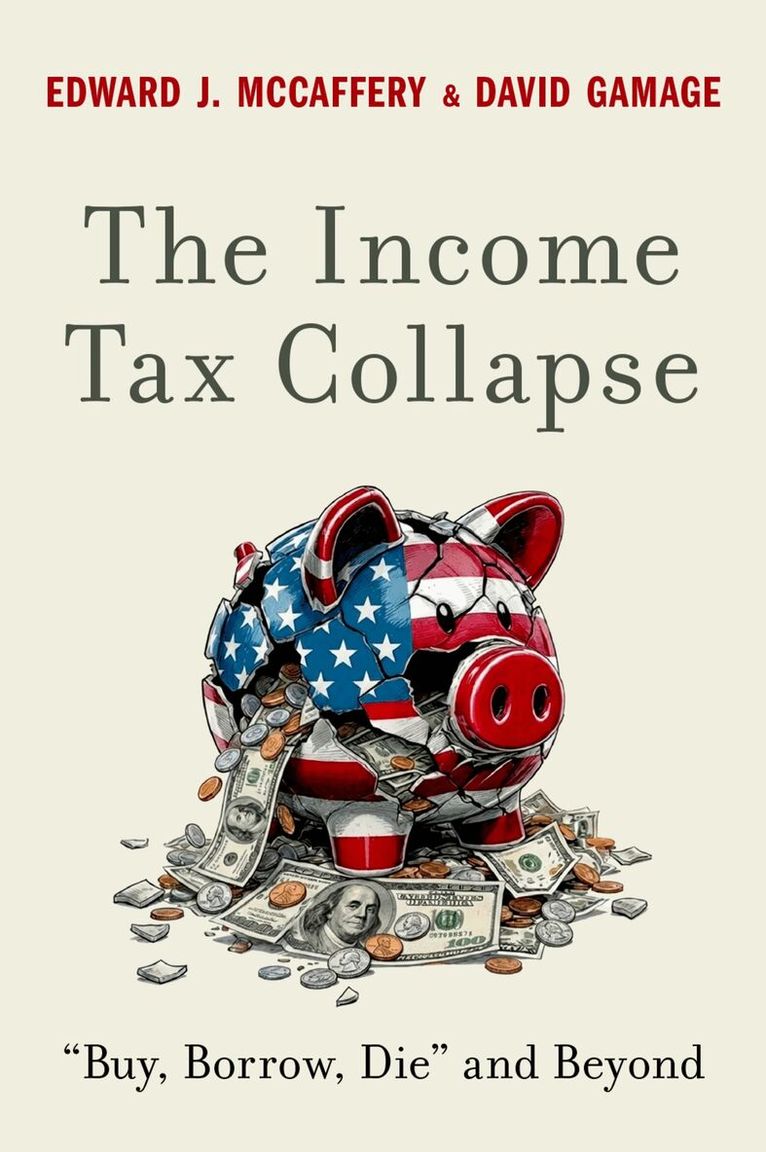
For more than a century, the United States has relied on the income tax to fund government and shape distributional policy. Designed to tax both labor and capital, the system has drifted from that ambition. The Income Tax Collapse offers a clear, accessible account of how this shift occurred.At the center of the book is the set of techniques known as "buy, borrow, die", longstanding features of tax law that allow wealthy households to accumulate and spend capital income while reporting little or none of it. These practices now shape outcomes for entrepreneurs, business owners, workers, mixed work-wealth households, and the wealthiest citizens.Looking ahead, the book identifies the structural pressures driving the system and presents realistic reform options, from adjustments to realization rules to broader shifts such as mark-to-market, wealth taxation, or progressive spending taxes.
E-bok
PDF, Engelska, 2007533 kr
Läs direkt efter köp
Taxing Women comprises both an insightful, critical analysis of the gender biases in current tax laws and a wake-up call for all those concerned with gender justice to pay more attention to the pervasive impact of such laws. Providing real-life examples, Edward McCaffery shows how tax laws are actually written to punish married couples who file jointly. No dual-income household can afford not to read this book before filing their taxes. "Taxing Women is a must-have primer for any woman who wants to understand how our current tax system affects her family''s economic condition. In plain English, McCaffery explains how the tax code stacks the deck against women and why it''s in women''s economic interest to lead the next great tax rebellion."—Patricia Schroeder "McCaffery is an expert on the interplay between taxes and social policy. . . . Devastating in his analysis. . . . Intriguing."—Harris Collingwood, Working Women "A wake-up call regarding the inequalities of an archaic system that actually penalizes women for working."—Publishers Weekly
Häftad, Engelska, 1999
257 kr
Skickas inom 5-8 vardagar
Taxing Women comprises both an insightful, critical analysis of the gender biases in current tax laws and a wake-up call for all those concerned with gender justice to pay more attention to the pervasive impact of such laws. Providing real-life examples, Edward McCaffery shows how tax laws are actually written to punish married couples who file jointly. No dual-income household can afford not to read this book before filing their taxes."Taxing Women is a must-have primer for any woman who wants to understand how our current tax system affects her family's economic condition. In plain English, McCaffery explains how the tax code stacks the deck against women and why it's in women's economic interest to lead the next great tax rebellion."—Patricia Schroeder"McCaffery is an expert on the interplay between taxes and social policy. . . . Devastating in his analysis. . . . Intriguing."—Harris Collingwood, Working Women"A wake-up call regarding the inequalities of an archaic system that actually penalizes women for working."—Publishers Weekly
Häftad, Engelska, 2006
265 kr
Skickas inom 5-8 vardagar
Everyone knows that the current tax system is unfair. Some of the richest people in America pay no tax, while a huge share of the tax burden falls on the rest of us. A mere glance at the tax code confirms that it is far too complex, with volumes of rules that no ordinary person could possibly comprehend. What is to be done? Some conservatives have called for a so-called flat tax. But a flat tax is not necessarily a simple tax, and "flat" means "more" for most taxpayers: a rise in middle-class taxes to finance tax cuts for the rich. Is there another choice? In clear, easy-to-understand language, Edward J. McCaffery proposes a straightforward and fair alternative. A "fair not flat" tax that is consistent and progressive would tax spending, not income and savings. And if it were collected at its lower levels through a national sales tax, most people would not have to file a return. A supplemental tax on spending for the wealthiest individuals would make the national sales tax progressive. Under McCaffery's system, a family of four would pay no tax on their first $20,000 in spending, and 15 percent on the next $60,000. Only the few families who spend more than $80,000 a year would be subject to the supplemental tax. Necessities would be taxed less than ordinary and luxury items. No one would be taxed directly on savings. The estate and gift or so-called death tax would be abolished, for the simple reason that dead people don't spend. The "fair not flat" tax would fall on heirs when and as they spend their good fortune. Perhaps best of all, most Americans would not have to fill out tax returns.Simpler, more efficient, fairer, and more reflective of America's current social values, McCaffery's "fair not flat" tax could help get us out of the tax mess that politicians and special interests have gotten us into, improving the whole country in the process. Read Fair Not Flat to find out how. “In Fair Not Flat, Mr. McCaffery lays out the case for a consumption tax. He does so in a reader-friendly way, presenting his argument with very few footnotes, equations or technical terms. The consumption of the book, so to speak, is not at all taxing. And its argument is well worth pondering.”—Bruce Bartlett, Wall Street Journal
E-bok
PDF, Engelska, 2008553 kr
Läs direkt efter köp
Everyone knows that the current tax system is unfair. Some of the richest people in America pay no tax, while a huge share of the tax burden falls on the rest of us. A mere glance at the tax code confirms that it is far too complex, with volumes of rules that no ordinary person could possibly comprehend. What is to be done? Some conservatives have called for a so-called flat tax. But a flat tax is not necessarily a simple tax, and "flat" means "more" for most taxpayers: a rise in middle-class taxes to finance tax cuts for the rich. Is there another choice? In clear, easy-to-understand language, Edward J. McCaffery proposes a straightforward and fair alternative. A "fair not flat" tax that is consistent and progressive would tax spending, not income and savings. And if it were collected at its lower levels through a national sales tax, most people would not have to file a return. A supplemental tax on spending for the wealthiest individuals would make the national sales tax progressive. Under McCaffery''s system, a family of four would pay no tax on their first $20,000 in spending, and 15 percent on the next $60,000. Only the few families who spend more than $80,000 a year would be subject to the supplemental tax. Necessities would be taxed less than ordinary and luxury items. No one would be taxed directly on savings. The estate and gift or so-called death tax would be abolished, for the simple reason that dead people don''t spend. The "fair not flat" tax would fall on heirs when and as they spend their good fortune. Perhaps best of all, most Americans would not have to fill out tax returns. Simpler, more efficient, fairer, and more reflective of America''s current social values, McCaffery''s "fair not flat" tax could help get us out of the tax mess that politicians and special interests have gotten us into, improving the whole country in the process. Read Fair Not Flat to find out how. “In Fair Not Flat, Mr. McCaffery lays out the case for a consumption tax. He does so in a reader-friendly way, presenting his argument with very few footnotes, equations or technical terms. The consumption of the book, so to speak, is not at all taxing. And its argument is well worth pondering.”—Bruce Bartlett, Wall Street Journal
Inbunden, Engelska, 1997
378 kr
Tillfälligt slut
The US tax system was designed in the 1930s and 1940s, when the typical American household was a single-income family featuring a male breadwinner and a female homemaker. Writing for an audience with no prior knowledge of tax, this study shows how the modern tax system penalizes two-earner families, pressuring some families to break up and many mothers to stay at home. The author illustrates how working wives are hard hit by tax law inequalities. As secondary earners under a joint filing system, wives enter the workforce at a high tax rate dictated by their husband's salary. Using real-life examples, Mccaffery shows how many wives actually lose money by working; why social security is a pure tax, with no benefits, on most working wives; and why part-time work is often not a viable option for married mothers. The book seeks to find solutions to these entrenched gender-based problems in the tax code, which affect all aspects of social life. Mccaffery proposes simple, but effective, changes in the tax system to alleviate the stresses facing women.In fact, standard economic theory has long recommended taxing married women less than men - exactly the opposite of what the USA does at present.