Edward Jones Corredera – författare
Visar alla böcker från författaren Edward Jones Corredera. Handla med fri frakt och snabb leverans.
8 produkter
Odious Debt
Bankruptcy, International Law, and the Making of Latin America
Inbunden, 2024
1384 kr
Lägg i varukorg
What are fallen tyrants owed? What makes debt illegitimate? And when is bankruptcy moral? Drawing on new archival sources, this book shows how Latin American nations have wrestled with the morality of indebtedness and insolvency since their foundation, and outlines how their history can shed new …
Odious Debt
Bankruptcy, International Law, and the Making of Latin America
E-bok, 2024
1248 kr
Lägg i varukorg
What are fallen tyrants owed? What makes debt illegitimate? And when is bankruptcy moral? Drawing on new archival sources, this book shows how Latin American nations have wrestled with the morality of indebtedness and insolvency since their foundation, and outlines how their history can shed new …
Odious Debt
Bankruptcy, International Law, and the Making of Latin America
E-bok, 2024
1248 kr
Lägg i varukorg
What are fallen tyrants owed? What makes debt illegitimate? And when is bankruptcy moral? Drawing on new archival sources, this book shows how Latin American nations have wrestled with the morality of indebtedness and insolvency since their foundation, and outlines how their history can shed new …
The Unseen History of International Law
Av Mark Somos, Matthew Cleary m. fl.
Inbunden, 2025
2504 kr
Lägg i varukorg
The Unseen History of International Law locates and describes almost one thousand surviving copies of the first nine editions of Hugo Grotius' De iure belli ac pacis (IBP) published between 1625 and 1650. Meticulously reconstructing the publishing history of these first nine editions and …
Unseen History of International Law
Av Emanuele Salerno, Edward Jones Corredera m. fl.
E-bok, 2025
2198 kr
Lägg i varukorg
The Unseen History of International Law locates and describes almost one thousand surviving copies of the first nine editions of Hugo Grotius'' De iure belli ac pacis (IBP) published between 1625 and 1650. Meticulously reconstructing the publishing history of these first nine editions and …
Unseen History of International Law
Av Emanuele Salerno, Edward Jones Corredera m. fl.
E-bok, 2025
2247 kr
Lägg i varukorg
The Unseen History of International Law locates and describes almost one thousand surviving copies of the first nine editions of Hugo Grotius'' De iure belli ac pacis (IBP) published between 1625 and 1650. Meticulously reconstructing the publishing history of these first nine editions and …
Supplicant Empires
Searching for the Iberian World in Global History
Häftad, 2025
1266 kr
Lägg i varukorg
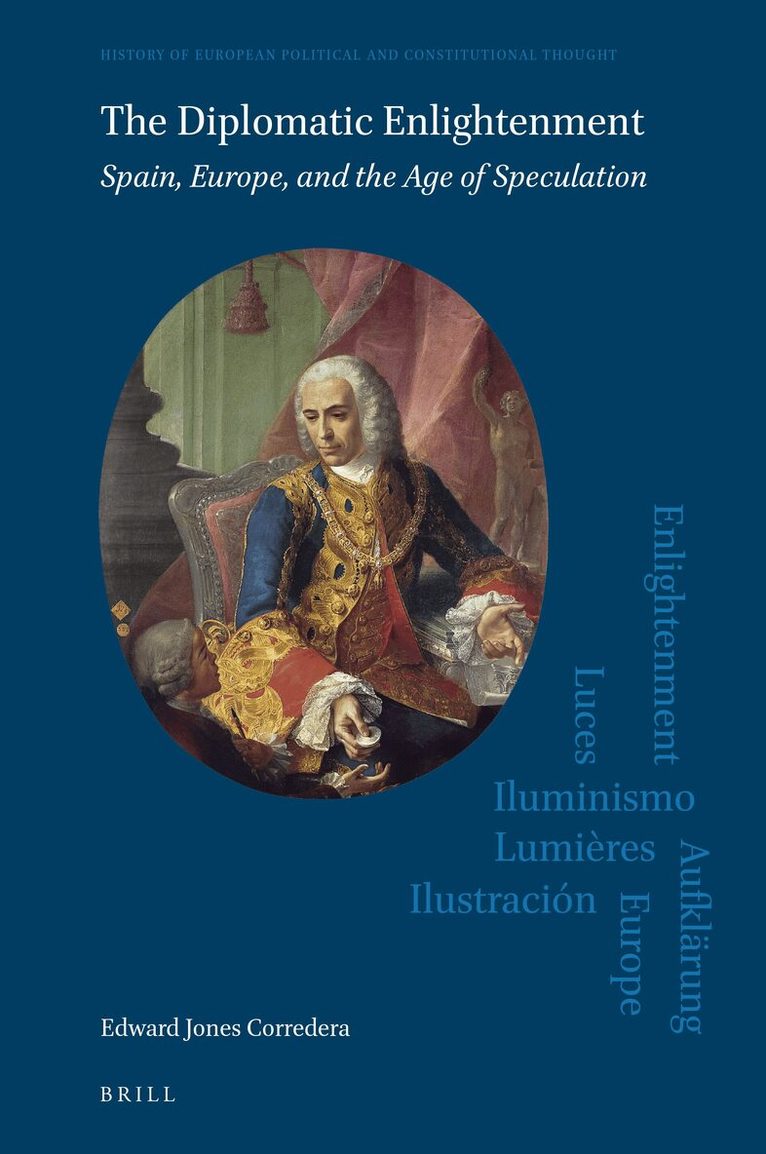
Diplomatic Enlightenment
Spain, Europe, and the Age of Speculation
Inbunden, 2021
1928 kr
Lägg i varukorg
This book reconfigures the study of the origins of the Enlightenment in the Spanish Empire. Challenging dominant interpretations of the period, this book shows that early eighteenth-century Spanish authors turned to Enlightenment ideas to reinvent Spain’s role in the European balance of power. And …