Edward Matenga - Böcker
Visar alla böcker från författaren Edward Matenga. Handla med fri frakt och snabb leverans.
2 produkter
2 produkter
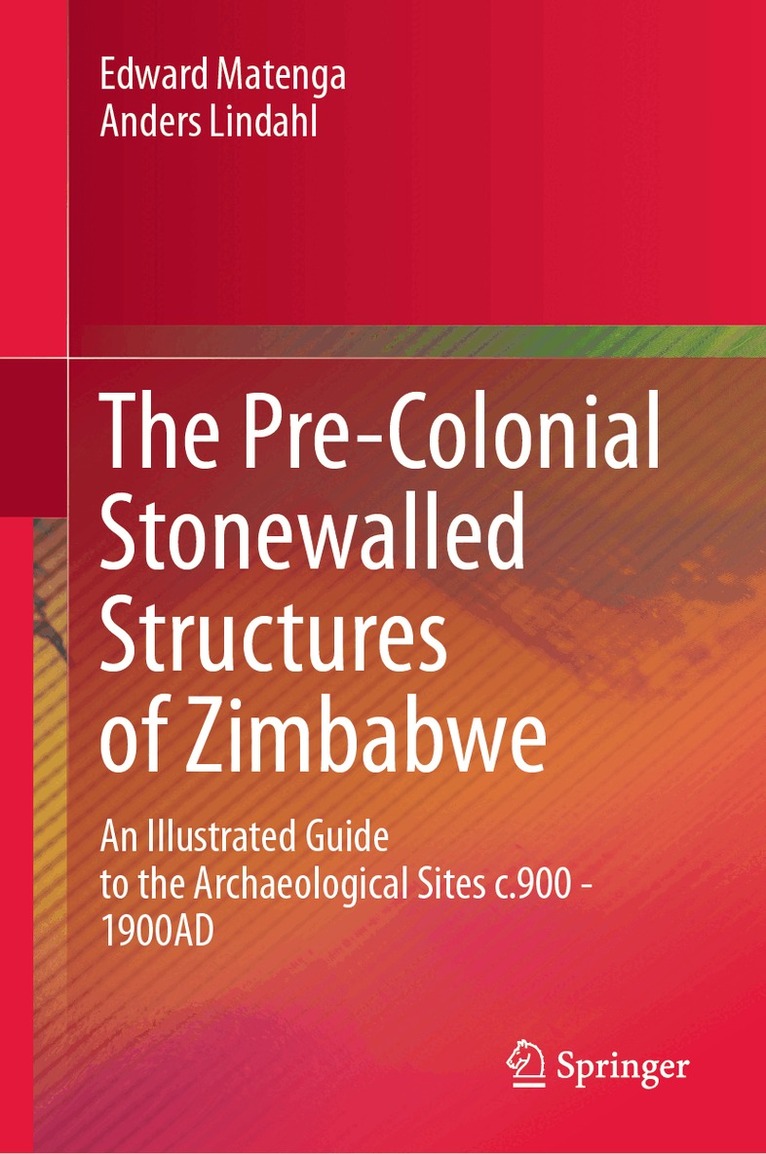
Pre-Colonial Stonewalled Structures of Zimbabwe
An Illustrated Guide to the Archaeological Sites c.900 - 1900AD
Inbunden, Engelska, 2026
990 kr
Skickas inom 10-15 vardagar
This book provides a general guide to stone-structures of the pre-colonial period called zimbabwes. This is a name which denotes their usage as prestige buildings and that a particular quality of masonry with frequent application of wall decoration patterns was required, which distinguishes them from many other stone structures of coarse workmanship. At least 300 sites are known within the borders of Zimbabwe alone, while a few more are found in Botswana, South Africa and Mozambique. However, recent findings have indicated that stone buildings in southern Angola of similar typology also carry decoration patterns that suggests a much wider distribution in the region than was previously thought.The word Zimbabwe is of historical origin which has been customized to refer to a specific typology of stone walls and to distinguish them from the rest of low-grade buildings which number several hundred. In the 16th century, it denoted royal and chiefly settlements built in stone and it was used figuratively to imply the presence there of such important political figures. In this guide, zimbabwe (lower case and in italics) refers to stone walls whereas when in upper case it refers either to Great Zimbabwe or Zimbabwe the modern country. This work is the first comprehensive volume to act as a guide to the archaeological stone wall structures. Zimbabwe sites are the only immovable cultural remains of substantial physical form that have been inherited from a pre-colonial past. In a post-colonial state, they are extremely valuable as tangible evidence of the historical continuity of indigenous populations with a pre-colonial past. Their history implies an inheritance for present and future generations and entrust ownership to the public. Religious activities connected with the sites imply not just vestigial importance, but embody cosmological values that bind people together. A descriptive inventory such as this guidebook serves two purposes, i.e. a heritage register to support conservation programmes and as a popular study guide to interest both local and international visitors.
Del 16 - Studies in Global Archaeology
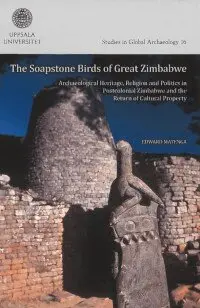
The soapstone birds of Great Zimbabwe : archaeological heritage, religion and politics in postcolonial Zimbabwe and the return of cultural property
Häftad, Engelska, 2011
275 kr
Skickas inom 5-8 vardagar
At least eight soapstone carvings of birds furnished a shrine, Great Zimbabwe, in the 19th century. This large stonewalled settlement, once a political and urban centre, had been much reduced for four centuries, although the shrine continued to operate as local traditions dictated. The Zimbabwe Birds were handed down from a past that has only been partially illuminated by archaeological inquiry and ethnography, as has the site as such. This thesis publishes the first detailed catalogue of the Birds and attempts to reconstruct their provenance at the site based on the earliest written accounts. A modern history of the Birds unfolds when the European settlers removed them from the site in dubious transactions, claiming them as rewards of imperial conquest. As the most treasured objects from Great Zimbabwe, the fate of the Birds has been intertwined with that of the site in a matrix of contested meanings and ownership. This thesis explores how the meanings of cultural objects have a tendency to shift and to be ephemeral, demonstrating the ability of those in power to appropriate and determine such meanings. In turn, this has a bearing on ownership claims, and gives rise to an “authorized heritage discourse” syndrome. The forced migrations of the Zimbabwe Birds within the African continent and to Europe and their subsequent return to their homeland decades later are characterised by melodramatic episodes of manoeuvring by traders, politicians and theologians, and of the return of stolen property cloaked as an amicable barter deal, or a return extolled as an act of generosity. International doctrines that urge the return of cultural property are influenced by Western hegemonic ideologies. Natural justice is perverted, as stolen property acquires a (superior) significance in its new context, which merits the extinction of the original provenance. This leaves “generosity” and goodwill as the promises of the future, holding the fate of one Zimbabwe Bird still kept in exile in South Africa.