Edward Slingerland - Böcker
Visar alla böcker från författaren Edward Slingerland. Handla med fri frakt och snabb leverans.
11 produkter
11 produkter
456 kr
Skickas inom 5-8 vardagar
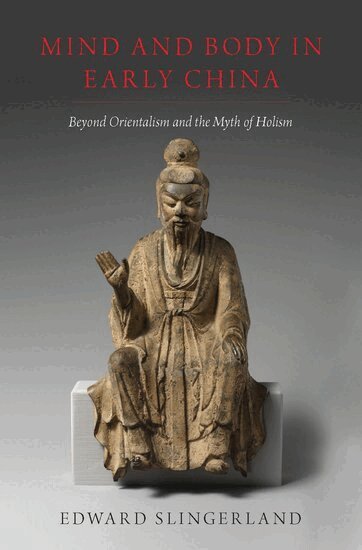
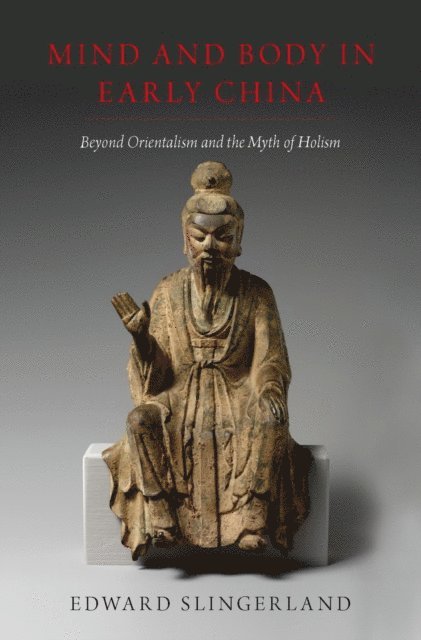
Mind and Body in Early China critiques Orientalist accounts of early China as the radical, "holistic" other. The idea that the early Chinese held the "strong" holist view, seeing no qualitative difference between mind and body, has long been contradicted by traditional archeological and qualitative textual evidence. New digital humanities methods, along with basic knowledge about human cognition, now make this position untenable. A large body of empirical evidence suggests that "weak" mind-body dualism is a psychological universal, and that human sociality would be fundamentally impossible without it.Edward Slingerland argues that the humanities need to move beyond social constructivist views of culture, and embrace instead a view of human cognition and culture that integrates the sciences and the humanities. Our interpretation of texts and artifacts from the past and from other cultures should be constrained by what we know about the species-specific, embodied commonalities shared by all humans. This book also attempts to broaden the scope of humanistic methodologies by employing team-based qualitative coding and computer-aided "distant reading" of texts, while also drawing upon our current best understanding of human cognition to transform our basic starting point. It has implications for anyone interested in comparative religion, early China, cultural studies, digital humanities, or science-humanities integration.
Effortless Action
Wu-wei as Conceptual Metaphor and Spiritual Ideal in Early China
Inbunden, Engelska, 2003
1 235 kr
Skickas inom 5-8 vardagar
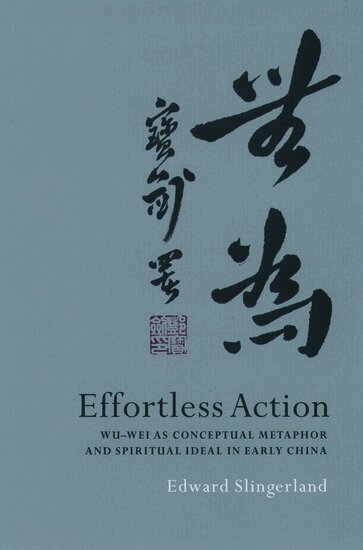
This book presents a systematic account of the role of the personal spiritual ideal of wu-wei--literally "no doing," but better rendered as "effortless action"--in early Chinese thought. Edward Slingerland's analysis shows that wu-wei represents the most general of a set of conceptual metaphors having to do with a state of effortless ease and unself-consciousness. This concept of effortlessness, he contends, serves as a common ideal for both Daoist and Confucian thinkers. He also argues that this concept contains within itself a conceptual tension that motivates the development of early Chinese thought: the so-called "paradox of wu-wei," or the question of how one can consciously "try not to try." Methodologically, this book represents a preliminary attempt to apply the contemporary theory of conceptual metaphor to the study of early Chinese thought. Although the focus is upon early China, both the subject matter and methodology have wider implications. The subject of wu-wei is relevant to anyone interested in later East Asian religious thought or in the so-called "virtue-ethics" tradition in the West. Moreover, the technique of conceptual metaphor analysis--along with the principle of "embodied realism" upon which it is based--provides an exciting new theoretical framework and methodological tool for the study of comparative thought, comparative religion, intellectual history, and even the humanities in general. Part of the purpose of this work is thus to help introduce scholars in the humanities and social sciences to this methodology, and provide an example of how it may be applied to a particular sub-field.
Effortless Action
Wu-wei As Conceptual Metaphor and Spiritual Ideal in Early China
Häftad, Engelska, 2007
402 kr
Skickas inom 5-8 vardagar
This book presents a systematic account of the role of the personal spiritual ideal of wu-wei--literally "no doing," but better rendered as "effortless action"--in early Chinese thought. Edward Slingerland's analysis shows that wu-wei represents the most general of a set of conceptual metaphors having to do with a state of effortless ease and unself-consciousness. This concept of effortlessness, he contends, serves as a common ideal for both Daoist and Confucian thinkers. He also argues that this concept contains within itself a conceptual tension that motivates the development of early Chinese thought: the so-called "paradox of wu-wei," or the question of how one can consciously "try not to try." Methodologically, this book represents a preliminary attempt to apply the contemporary theory of conceptual metaphor to the study of early Chinese thought. Although the focus is upon early China, both the subject matter and methodology have wider implications. The subject of wu-wei is relevant to anyone interested in later East Asian religious thought or in the so-called "virtue-ethics" tradition in the West. Moreover, the technique of conceptual metaphor analysis--along with the principle of "embodied realism" upon which it is based--provides an exciting new theoretical framework and methodological tool for the study of comparative thought, comparative religion, intellectual history, and even the humanities in general. Part of the purpose of this work is thus to help introduce scholars in the humanities and social sciences to this methodology, and provide an example of how it may be applied to a particular sub-field.
1 932 kr
Skickas inom 5-8 vardagar
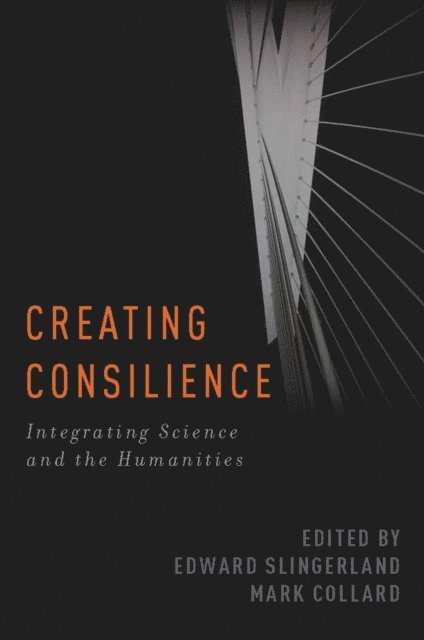
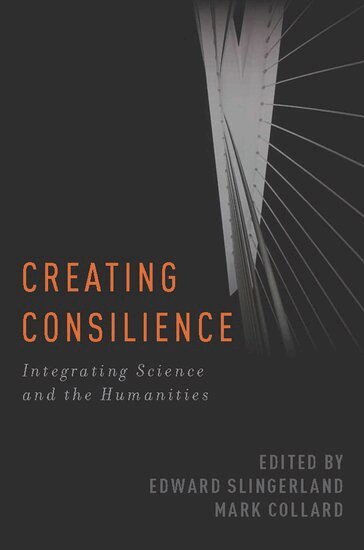
Calls for a "consilient" or "vertically integrated" approach to the study of human mind and culture have, for the most part, been received by scholars in the humanities with either indifference or hostility. One reason for this is that consilience has often been framed as bringing the study of humanistic issues into line with the study of non-human phenomena, rather than as something to which humanists and scientists contribute equally. The other major reason that consilience has yet to catch on in the humanities is a dearth of compelling examples of the benefits of adopting a consilient approach. Creating Consilience is the product of a workshop that brought together internationally-renowned scholars from a variety of fields to address both of these issues. It includes representative pieces from workshop speakers and participants that examine how adopting such a consilient stance -- informed by cognitive science and grounded in evolutionary theory -- would concretely impact specific topics in the humanities, examining each topic in a manner that not only cuts across the humanities-natural science divide, but also across individual humanistic disciplines. By taking seriously the fact that science-humanities integration is a two-way exchange, this volume takes a new approach to bridging the cultures of science and the humanities. The editors and contributors formulate how to develop a new shared framework of consilience beyond mere interdisciplinarity, in a way that both sides can accept.
603 kr
Skickas inom 5-8 vardagar
Calls for a "consilient" or "vertically integrated" approach to the study of human mind and culture have, for the most part, been received by scholars in the humanities with either indifference or hostility. One reason for this is that consilience has often been framed as bringing the study of humanistic issues into line with the study of non-human phenomena, rather than as something to which humanists and scientists contribute equally. The other major reason that consilience has yet to catch on in the humanities is a dearth of compelling examples of the benefits of adopting a consilient approach. Creating Consilience is the product of a workshop that brought together internationally-renowned scholars from a variety of fields to address both of these issues. It includes representative pieces from workshop speakers and participants that examine how adopting such a consilient stance -- informed by cognitive science and grounded in evolutionary theory -- would concretely impact specific topics in the humanities, examining each topic in a manner that not only cuts across the humanities-natural science divide, but also across individual humanistic disciplines. By taking seriously the fact that science-humanities integration is a two-way exchange, this volume takes a new approach to bridging the cultures of science and the humanities. The editors and contributors formulate how to develop a new shared framework of consilience beyond mere interdisciplinarity, in a way that both sides can accept.
184 kr
Skickas inom 7-10 vardagar
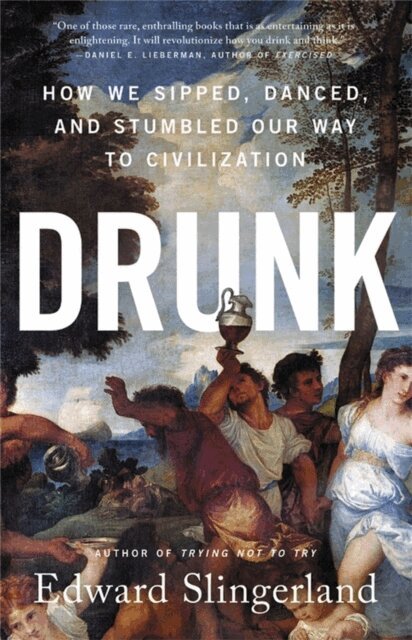
While plenty of entertaining books have been written about the history of alcohol and other intoxicants, none have offered a comprehensive, convincing answer to the basic question of why humans want to get high in the first place.Drunk elegantly cuts through the tangle of urban legends and anecdotal impressions that surround our notions of intoxication to provide the first rigorous, scientifically-grounded explanation for our love of alcohol. Drawing on evidence from archaeology, history, cognitive neuroscience, psychopharmacology, social psychology, literature, and genetics, Drunk shows that our taste for chemical intoxicants is not an evolutionary mistake, as we are so often told. In fact, intoxication helps solve a number of distinctively human challenges: enhancing creativity, alleviating stress, building trust, and pulling off the miracle of getting fiercely tribal primates to cooperate with strangers. Our desire to get drunk, along with the individual and social benefits provided by drunkenness, played a crucial role in sparking the rise of the first large-scale societies. We would not have civilization without intoxication.From marauding Vikings and bacchanalian orgies to sex-starved fruit flies, blind cave fish, and problem-solving crows, Drunk is packed with fascinating case studies and engaging science, as well as practical takeaways for individuals and communities. The result is a captivating and long overdue investigation into humanity's oldest indulgence-one that explains not only why we want to get drunk, but also how it might actually be good for us to tie one on now and then.
301 kr
Skickas inom 7-10 vardagar
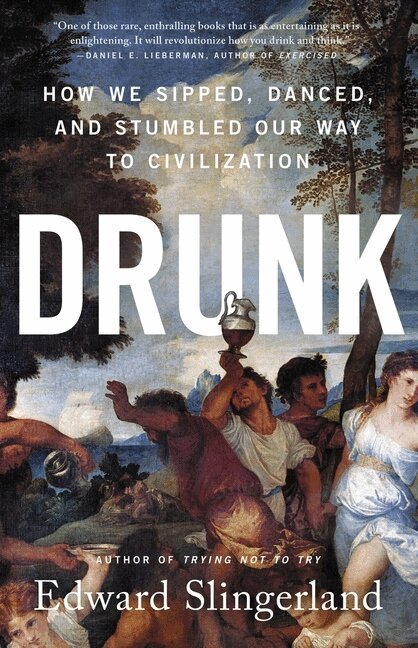
While plenty of entertaining books have been written about the history of alcohol and other intoxicants, none have offered a comprehensive, convincing answer to the basic question of why humans want to get high in the first place. Drunk elegantly cuts through the tangle of urban legends and anecdotal impressions that surround our notions of intoxication to provide the first rigorous, scientifically-grounded explanation for our love of alcohol. Drawing on evidence from archaeology, history, cognitive neuroscience, psychopharmacology, social psychology, literature, and genetics, Slingerland shows that our taste for chemical intoxicants is not an evolutionary mistake, as we are so often told. In fact, intoxication helps solve a number of distinctively human challenges: enhancing creativity, alleviating stress, building trust, and pulling off the miracle of getting fiercely tribal primates to cooperate with strangers. Our desire to get drunk, along with the individual and social benefits provided by drunkenness, played a crucial role in sparking the rise of the first large-scale societies. We would not have civilization without intoxication. From marauding Vikings and bacchanalian orgies to sex-starved fruit flies, blind cave fish, and problem-solving crows, Drunk is packed with fascinating case studies and engaging science, as well as practical takeaways for individuals and communities. The result is a captivating and long overdue investigation into humanity's oldest indulgence - one that explains not only why we want to get drunk, but also how it might actually be good for us to tie one on now and then.
448 kr
Skickas inom 7-10 vardagar
What Science Offers the Humanities examines some of the deep problems facing the study of culture. It focuses on the excesses of postmodernism, but also acknowledges serious problems with postmodernism's harshest critics. In short, Edward Slingerland argues that in order for the humanities to progress, its scholars need to take seriously contributions from the natural sciences - and particular research on human cognition - which demonstrate that any separation of the mind and the body is entirely untenable. The author provides suggestions for how humanists might begin to utilize these scientific discoveries without conceding that science has the last word on morality, religion, art, and literature. Calling into question such deeply entrenched dogmas as the 'blank slate' theory of nature, strong social constructivism, and the ideal of disembodied reason, What Science Offers the Humanities replaces the human-sciences divide with a more integrated approach to the study of culture.
1 200 kr
Skickas inom 7-10 vardagar
What Science Offers the Humanities examines some of the deep problems facing the study of culture. It focuses on the excesses of postmodernism, but also acknowledges serious problems with postmodernism's harshest critics. In short, Edward Slingerland argues that in order for the humanities to progress, its scholars need to take seriously contributions from the natural sciences - and particular research on human cognition - which demonstrate that any separation of the mind and the body is entirely untenable. The author provides suggestions for how humanists might begin to utilize these scientific discoveries without conceding that science has the last word on morality, religion, art, and literature. Calling into question such deeply entrenched dogmas as the 'blank slate' theory of nature, strong social constructivism, and the ideal of disembodied reason, What Science Offers the Humanities replaces the human-sciences divide with a more integrated approach to the study of culture.
Trying Not to Try: Ancient China, Modern Science, and the Power of Spontaneity
Häftad, Engelska, 2015
218 kr
Skickas inom 3-6 vardagar
Trying Not to Try
The Ancient Art of Effortlessness and the Surprising Power of Spontaneity
Häftad, Engelska, 2015
126 kr
Skickas
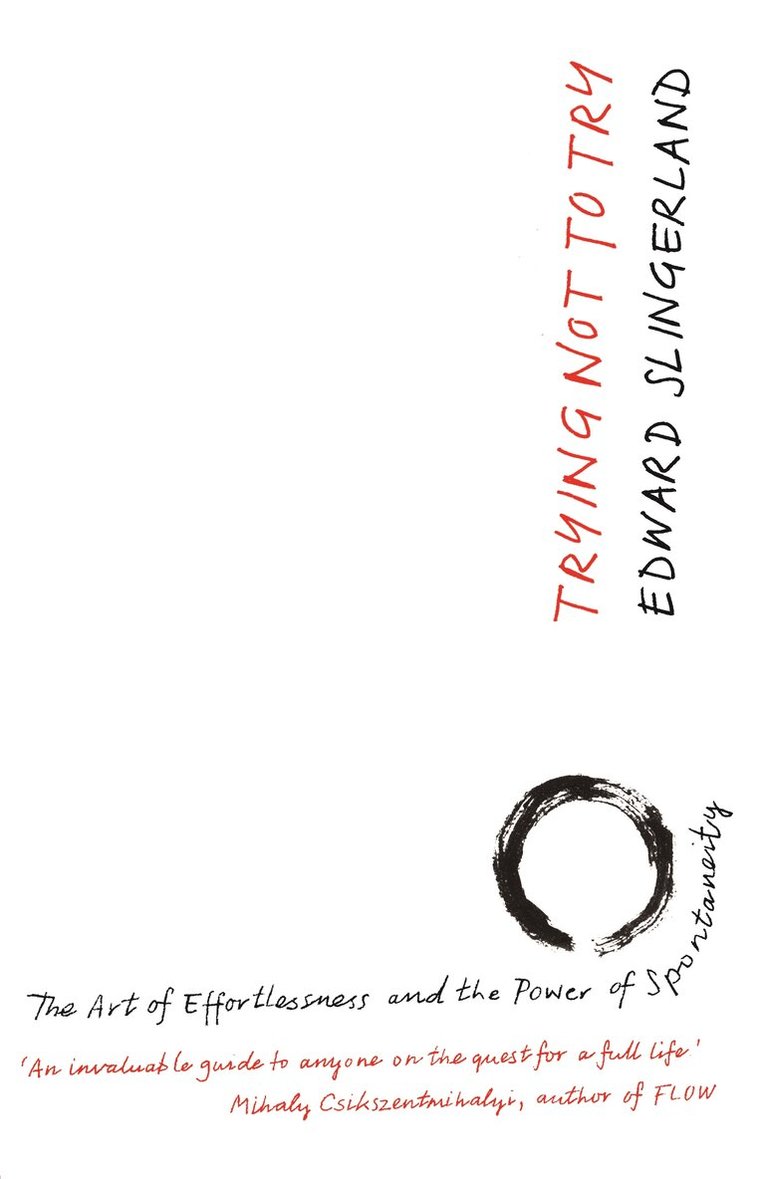
A Guardian Best Book of 2014A 2014 Brain Pickings Best Book on Psychology, Philosophy, and How to Live MeaningfullyWhy is it hard to fall asleep the night before an important meeting? Or be charming and relaxed on a first date? What is it about a comedian whose jokes fall flat or an athlete who chokes? What if, contrary to what we have long been told, spontaneity - not striving - is the answer to success? Through stories of mythical creatures and drunken cart riders, jazz musicians and Japanese motorcycle gangs, Slingerland effortlessly blends Eastern thought and cutting-edge science to show us how we can embody a spontaneous way of being and live more fulfilling lives.