
Edwin D. Craun – författare
Visar alla böcker från författaren Edwin D. Craun. Handla med fri frakt och snabb leverans.
5 produkter
5 produkter
1 543 kr
Skickas inom 5-8 vardagar
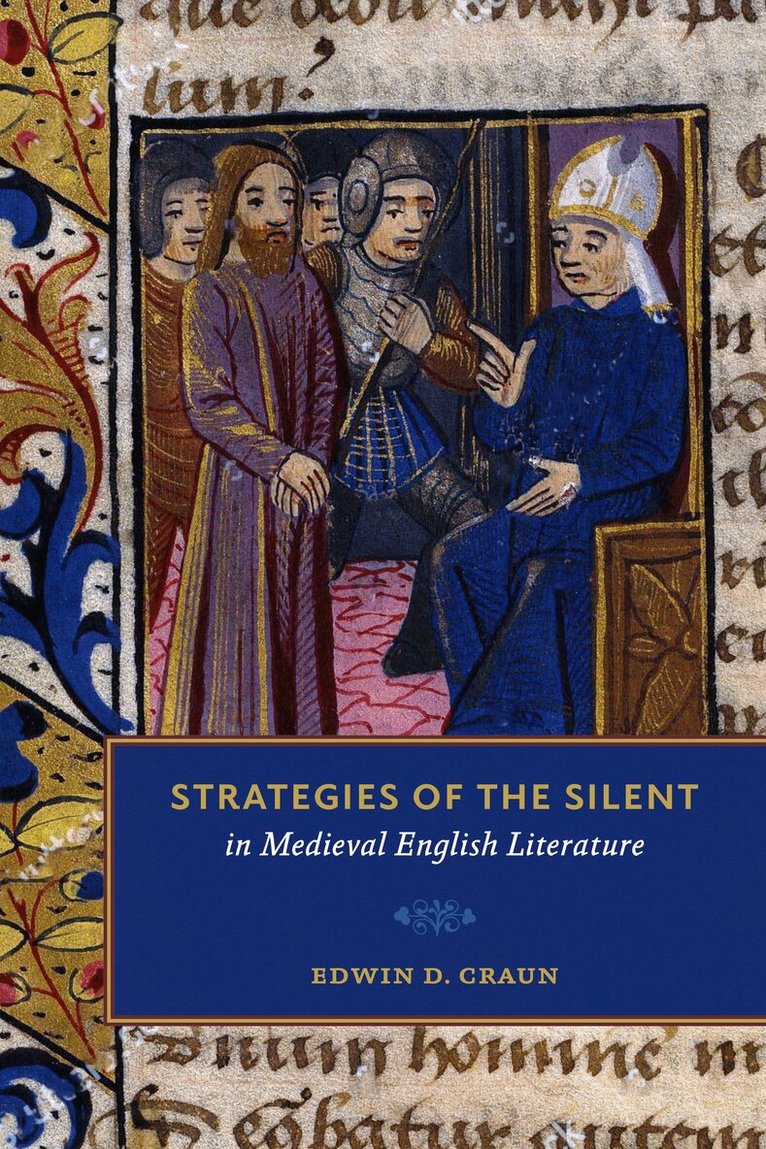
Silence, like speech, is a mode of communication that can be used strategically. In Strategies of the Silent in Medieval English Literature, Edwin D. Craun investigates the silences in public life that punctuate talk in late Middle English literature.Centering his study on readings of canonical texts, including the works of Thomas Hoccleve, the anonymous Mum and the Sothsegger, William Langland’s Piers Plowman, John Lydgate’s translation of Guillaume de Deguileville’s Pelerinage de vie humaine, The Testimony of William Thorpe, a selection of the York cycle of passion plays, and The Book of Margery Kempes, Craun recovers the widespread moral discourse on silence developed by late medieval secular and clerical writers, who compiled materials from Roman popular morality and Stoic texts as well as Jewish wisdom books and Christian texts. These texts model how silence could play a role in effective government, respond to violent and angry antagonists, or in some cases to entirely obviate a good outcome. Through this nuanced exploration of the ethics of communication in medieval moral, narrative, and dramatic literature, Craun shows us that public silences, then as now, have strategies and consequences, dimensions that medieval imaginative writers explore subtly yet analytically in order to provoke ethical reflection and pragmatic action. Strategies of the Silent in Medieval English Literature offers original thematical and rhetorical insights into the written history of silence. It will appeal to scholars, graduate students, and advanced undergraduates interested in Middle English literature, history, and political thought.
438 kr
Skickas inom 5-8 vardagar
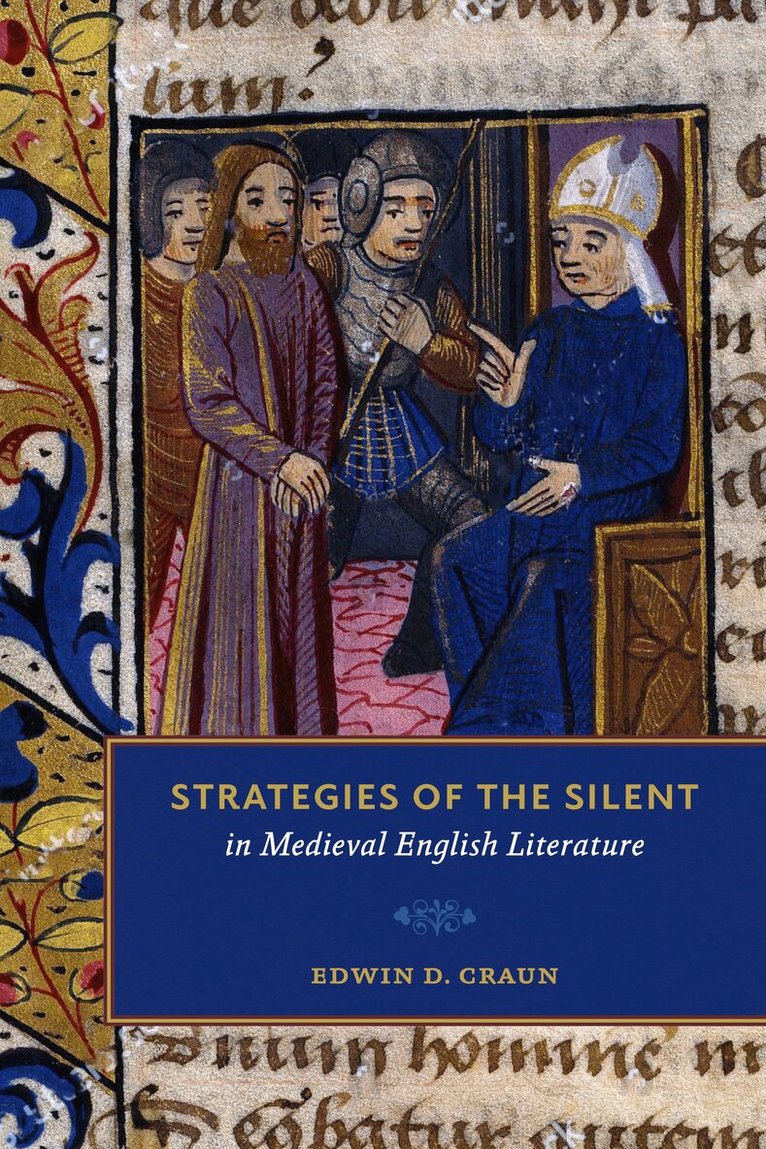
Silence, like speech, is a mode of communication that can be used strategically. In Strategies of the Silent in Medieval English Literature, Edwin D. Craun investigates the silences in public life that punctuate talk in late Middle English literature.Centering his study on readings of canonical texts, including the works of Thomas Hoccleve, the anonymous Mum and the Sothsegger, William Langland’s Piers Plowman, John Lydgate’s translation of Guillaume de Deguileville’s Pelerinage de vie humaine, The Testimony of William Thorpe, a selection of the York cycle of passion plays, and The Book of Margery Kempes, Craun recovers the widespread moral discourse on silence developed by late medieval secular and clerical writers, who compiled materials from Roman popular morality and Stoic texts as well as Jewish wisdom books and Christian texts. These texts model how silence could play a role in effective government, respond to violent and angry antagonists, or in some cases to entirely obviate a good outcome. Through this nuanced exploration of the ethics of communication in medieval moral, narrative, and dramatic literature, Craun shows us that public silences, then as now, have strategies and consequences, dimensions that medieval imaginative writers explore subtly yet analytically in order to provoke ethical reflection and pragmatic action. Strategies of the Silent in Medieval English Literature offers original thematical and rhetorical insights into the written history of silence. It will appeal to scholars, graduate students, and advanced undergraduates interested in Middle English literature, history, and political thought.
Del 76 - Cambridge Studies in Medieval Literature
Ethics and Power in Medieval English Reformist Writing
Inbunden, Engelska, 2010
1 499 kr
Skickas inom 7-10 vardagar
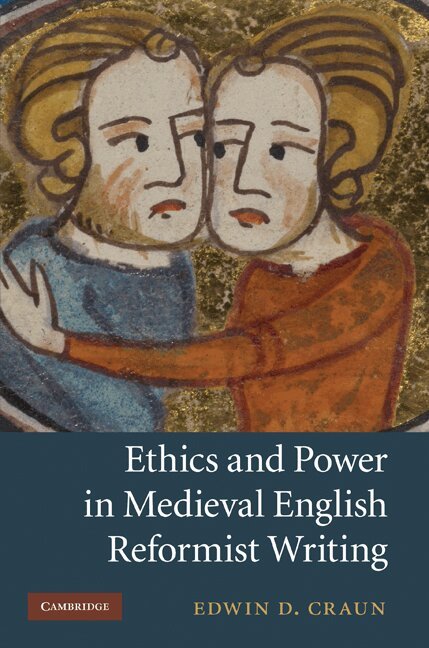
The late medieval Church obliged all Christians to rebuke the sins of others, especially those who had power to discipline in Church and State: priests, confessors, bishops, judges, the Pope. This practice, in which the injured party had to confront the wrong-doer directly and privately, was known as fraternal correction. Edwin Craun examines how pastoral writing instructed Christians to make this corrective process effective by avoiding slander, insult, and hypocrisy. He explores how John Wyclif and his followers expanded this established practice to authorize their own polemics against mendicants and clerical wealth. Finally, he traces how major English reformist writing - Piers Plowman, Mum and the Sothsegger, and The Book of Margery Kempe - expanded the practice to justify their protests, to protect themselves from repressive elements in the late Ricardian and Lancastrian Church and State, and to urge their readers to mount effective protests against religious, social, and political abuses.
Del 76 - Cambridge Studies in Medieval Literature
Ethics and Power in Medieval English Reformist Writing
Häftad, Engelska, 2013
516 kr
Skickas inom 7-10 vardagar
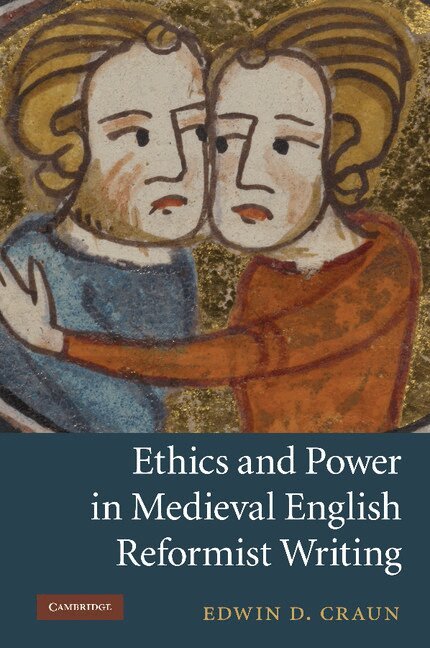
The late medieval Church obliged all Christians to rebuke the sins of others, especially those who had power to discipline in Church and State: priests, confessors, bishops, judges, the Pope. This practice, in which the injured party had to confront the wrong-doer directly and privately, was known as fraternal correction. Edwin Craun examines how pastoral writing instructed Christians to make this corrective process effective by avoiding slander, insult, and hypocrisy. He explores how John Wyclif and his followers expanded this established practice to authorize their own polemics against mendicants and clerical wealth. Finally, he traces how major English reformist writing - Piers Plowman, Mum and the Sothsegger, and The Book of Margery Kempe - expanded the practice to justify their protests, to protect themselves from repressive elements in the late Ricardian and Lancastrian Church and State, and to urge their readers to mount effective protests against religious, social, and political abuses.
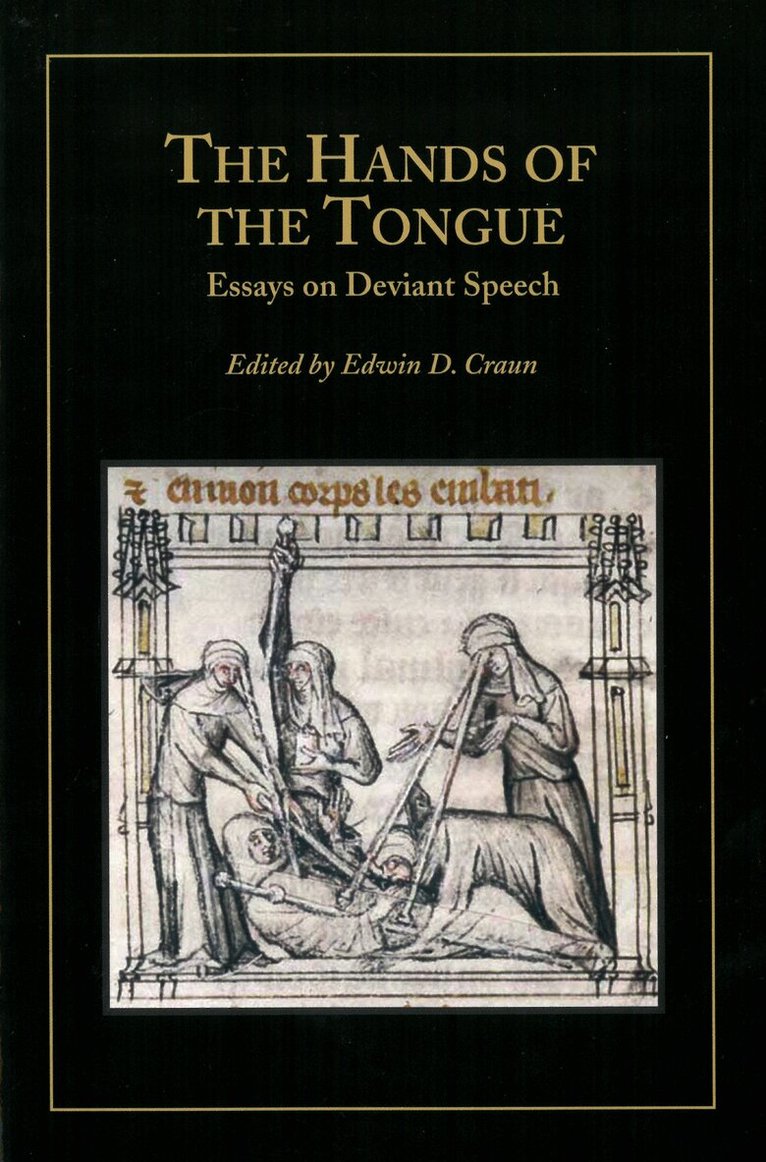
Del 47 - Studies in Medieval and Early Modern Culture
Hands of the Tongue
Essays on Deviant Speech
Inbunden, Engelska, 2007
321 kr
Tillfälligt slut
What destructive powers did the tongue and its speech have for medievals? It could damn humans through blasphemy. It could occlude penitential knowledge of the self, especially of the misdirected will, by generating excuses for what the medieval clergy regarded as sin. It could disrupt monastic disciplines of meditation or distract parishioners during sermons. It could turn good repute to ill, destroying a woman's chances for marriage, a man's masculine self, a merchant's credit, or a defendant's status in a court of law. However, speech could maintain or restore credit, status, and masculinity, and it could also preserve honor in knights or women, in their particular roles as faithful feudal wives. Many of the essays in The Hands of the Tongue: Essays on Deviant Speech bridge disciplines, with social historians adducing evidence from lyrics, narrative poetry, and plays, or literary historians working from moral theology and biblical exegesis. Certainly the whole set of essays works to remind medievalists that any aspects of medieval culture worth studying must be explored collectively. Together the contributors present a clear picture of what we know about deviant speech in medieval culture, offering a critical perspective on the state of the scholarship.