Egon Pelikan - Böcker
Visar alla böcker från författaren Egon Pelikan. Handla med fri frakt och snabb leverans.
2 produkter
2 produkter
Del 14 - Cultural Memories
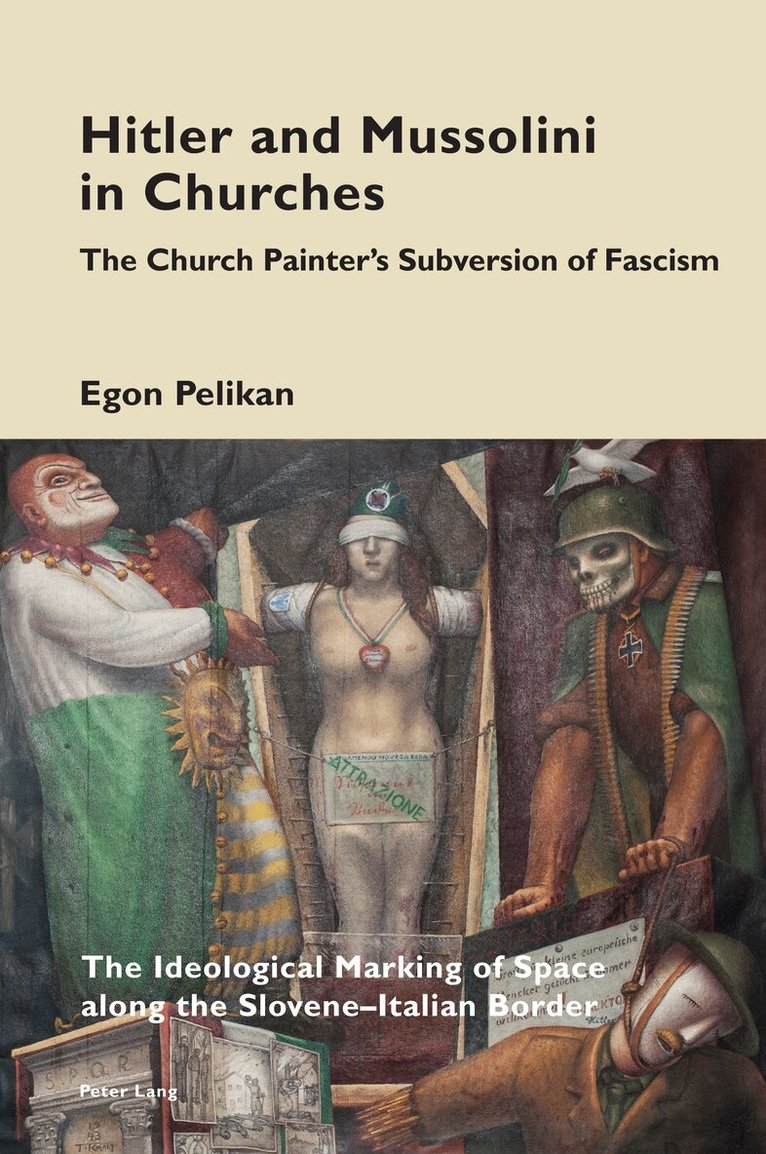
Hitler and Mussolini in Churches
The Church Painter’s Subversion of Fascism: The Ideological Marking of Space along the Slovene–Italian Border
Häftad, Engelska, 2020
743 kr
Tillfälligt slut
When Europe fell prey to totalitarian regimes in the twentieth century, the Slovene artist Tone Kralj responded to the cruellest oppression by systematically depicting his own and his community’s resistance against Fascism and Nazism in public spaces, under the very nose of the regime. As incredible as it may seem, the regime never discovered and punished his rebellious actions. The painter embedded his ideological subversion of Fascism and Nazism in wall paintings in more than fifty Catholic churches along the Slovene–Italian ethnic border, thus disseminating his subversive message among the people with whom he shared the same cultural memory. With many of them covering a surface area of several square metres, the church paintings introduced Hitler and Mussolini into Biblical visual narratives, portraying the two dictators with irony and grotesqueness as villainous Biblical characters, often in the role of hangmen, murderers or clowns. The symbols of their regimes were incorporated into Biblical scenes depicting eschatological dimensions of the struggle between good and evil, thus spreading – in the time of the most brutal fascistization – the painter’s firm belief in the historical downfall of the Fascist and Nazi regimes.
Del 1 - Studies in Political Radicalization: Historical and Comparative Perspectives - CEU Press
Anti-fascism in European History
From the 1920s to Today
Inbunden, Engelska, 2023
1 694 kr
Skickas inom 10-15 vardagar
The increasing radicalization of political life in most countries in Europe lends special relevance to studies of the antifascist legacies on the continent. This insightful collection of essays is an in-depth review of antifascism in Slovenia, setting it in the context of related movements elsewhere in Europe. The period treated by the 19 essays comprises the interwar period, World War Two, and the post-war decades. The comparative and transnational perspectives advanced by the volume change our understanding of antifascism. The essays deal with the right-wing but also left-wing instrumentalization of antifascism, with a particular focus on the communist and post-communist periods. The authors point out that antifascism comes in various strains, whether inspired by liberalism, social democracy, communism, monarchism, anarchism, or even Christian conservatism. The contributors bring to light several overlooked antifascist actors, campaigns, and organisations, mostly in Slovenia and the Adriatic area.