Häftad, Engelska, 2020
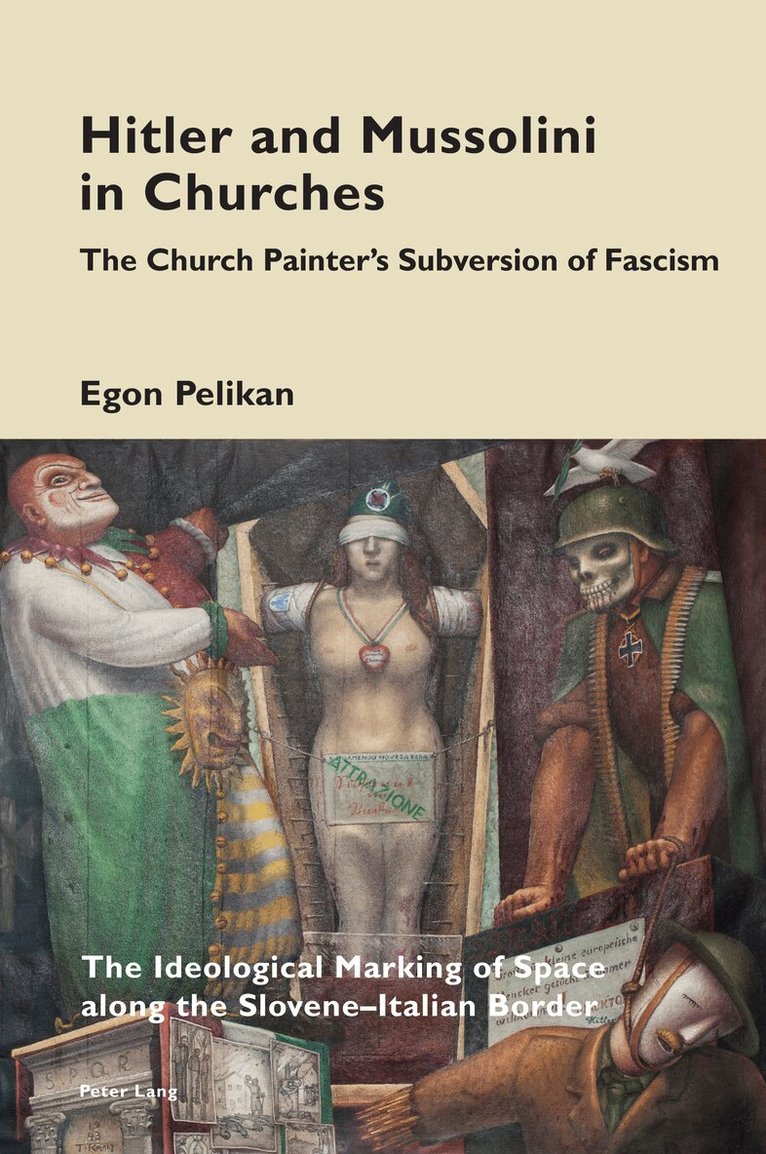
Hitler and Mussolini in Churches
The Church Painter’s Subversion of Fascism: The Ideological Marking of Space along the Slovene–Italian Border
Del 14 i serien Cultural Memories
764 kr
Tillfälligt slut
Beskrivning
Produktinformation
- Utgivningsdatum: 2020-06-01
- Mått: 152 x 229 x 22 mm
- Vikt: 492 g
- Format: Häftad
- Språk: Engelska
- Serie: Cultural Memories
- Antal sidor: 310
- Upplaga: 20001
- Förlag: Peter Lang International Academic Publishers
- ISBN: 9781789971491
Utforska kategorier
Mer om författaren
Egon Pelikan is Full Professor and Head of the Institute of Historical Studies of the Science and Research Centre in Koper (Slovenia). As a member of the Alexander von Humboldt Foundation, he was a visiting assistant professor at the Department of History of the University of Duisburg-Essen (2004–2005). He was also a visiting researcher at the Saxon Academy of Sciences and Humanities in Leipzig (2011). His research is focused on the period of political ideologies from the end of the nineteenth century to the end of the Second World War.
Recensioner i media
«Whether casting Mussolini as Pontius Pilate or as Nero or depicting a bleeding sheep to represent the Slovene nation during the war or placing two Fascists in the crowd watching St Vitus being thrown to hungry lions, the anti-Fascist Kralj showed how art can be powerfully subversive. Egon Pelikan has produced an exciting book on an important chapter in anti-fascist history. Highly recommended.» (Sabrina P. Ramet, Author of Alternatives to Democracy in Twentieth-Century Europe: Collectivist Visions of Modernity (2019))«Rarely are we confronted with such commanding visual assertions of identity as we are in the public works of the artist Tone Kralj. Egon Pelikan’s authoritative analysis of Kralj’s wall paintings, found in churches that dot the countryside in the Slovene/Italian borderland Primorska, reveals a deeply humane view of a disturbing world. As Pelikan shows, their iconography lends the local space powerful alternative meanings that consistently subvert the efforts of the region’s varied twentieth-century rulers to transform it.» (Pieter M. Judson, European University Institute, Florence)
Betyg & recensioner
0 recensioner
Inga recensioner tillgängliga.