Ehud Benor - Böcker
Visar alla böcker från författaren Ehud Benor. Handla med fri frakt och snabb leverans.
3 produkter
3 produkter
646 kr
Skickas inom 10-15 vardagar
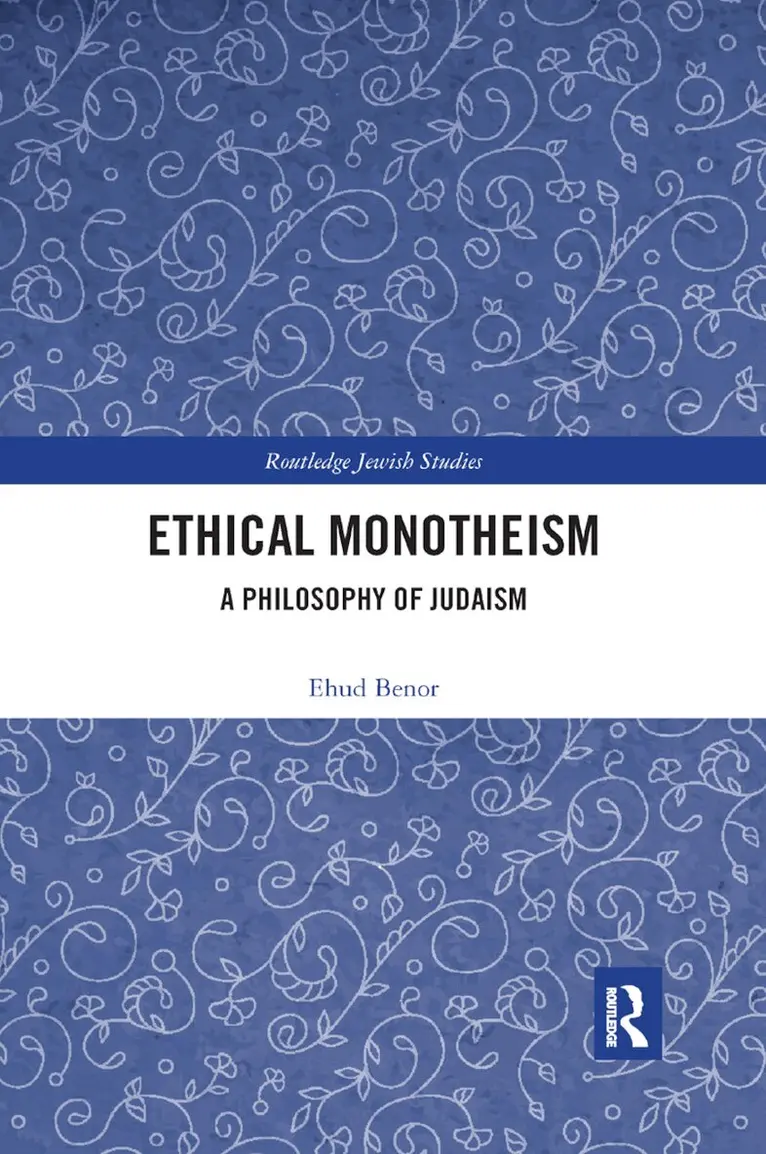
The term Ethical Monotheism is an important marker in Judaism’s tumultuous transition into the modern era. The term emerged in the context of culture-wars concerning the question of whether or not Jews could or should become emancipated citizens of modern European states. It appeared in arguments whether or not Judaism could be considered a Religion of Reason—a symbolic, motivational representation of a universal morality, and in debates about whether or not Judaism could or should reform itself into a Religion of Reason. This book is both a decisive departure from such discussions and an attempt to add a further, post-modern, statement to their ongoing development. As departure, it refuses to take for granted a philosophical conception of Religion of Reason as the standard for Ethical Monotheism according to which Judaism was to be evaluated or reformed. As continuation, the book undertakes a phenomenology of Jewish modes of ethical religiosity that allows it to inquire what kind of ethical monotheism Judaism might be. Through sophisticated analysis of select "snapshots," or "fragments of a hologram," guided by a robust theory of religion, the author discloses Judaic ethical monotheism as an ongoing wrestling with the meaning of justice. By closely examining five main "snapshots" of this long process—the Bible, rabbinic Judaism, Maimonides, The Zohar, and the modern philosophers, Buber and Levinas—the author offers his own constructive philosophy of Judaism and his own distinctive philosophy of religion.Ethical Monotheism offers a new way to think about Judaism as a religion and as a coherent philosophical debate, and demonstrates the need to integrate philosophy, history, cognitive psychology, anthropology, theology, and history of science in the study of "religion."
382 kr
Tillfälligt slut
Shows that for Maimonides (medieval Jewish philosopher) prayer as a pure act of worship is essential.Benor's study offers a systematic Aristotelian account of Maimonides' philosophy of religion that reconciles the ideals of rabbinic Judaism with the sensibilities of a medieval Jewish philosopher, coherently unifies his work, and shows where Maimonides' uncompromising radicalism presents enduring and challenging insights to the history and the philosophy of religion.Worship of the Heart explores Maimonides' contribution to the understanding of prayer, examining it against the background of two contrasting notions-dialogue and contemplation. The author argues that Maimonides integrates fundamental elements of these conceptions with his own insights to forge a mediating conception of prayer-a conception as constitutive of a world view.
2 113 kr
Skickas inom 10-15 vardagar
The term Ethical Monotheism is an important marker in Judaism’s tumultuous transition into the modern era. The term emerged in the context of culture-wars concerning the question of whether or not Jews could or should become emancipated citizens of modern European states. It appeared in arguments whether or not Judaism could be considered a Religion of Reason—a symbolic, motivational representation of a universal morality, and in debates about whether or not Judaism could or should reform itself into a Religion of Reason. This book is both a decisive departure from such discussions and an attempt to add a further, post-modern, statement to their ongoing development. As departure, it refuses to take for granted a philosophical conception of Religion of Reason as the standard for Ethical Monotheism according to which Judaism was to be evaluated or reformed. As continuation, the book undertakes a phenomenology of Jewish modes of ethical religiosity that allows it to inquire what kind of ethical monotheism Judaism might be. Through sophisticated analysis of select "snapshots," or "fragments of a hologram," guided by a robust theory of religion, the author discloses Judaic ethical monotheism as an ongoing wrestling with the meaning of justice. By closely examining five main "snapshots" of this long process—the Bible, rabbinic Judaism, Maimonides, The Zohar, and the modern philosophers, Buber and Levinas—the author offers his own constructive philosophy of Judaism and his own distinctive philosophy of religion.Ethical Monotheism offers a new way to think about Judaism as a religion and as a coherent philosophical debate, and demonstrates the need to integrate philosophy, history, cognitive psychology, anthropology, theology, and history of science in the study of "religion."