Eiichiro Azuma - Böcker
Visar alla böcker från författaren Eiichiro Azuma. Handla med fri frakt och snabb leverans.
11 produkter
11 produkter
1 433 kr
Skickas inom 5-8 vardagar
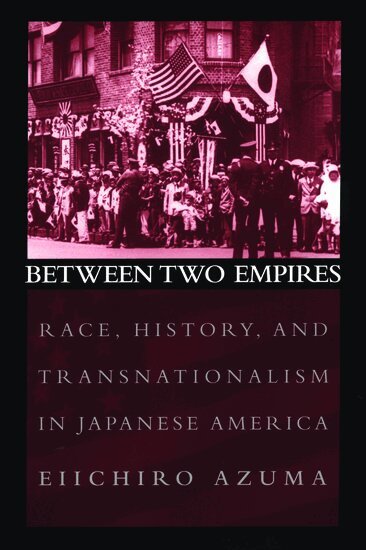
The incarceration of Japanese Americans has been discredited as a major blemish in American democratic tradition. Accompanying this view is the assumption that the ethnic group help unqualified allegiance to the United States. Between Two Empires probes the complexities of prewar Japanese America to show how Japanese in America held an in-between space between the United States and the empire of Japan, between American nationality and Japanese racial identity.
509 kr
Skickas inom 5-8 vardagar
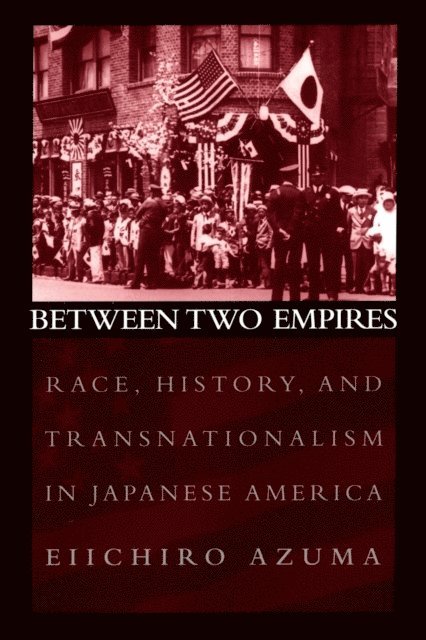
The incarceration of Japanese Americans has been discredited as a major blemish in American democratic tradition. Accompanying this view is the assumption that the ethnic group held unqualified allegiance to the United States. Between Two Empires probes the complexities of prewar Japanese America to show how Japanese in America held an in-between space between the United States and the empire of Japan, between American nationality and Japanese racial identity.
701 kr
Skickas inom 7-10 vardagar
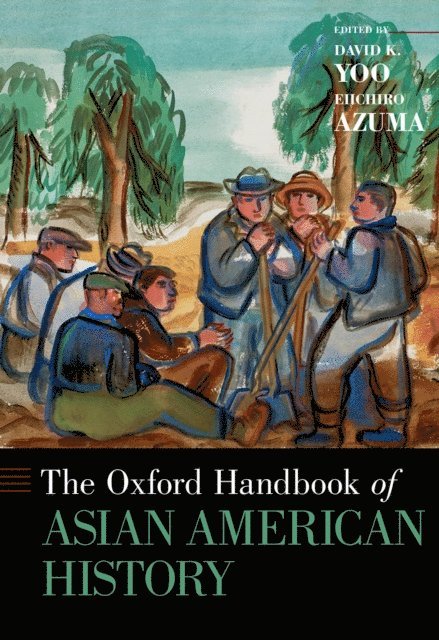
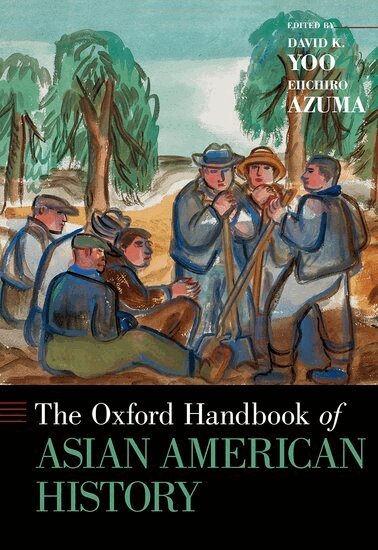
After emerging from the tumult of social movements of the 1960s and 1970s, the field of Asian American studies has enjoyed rapid and extraordinary growth. Nonetheless, many aspects of Asian American history still remain open to debate. The Oxford Handbook of Asian American History offers the first comprehensive commentary on the state of the field, simultaneously assessing where Asian American studies came from and what the future holds. In this volume, thirty leading scholars offer original essays on a wide range of topics. The chapters trace Asian American history from the beginning of the migration flows toward the Pacific Islands and the American continent to Japanese American incarceration and Asian American participation in World War II, from the experience of exclusion, violence, and racism to the social and political activism of the late twentieth century. The authors explore many of the key aspects of the Asian American experience, including politics, economy, intellectual life, the arts, education, religion, labor, gender, family, urban development, and legal history.The Oxford Handbook of Asian American History demonstrates how the roots of Asian American history are linked to visions of a nation marked by justice and equity and to a deep effort to participate in a global project aimed at liberation. The contributors to this volume attest to the ongoing importance of these ideals, showing how the mass politics, creative expressions, and the imagination that emerged during the 1960s are still relevant today. It is an unprecedentedly detailed portrait of Asian Americans and how they have helped change the face of the United States.
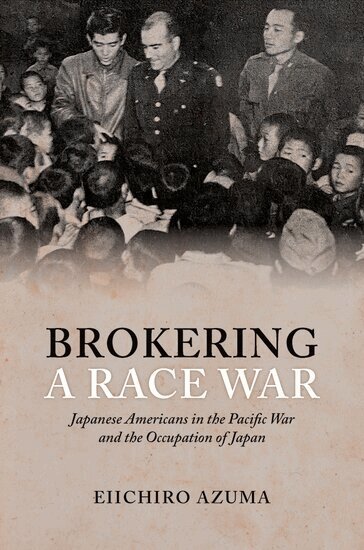
Brokering a Race War
Japanese Americans in the Pacific War and the Occupation of Japan
Inbunden, Engelska, 2026
1 277 kr
Kommande
During the years of the Pacific War and occupied Japan, more than ten thousand second-generation Japanese Americans (Nisei) served in the US armed forces and their campaigns in combat theaters and subsequently occupied enemy land in the Asia-Pacific region. By birthright US citizenship and acculturation, these young men and women of Japanese ancestry considered themselves to be American, but by blood ties and heritage culture they tended to be identified with their ancestral land of Japan. American-born residents of Japan were similarly recruited into the role of experts on the enemy according to presumptions about the special cultural capital they possessed due to their American upbringing.Brokering a Race War traces the complex experiences of Nisei soldiers and civilian linguists framed in a trans-imperial context. It examines the interactions between the United States and Japan as well as Japanese Americans' complicated relationships to white Americans and Japanese nationals. With a focus on Nisei's interstitial positions and brokering roles, it analyzes the changing meanings of race, citizenship, and culture among these groups and in transpacific power relations. In doing so, it reveals how these minority American soldiers came to appreciate the power of their birthright citizenship in the context of the total war against and the subsequent domination of the enemy who shared the same ancestry. Nisei's work in occupied Japan turned them into the frontline executors of US imperial power under the guise of spreading colorblind democracy to the Cold War Asia-Pacific and beyond. Based on new bilingual archival sources, Brokering a Race War offers a nuanced perspective on the oft-celebratory representations of minority US servicemen as an embodiment of America's disavowal of racism and a paragon of its multicultural democracy.
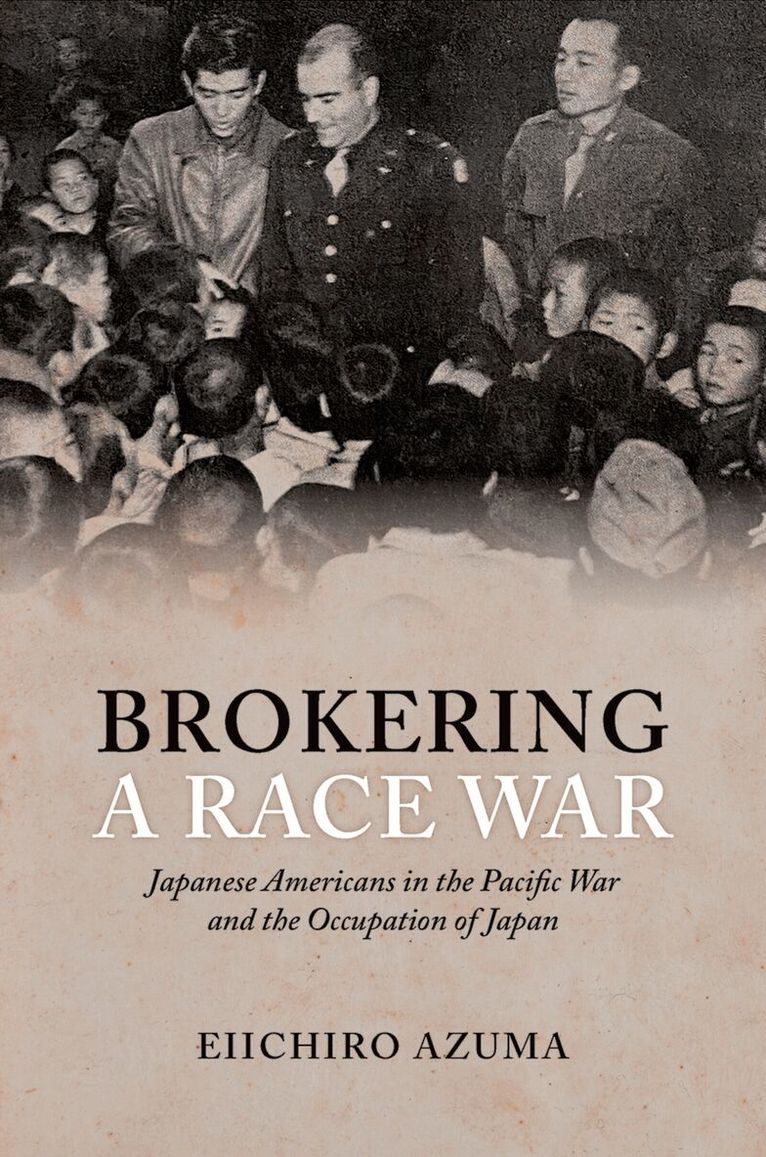
Brokering a Race War
Japanese Americans in the Pacific War and the Occupation of Japan
Häftad, Engelska, 2026
272 kr
Kommande
During the years of the Pacific War and occupied Japan, more than ten thousand second-generation Japanese Americans (Nisei) served in the US armed forces and their campaigns in combat theaters and subsequently occupied enemy land in the Asia-Pacific region. By birthright US citizenship and acculturation, these young men and women of Japanese ancestry considered themselves to be American, but by blood ties and heritage culture they tended to be identified with their ancestral land of Japan. American-born residents of Japan were similarly recruited into the role of experts on the enemy according to presumptions about the special cultural capital they possessed due to their American upbringing.Brokering a Race War traces the complex experiences of Nisei soldiers and civilian linguists framed in a trans-imperial context. It examines the interactions between the United States and Japan as well as Japanese Americans' complicated relationships to white Americans and Japanese nationals. With a focus on Nisei's interstitial positions and brokering roles, it analyzes the changing meanings of race, citizenship, and culture among these groups and in transpacific power relations. In doing so, it reveals how these minority American soldiers came to appreciate the power of their birthright citizenship in the context of the total war against and the subsequent domination of the enemy who shared the same ancestry. Nisei's work in occupied Japan turned them into the frontline executors of US imperial power under the guise of spreading colorblind democracy to the Cold War Asia-Pacific and beyond. Based on new bilingual archival sources, Brokering a Race War offers a nuanced perspective on the oft-celebratory representations of minority US servicemen as an embodiment of America's disavowal of racism and a paragon of its multicultural democracy.
2 034 kr
Skickas inom 5-8 vardagar
The academic field of Asian American history traces its roots to social movements of the late 1960s, when individuals and communities attempted to expand and challenge the existing frame of United States history to take into account their experiences. There were of course people who had documented and written about Asian Americans in earlier eras, but a recognizable field did not develop until the Asian American movement. The publication of Ronald Takaki's Strangers from a Different Shore: A History of Asian Americans (1989) and Sucheng Chan's Asian Americans: An Interpretive History (1991) signaled a coming of age for the field in which these narratives of the Asian American past synthesized the literature that had been produced to date. These two landmark works reflected the rise of social history, which stressed the agency of individuals and communities. Historians of many immigrant groups challenged the framework of assimilation and highlighted ethnic retentions. The result was a more nuanced understanding of how immigration had shaped the contours of United States history. The attention paid to the sending countries placed immigration history within a transnational context and underscored global processes linked to labor, capital, and empire. As part of these historical developments, scholars working in Asian American history helped unearth buried pasts.The Asian American movement and post-1965 migrations of Asians to the United States sparked classes, programs, and other developments on college campuses that led to students entering graduate school to specialize in Asian American history. While the Japanese American incarceration during World War II and racial exclusion remain the most documented and analyzed dimensions of Asian American history, the body of scholarship produced over the past two decades or so has deepened and broadened the scope of knowledge. Numerous monographs and anthologies have included a greater number of ethnic groups and issues. The influence of cultural studies, transnationalism, regional diversity, and interdisciplinary and comparative frameworks (to name only a few) has added to the richness of the theoretical and methodological approaches to the study of Asian American history. Nevertheless, there remains much work to be done in the field, given the tremendous internal diversity within this umbrella category.The Oxford Handbook of Asian American History represents an ideal opportunity to engage in state of the field essays that are historiographically informed, but that provide a platform for historians to think creatively about their areas of research expertise. What kinds of questions and issues remain, how do recent developments in related fields affect the historical treatment of Asian America, and what theoretical and methodological concerns have emerged? These questions are merely suggestive of many more that will be asked through the collection's essays. Given the development of the field, the time is ripe for a volume that simultaneously assesses where the scholarship has been and what the future holds.
Del 17 - Asia Pacific Modern
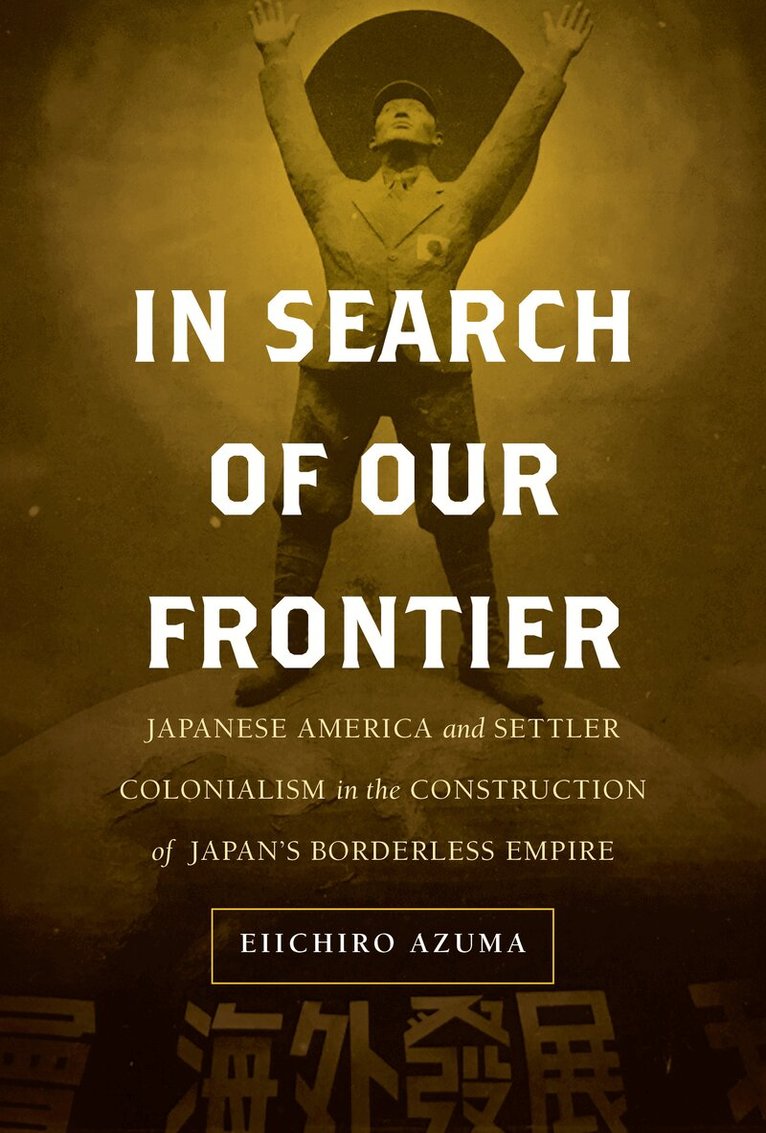
In Search of Our Frontier
Japanese America and Settler Colonialism in the Construction of Japan’s Borderless Empire
Inbunden, Engelska, 2019
290 kr
Skickas inom 7-10 vardagar
In Search of Our Frontier explores the complex transnational history of Japanese immigrant settler colonialism, which linked Japanese America with Japan’s colonial empire through the exchange of migrant bodies, expansionist ideas, colonial expertise, and capital in the Asia-Pacific basin before World War II. The trajectories of Japanese transpacific migrants exemplified a prevalent national structure of thought and practice that not only functioned to shore up the backbone of Japan’s empire building but also promoted the borderless quest for Japanese overseas development. Eiichiro Azuma offers new interpretive perspectives that will allow readers to understand Japanese settler colonialism’s capacity to operate outside the aegis of the home empire.
766 kr
Skickas inom 7-10 vardagar
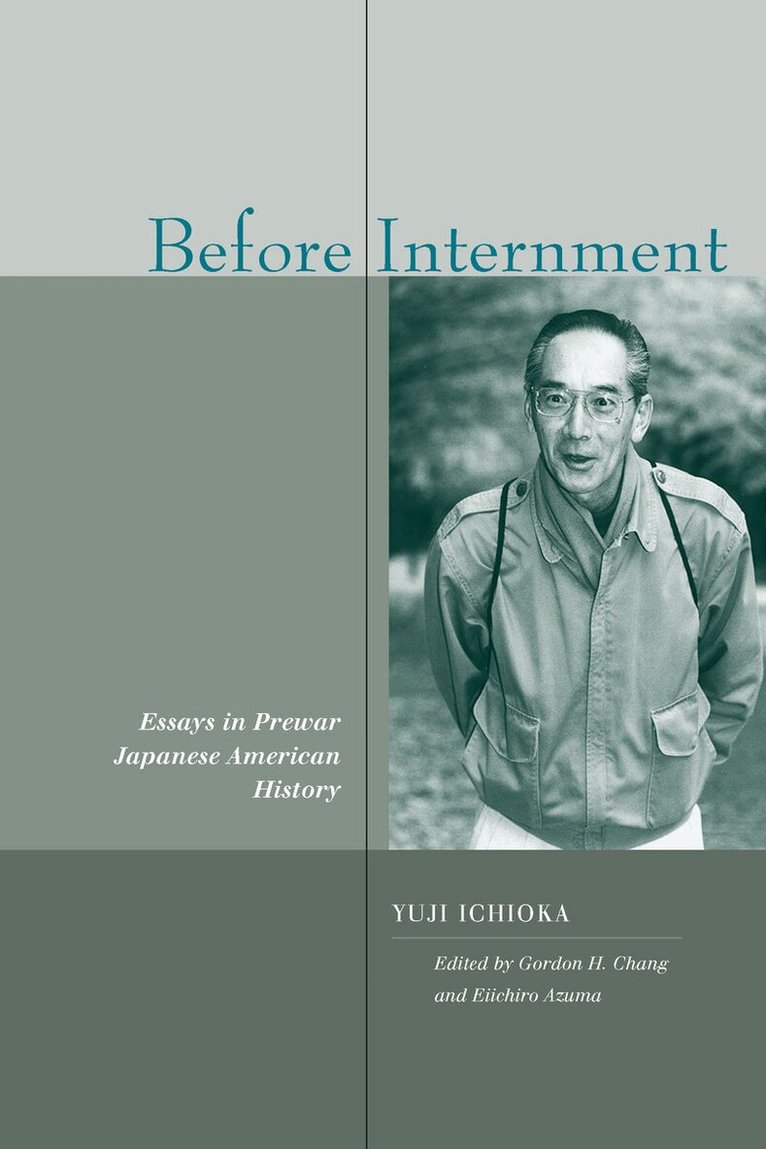
This is a collection of the last essays by Yuji Ichioka, the foremost authority on Japanese-American history, who passed away two years ago. The essays focus on Japanese Americans during the interwar years and explore issues such as the nisei (American-born generation) relationship toward Japan, Japanese-American attitudes toward Japan's prewar expansionism in Asia, and the meaning of "loyalty" in a racist society—all controversial but central issues in Japanese-American history. Ichioka draws from original sources in Japanese and English to offer an unrivaled picture of Japanese Americans in these years. Also included in this volume are an introductory essay by editor Eiichiro Azuma that places Ichioka's work in Japanese-American historiography, and a postscript by editor Chang reflecting on Ichioka's life-work.
752 kr
Skickas inom 7-10 vardagar
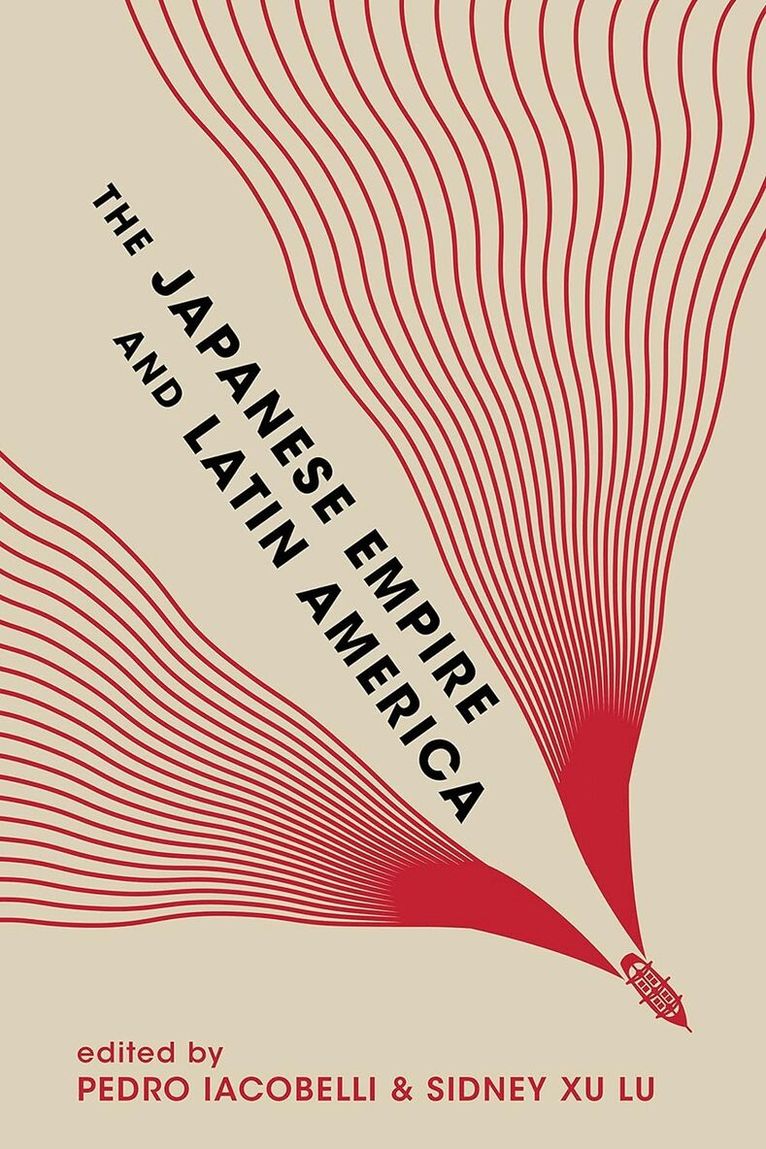
The Japanese Empire and Latin America provides a comprehensive analysis of the complicated relationship between Japanese migration and capital exportation to Latin America and the rise and fall of the empire in the Asia-Pacific region. It explains how Japan’s presence influenced the cultures and societies of Latin American countries and also explores the role of Latin America in the evolution of Japanese expansion. Together, this collection of essays presents a new narrative of the Japanese experience in Latin America by excavating trans-Pacific perspectives that shed new light on the global significance of Japan’s colonialism and expansionism. The chapters cover a variety of topics, such as economic expansion, migration management, cross-border community making, the surge of pro-Japan propaganda in the Americas, the circulation of knowledge, and the representation of the "other" in Japanese and Latin American fictions. By focusing on both government action and individual experiences, the viewpoints examined create a complete analysis, including the roles the empire played in the process of settler identity formation in Latin America. While the colonialist and expansionist discourses in Japan set a stage for the beginning of Japanese migration to Latin America, it was the vibrant circulation of information between East Asia and the Americas that allowed the empire to stay at the center of the cultural life of communities on the other side of the globe. The empire left an enduring mark on Latin America that is hard to ignore. This volume explores long-neglected aspects of the Japanese global expansion; and thus, moves our understanding of the empire’s significance beyond Asia and rethinks its legacy in global history.
Settling the California Delta
Rural Japanese America Under Racial Segregation
Inbunden, Engelska, 2027
1 942 kr
Kommande
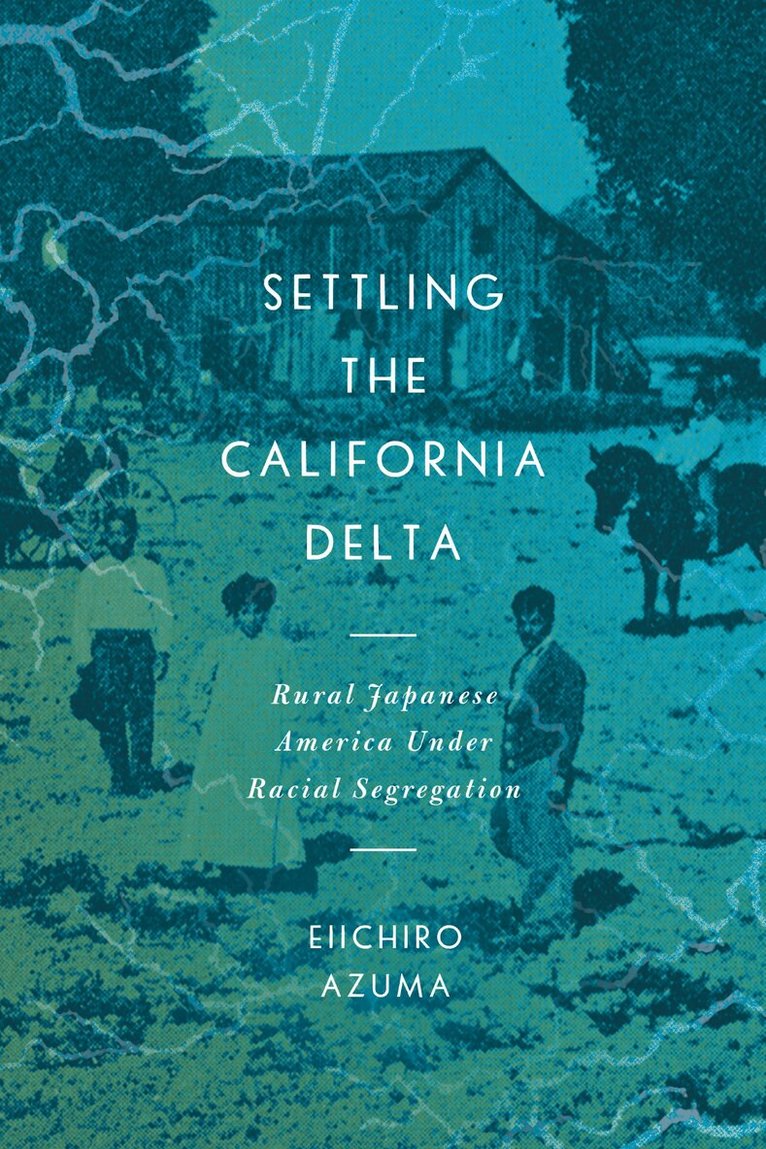
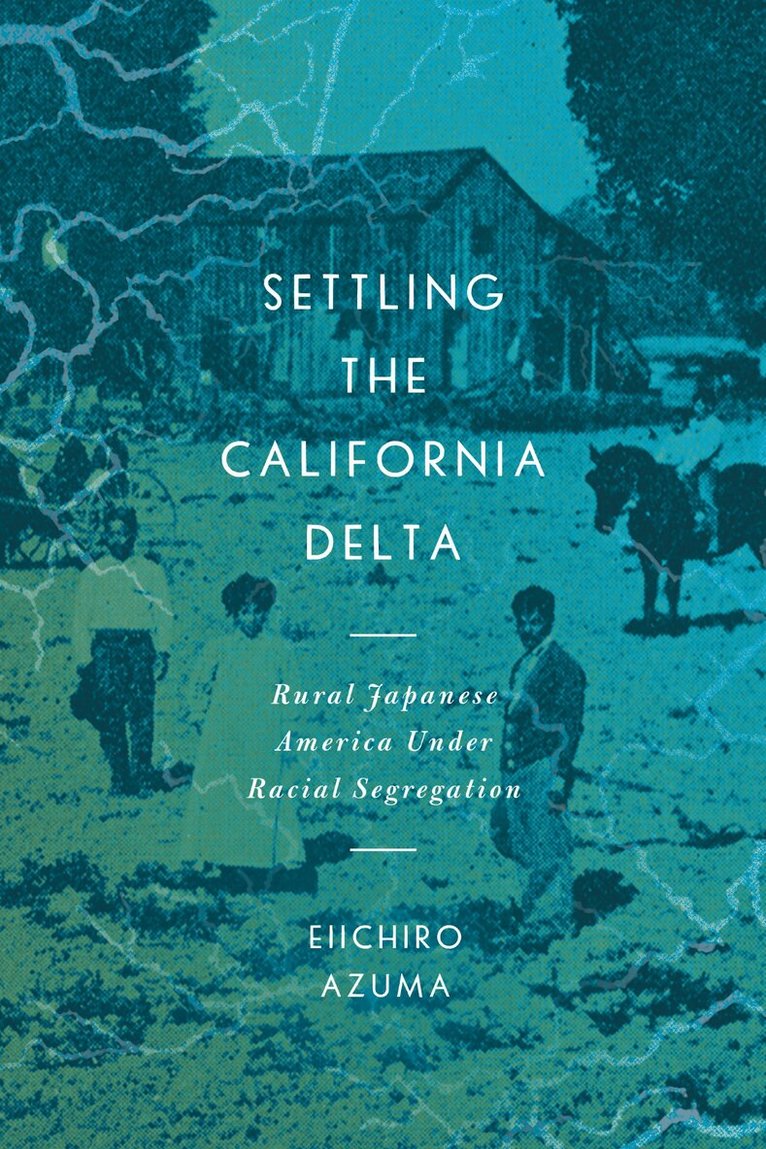
This book traces the forgotten history of a Japanese farm settlement in the Sacramento River delta. Before the wartime removal and incarceration, most West Coast Japanese Americans, including immigrant Issei and US-born Nisei generations, resided in rural agricultural areas. Existing histories of Japanese America have often overlooked this farming aspect of their experience, focusing instead on urban narratives. Centered on the town of Walnut Grove, the "downriver" (kawashimo) settlement was home to Issei farmers, merchants, and laborers who lived alongside their Nisei children in a society characterized by strict racial segregation and landlessness. In the delta basin, a small group of white landowning settlers and corporate interests held power and wealth, shaping social relations and economic opportunities for mostly Asian immigrant settlers and fieldhands.Combining theories of settler colonialism, racial capitalism, and immigrant transnationalism with the techniques of microhistory, Eiichiro Azuma reveals the intricate dynamics of paternalistic interdependency between white landlords and Japanese tenants, as well as the complex interethnic relations among marginalized immigrant groups in the local segregated society and agricultural economy. Through his careful analysis of heretofore overlooked immigrant vernacular sources and oral histories, Azuma sheds important light on a lesser-known aspect of rural Asian American history through the lens of multiracial entanglements on the ground.
541 kr
Kommande
This book traces the forgotten history of a Japanese farm settlement in the Sacramento River delta. Before the wartime removal and incarceration, most West Coast Japanese Americans, including immigrant Issei and US-born Nisei generations, resided in rural agricultural areas. Existing histories of Japanese America have often overlooked this farming aspect of their experience, focusing instead on urban narratives. Centered on the town of Walnut Grove, the "downriver" (kawashimo) settlement was home to Issei farmers, merchants, and laborers who lived alongside their Nisei children in a society characterized by strict racial segregation and landlessness. In the delta basin, a small group of white landowning settlers and corporate interests held power and wealth, shaping social relations and economic opportunities for mostly Asian immigrant settlers and fieldhands.Combining theories of settler colonialism, racial capitalism, and immigrant transnationalism with the techniques of microhistory, Eiichiro Azuma reveals the intricate dynamics of paternalistic interdependency between white landlords and Japanese tenants, as well as the complex interethnic relations among marginalized immigrant groups in the local segregated society and agricultural economy. Through his careful analysis of heretofore overlooked immigrant vernacular sources and oral histories, Azuma sheds important light on a lesser-known aspect of rural Asian American history through the lens of multiracial entanglements on the ground.