Eiko Maruko Siniawer - Böcker
Visar alla böcker från författaren Eiko Maruko Siniawer. Handla med fri frakt och snabb leverans.
6 produkter
6 produkter
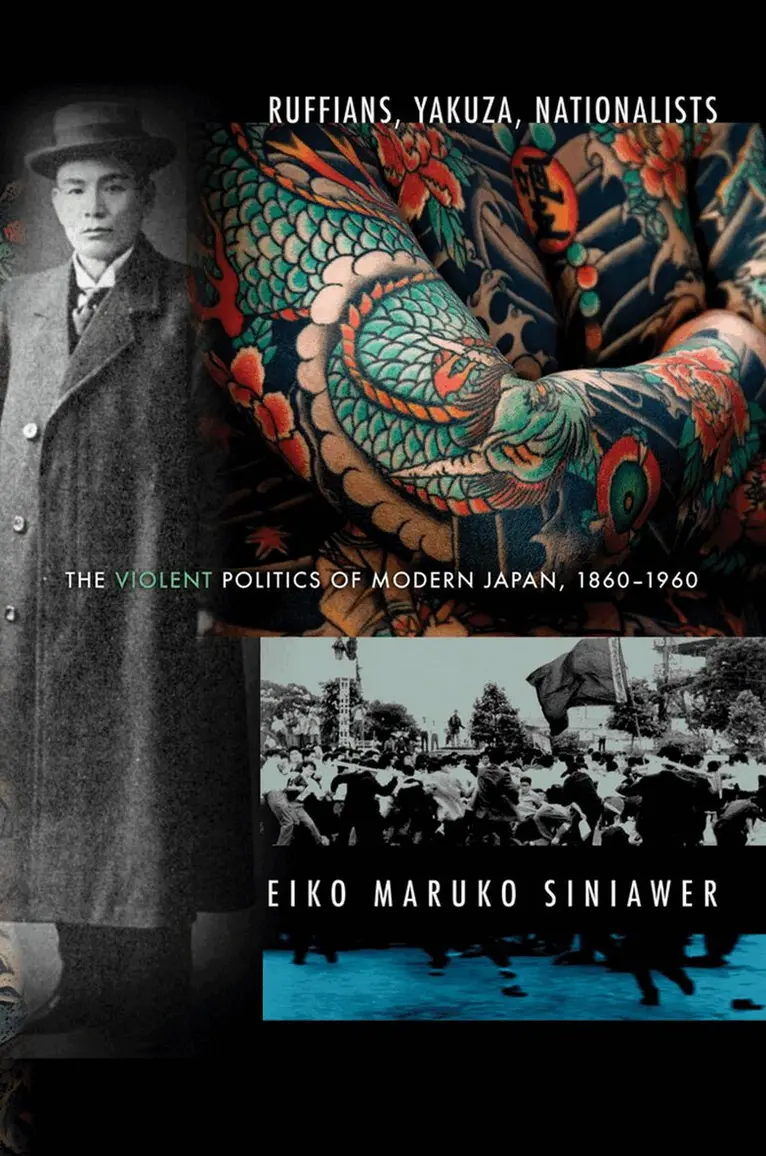
Ruffians, Yakuza, Nationalists
The Violent Politics of Modern Japan, 1860–1960
Inbunden, Engelska, 2008
722 kr
Skickas inom 10-15 vardagar
Violence and democracy may seem fundamentally incompatible, but the two have often been intimately and inextricably linked. In Ruffians, Yakuza, Nationalists, Eiko Maruko Siniawer argues that violence has been embedded in the practice of modern Japanese politics from the very inception of the country's experiment with democracy. As soon as the parliament opened its doors in 1890, brawls, fistfights, vandalism, threats, and intimidation quickly became a fixture in Japanese politics, from campaigns and elections to legislative debates. Most of this physical force was wielded by what Siniawer calls "violence specialists": ruffians and yakuza. Their systemic and enduring political violence-in the streets, in the halls of parliament, during popular protests, and amid labor strife-ultimately compromised party politics in Japan and contributed to the rise of militarism in the 1930s.For the post-World War II years, Siniawer illustrates how the Japanese developed a preference for money over violence as a political tool of choice. This change in tactics signaled a political shift, but not necessarily an evolution, as corruption and bribery were in some ways more insidious, exclusionary, and undemocratic than violence. Siniawer demonstrates that the practice of politics in Japan has been dangerous, chaotic, and far more violent than previously thought. Additionally, crime has been more political. Throughout the book, Siniawer makes clear that certain yakuza groups were ideological in nature, contrary to the common understanding of organized crime as nonideological. Ruffians, Yakuza, Nationalists is essential reading for anyone wanting to comprehend the role of violence in the formation of modern nation-states and its place in both democratic and fascist movements.
433 kr
Skickas inom 10-15 vardagar
Violence and democracy may seem fundamentally incompatible, but the two have often been intimately and inextricably linked. In Ruffians, Yakuza, Nationalists, Eiko Maruko Siniawer argues that violence has been embedded in the practice of modern Japanese politics from the very inception of the country's experiment with democracy. As soon as the parliament opened its doors in 1890, brawls, fistfights, vandalism, threats, and intimidation quickly became a fixture in Japanese politics, from campaigns and elections to legislative debates. Most of this physical force was wielded by what Siniawer calls "violence specialists": ruffians and yakuza. Their systemic and enduring political violence-in the streets, in the halls of parliament, during popular protests, and amid labor strife-ultimately compromised party politics in Japan and contributed to the rise of militarism in the 1930s.For the post-World War II years, Siniawer illustrates how the Japanese developed a preference for money over violence as a political tool of choice. This change in tactics signaled a political shift, but not necessarily an evolution, as corruption and bribery were in some ways more insidious, exclusionary, and undemocratic than violence. Siniawer demonstrates that the practice of politics in Japan has been dangerous, chaotic, and far more violent than previously thought. Additionally, crime has been more political. Throughout the book, Siniawer makes clear that certain yakuza groups were ideological in nature, contrary to the common understanding of organized crime as nonideological. Ruffians, Yakuza, Nationalists is essential reading for anyone wanting to comprehend the role of violence in the formation of modern nation-states and its place in both democratic and fascist movements.
785 kr
Skickas inom 7-10 vardagar
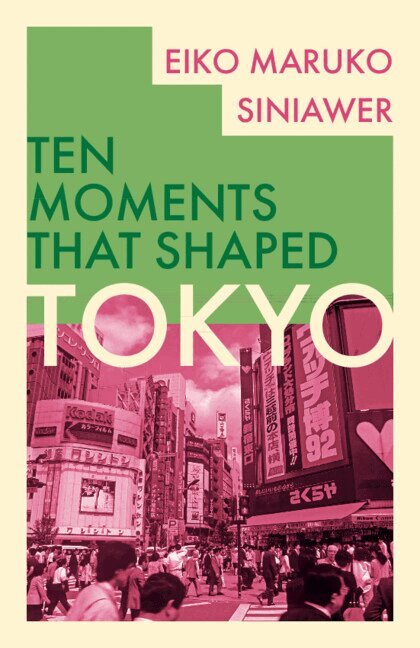
From sleepy fishing village to samurai capital to vibrant global metropolis, Eiko Maruko Siniawer takes readers through Tokyo's rich history, revealing four centuries of transformation deeply woven into its fabric. This accessible guide introduces a world of shoguns and Kabuki theater, riots and earthquakes, wartime devastation and reconstruction, booms and busts, bright lights and skyscrapers, all viewed through the lived experiences of those who have inhabited and shaped a city of distinctive neighborhoods and different personalities. Emphasizing the city's human heart, Siniawer conveys a vivid sense of time, culture, and place through ten moments that have shaped Tokyo's many lives.
241 kr
Skickas inom 7-10 vardagar
From sleepy fishing village to samurai capital to vibrant global metropolis, Eiko Maruko Siniawer takes readers through Tokyo's rich history, revealing four centuries of transformation deeply woven into its fabric. This accessible guide introduces a world of shoguns and Kabuki theater, riots and earthquakes, wartime devastation and reconstruction, booms and busts, bright lights and skyscrapers, all viewed through the lived experiences of those who have inhabited and shaped a city of distinctive neighborhoods and different personalities. Emphasizing the city's human heart, Siniawer conveys a vivid sense of time, culture, and place through ten moments that have shaped Tokyo's many lives.
1 518 kr
Skickas inom 10-15 vardagar
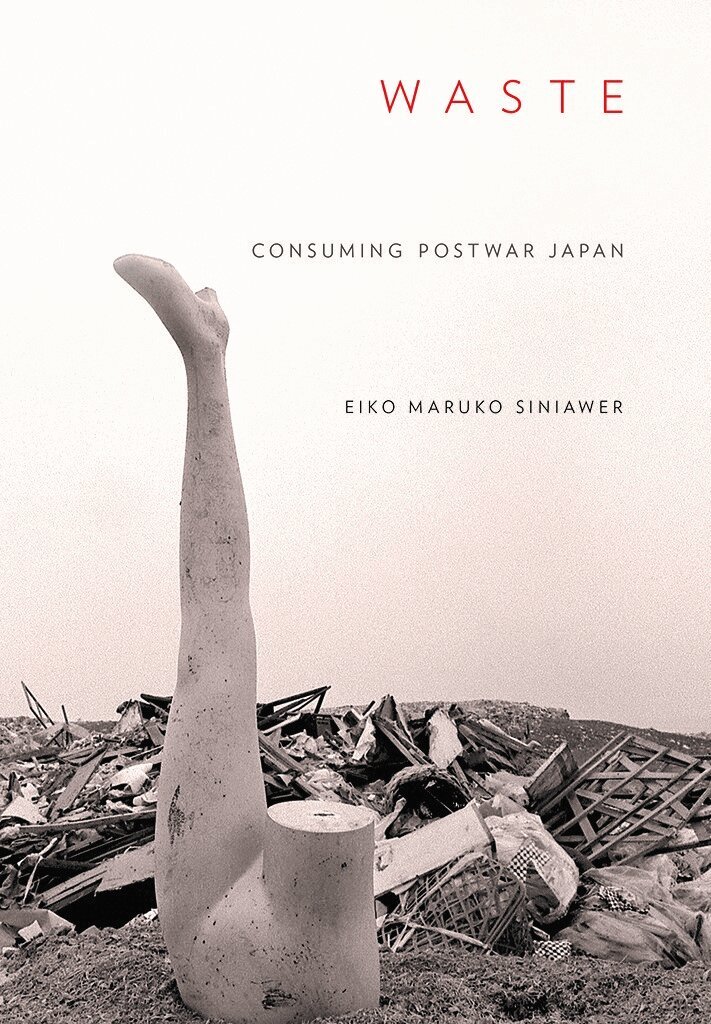
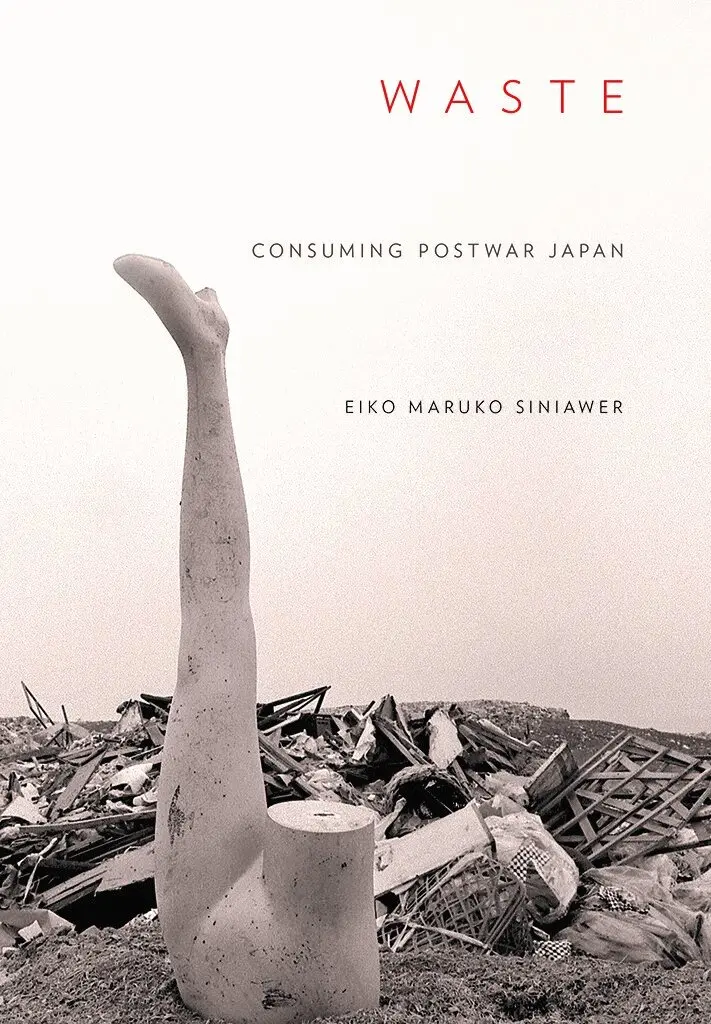
In Waste, Eiko Maruko Siniawer innovatively explores the many ways in which the Japanese have thought about waste—in terms of time, stuff, money, possessions, and resources—from the immediate aftermath of World War II to the present. She shows how questions about waste were deeply embedded in the decisions of everyday life, reflecting the priorities and aspirations of the historical moment, and revealing people's ever-changing concerns and hopes. Over the course of the long postwar, Japanese society understood waste variously as backward and retrogressive, an impediment to progress, a pervasive outgrowth of mass consumption, incontrovertible proof of societal excess, the embodiment of resources squandered, and a hazard to the environment. Siniawer also shows how an encouragement of waste consciousness served as a civilizing and modernizing imperative, a moral good, an instrument for advancement, a path to self-satisfaction, an environmental commitment, an expression of identity, and more. From the late 1950s onward, a defining element of Japan's postwar experience emerged: the tension between the desire for the privileges of middle-class lifestyles made possible by affluence and dissatisfaction with the logics, costs, and consequences of that very prosperity. This tension complicated the persistent search for what might be called well-being, a good life, or a life well lived. Waste is an elegant history of how people lived—how they made sense of, gave meaning to, and found value in the acts of the everyday.
406 kr
Skickas inom 10-15 vardagar
In Waste, Eiko Maruko Siniawer innovatively explores the many ways in which the Japanese have thought about waste—in terms of time, stuff, money, possessions, and resources—from the immediate aftermath of World War II to the present. She shows how questions about waste were deeply embedded in the decisions of everyday life, reflecting the priorities and aspirations of the historical moment, and revealing people's ever-changing concerns and hopes. Over the course of the long postwar, Japanese society understood waste variously as backward and retrogressive, an impediment to progress, a pervasive outgrowth of mass consumption, incontrovertible proof of societal excess, the embodiment of resources squandered, and a hazard to the environment. Siniawer also shows how an encouragement of waste consciousness served as a civilizing and modernizing imperative, a moral good, an instrument for advancement, a path to self-satisfaction, an environmental commitment, an expression of identity, and more. From the late 1950s onward, a defining element of Japan's postwar experience emerged: the tension between the desire for the privileges of middle-class lifestyles made possible by affluence and dissatisfaction with the logics, costs, and consequences of that very prosperity. This tension complicated the persistent search for what might be called well-being, a good life, or a life well lived. Waste is an elegant history of how people lived—how they made sense of, gave meaning to, and found value in the acts of the everyday.