Eileen Appelbaum - Böcker
Visar alla böcker från författaren Eileen Appelbaum. Handla med fri frakt och snabb leverans.
8 produkter
8 produkter
1 009 kr
Skickas inom 10-15 vardagar
This volume brings together an international group of contributors to explore the impacts of structural economic change and technological progress on labor markets. The contributors goal is to present an in-depth comparative study of the ways in which different national economies have adjusted to structural changes like the shift to service-based economies and technological changes brought about by the increasing use of the computer in offices and on the production line. Examining the adjustment process from both a micro and macro perspective, the contributors analyze the flexibility potentials within the different institutional organizations of the labor market in the U.S., France, West Germany, Great Britain, and Sweden.The study begins with a comprehensive introduction written by the editors which discusses the problem of structural and technological change in economic, social, and political terms. Two subsequent chapters address the economic structures of post-industrial society and the differential characteristics of employment growth in service industries. The contributors then present individual analyses of the labor market situation in the five countries under study as well as two general studies of institutions regulating the labor market and flexibility within the labor market. Throughout, the contributors are concerned with key issues such as which systems seem to adapt best, how skill and educational needs may be met in the changing labor market, and the importance of flexibility in a system characterized by ongoing structural and technological change. Ideal as supplementary reading for advanced courses in labor economics and industrial organization, this volume offers important new insights into labor market flexibility in the face of significant and continuing change.
485 kr
Kommande
How the financialization of healthcare has eroded the quality of care, driven up prices, and worsened health inequalitiesFinancial actors and healthcare leaders increasingly view healthcare organizations as financial assets to be bought, sold, and managed for maximum profit, regardless of the effects on patient care. Healthcare in the Age of Finance Capital reveals how the federal government enables financial opportunism in healthcare and offers bold ideas for overhauling a failed system.Rosemary Batt and Eileen Appelbaum provide a unique analysis of the financialization of healthcare, a process in which a growing proportion of the healthcare economy is owned and controlled by the financial sector. Healthcare organizations increasingly depend on financial machinations and the earnings derived from them rather than revenue generated from patient care.The extent to which financial calculations overshadow the healthcare mission depends importantly on institutional legacies, reimbursement rules, and the failure of regulatory oversight. Batt and Appelbaum show how differences in regulations and financing rules shape whether financial actors can penetrate distinct healthcare segments—from hospitals, nursing homes, and ambulatory care to physician specialties, home health, hospice, and autism services. Nonprofit healthcare is not immune from this financial logic.Evidence based, accessible, and informed by real-world examples, Healthcare in the Age of Finance Capital sheds critical light on how financial deregulation coupled with the relaxation of health, tax, anti-trust, and labor laws have allowed financially driven actors to exploit public funds for private gain at the expense of healthcare organizations, patients, communities, labor, and taxpayers.
1 571 kr
Skickas inom 10-15 vardagar
Much of the hoopla surrounding quality circles, teams, and high-performance work systems has been based on anecdotes and very thin evidence. It has not been established that those employee involvement strategies amount to anything more than another series of management fads or ruses designed to get more out of workers without giving them anything in return. This revelatory book, written by some of the skeptics, lays some of the suspicion to rest.Based on their visits to 44 plants and surveys of more than 4,000 employees, Eileen Appelbaum, Thomas Bailey, Peter Berg, and Arne L. Kalleberg concluded that companies are indeed more successful when managers share knowledge and power with workers and when workers assume increased responsibility and discretion.The study of steel, apparel, and medical electronics and imaging plants revealed much. In self-directed teams, workers were able to eliminate bottlenecks and coordinate the work process. In task forces created to improve quality, they communicated with individuals outside their own work groups and were able to solve problems. Expensive equipment in steel mills operated with fewer interruptions, turnaround and labor costs were cut in apparel factories, and costly inventories of components and medical equipment were reduced.And what did the employees think? The worker survey showed that jobs in participatory work systems often provide more challenging tasks and more opportunities for creativity. Employees in apparel had higher hourly earnings; those in steel had both higher hourly earnings and higher job satisfaction. Workers in more participatory settings were no more likely than others to report heavy workloads or excessive demands on their time. They were, however, less likely to report involuntary overtime or conflict with co-workers, and were more likely to be satisfied with their surroundings. Manufacturing Advantage provides the best assessment available of the effectiveness of high-performance work systems. Freestanding chapters near the end of the book provide full documentation of research data without interrupting the narrative flow.
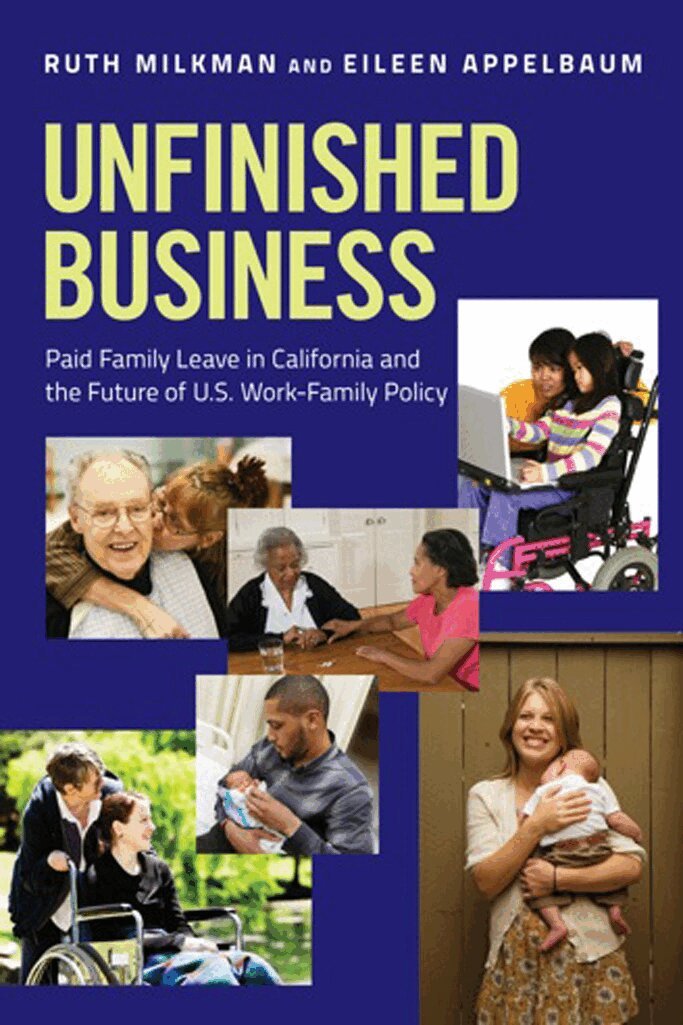
Unfinished Business
Paid Family Leave in California and the Future of U.S. Work-Family Policy
Inbunden, Engelska, 2013
1 525 kr
Skickas inom 10-15 vardagar
Unfinished Business documents the history and impact of California's paid family leave program, the first of its kind in the United States, which began in 2004. Drawing on original data from fieldwork and surveys of employers, workers, and the larger California adult population, Ruth Milkman and Eileen Appelbaum analyze in detail the effect of the state's landmark paid family leave on employers and workers. They also explore the implications of California's decade-long experience with paid family leave for the nation, which is engaged in ongoing debate about work-family policies. Unfinished Business exposes the process by which California workers and their allies built a coalition to win passage of paid family leave in the state legislature, and lays out the lessons for advocates in other states and localities, as well as the nation. Because paid leave enjoys extensive popular support across the political spectrum, campaigns for such laws have an excellent chance of success if some basic preconditions are met.Do paid family leave and similar programs impose significant costs and burdens on employers? Business interests argue that they do and routinely oppose any and all legislative initiatives in this area. Once the program took effect in California, this book shows, large majorities of employers themselves reported that its impact on productivity, profitability, and performance was negligible or positive. Milkman and Appelbaum demonstrate that the California program is well managed and easy to access, but that awareness of its existence remains limited. Moreover, those who need the program's benefits most urgently—low-wage workers, young workers, immigrants, and disadvantaged minorities—are least likely to know about it. As a result, the long-standing pattern of inequality in access to paid leave has remained largely intact.
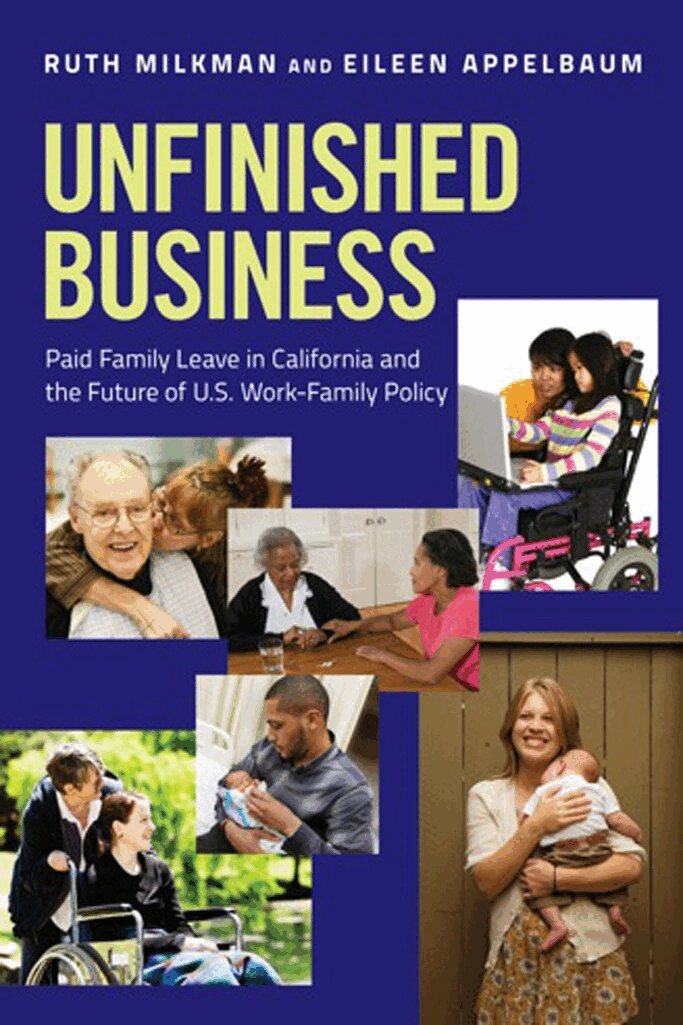
Unfinished Business
Paid Family Leave in California and the Future of U.S. Work-Family Policy
Häftad, Engelska, 2013
288 kr
Skickas inom 10-15 vardagar
Unfinished Business documents the history and impact of California's paid family leave program, the first of its kind in the United States, which began in 2004. Drawing on original data from fieldwork and surveys of employers, workers, and the larger California adult population, Ruth Milkman and Eileen Appelbaum analyze in detail the effect of the state's landmark paid family leave on employers and workers. They also explore the implications of California's decade-long experience with paid family leave for the nation, which is engaged in ongoing debate about work-family policies. Unfinished Business exposes the process by which California workers and their allies built a coalition to win passage of paid family leave in the state legislature, and lays out the lessons for advocates in other states and localities, as well as the nation. Because paid leave enjoys extensive popular support across the political spectrum, campaigns for such laws have an excellent chance of success if some basic preconditions are met.Do paid family leave and similar programs impose significant costs and burdens on employers? Business interests argue that they do and routinely oppose any and all legislative initiatives in this area. Once the program took effect in California, this book shows, large majorities of employers themselves reported that its impact on productivity, profitability, and performance was negligible or positive. Milkman and Appelbaum demonstrate that the California program is well managed and easy to access, but that awareness of its existence remains limited. Moreover, those who need the program's benefits most urgently—low-wage workers, young workers, immigrants, and disadvantaged minorities—are least likely to know about it. As a result, the long-standing pattern of inequality in access to paid leave has remained largely intact.
463 kr
Skickas inom 10-15 vardagar
Much of the hoopla surrounding quality circles, teams, and high-performance work systems has been based on anecdotes and very thin evidence. It has not been established that those employee involvement strategies amount to anything more than another series of management fads or ruses designed to get more out of workers without giving them anything in return. This revelatory book, written by some of the skeptics, lays some of the suspicion to rest.Based on their visits to 44 plants and surveys of more than 4,000 employees, Eileen Appelbaum, Thomas Bailey, Peter Berg, and Arne L. Kalleberg concluded that companies are indeed more successful when managers share knowledge and power with workers and when workers assume increased responsibility and discretion.The study of steel, apparel, and medical electronics and imaging plants revealed much. In self-directed teams, workers were able to eliminate bottlenecks and coordinate the work process. In task forces created to improve quality, they communicated with individuals outside their own work groups and were able to solve problems. Expensive equipment in steel mills operated with fewer interruptions, turnaround and labor costs were cut in apparel factories, and costly inventories of components and medical equipment were reduced.And what did the employees think? The worker survey showed that jobs in participatory work systems often provide more challenging tasks and more opportunities for creativity. Employees in apparel had higher hourly earnings; those in steel had both higher hourly earnings and higher job satisfaction. Workers in more participatory settings were no more likely than others to report heavy workloads or excessive demands on their time. They were, however, less likely to report involuntary overtime or conflict with co-workers, and were more likely to be satisfied with their surroundings. Manufacturing Advantage provides the best assessment available of the effectiveness of high-performance work systems. Freestanding chapters near the end of the book provide full documentation of research data without interrupting the narrative flow.
1 571 kr
Skickas inom 10-15 vardagar
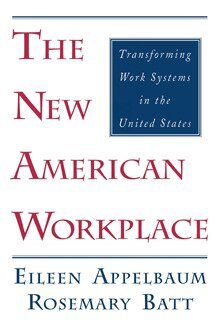
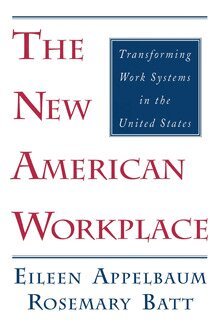
Despite formidable obstacles, a small but growing number of U.S. companies rccognize that today's domestic and international markets require them to transform their production process. On the basis of more than ten years of survey data and the evidence of case studies, Eileen Appelbaum and Rosemary Batt analyze the experiences of these companies. Their findings reveal two distinct and coherent models of the new American workplace. One is an American version of team production, which combines the principles of sociotechnical systems with those of quality engineering and which decentralizes the management of work flow and decision making. The other is an American version of lean production, which relies more heavily on managerial and technical expertise, and on centralized coordination and decision making. The authors explain the organizational models from which high-performance firms in the United States have borrowed and outline the policies required to promote more widespread workplace change. They contend that U.S. firms can, in fact, compete successfully, while providing their workers with increased job security, livable wages, and enhanced job satisfaction. Certain to appeal to both union and business leaders, this volume also offers crucial insights to policy makers and to scholars of the new American workplace.
516 kr
Skickas inom 10-15 vardagar
Despite formidable obstacles, a small but growing number of U.S. companies rccognize that today's domestic and international markets require them to transform their production process. On the basis of more than ten years of survey data and the evidence of case studies, Eileen Appelbaum and Rosemary Batt analyze the experiences of these companies. Their findings reveal two distinct and coherent models of the new American workplace. One is an American version of team production, which combines the principles of sociotechnical systems with those of quality engineering and which decentralizes the management of work flow and decision making. The other is an American version of lean production, which relies more heavily on managerial and technical expertise, and on centralized coordination and decision making. The authors explain the organizational models from which high-performance firms in the United States have borrowed and outline the policies required to promote more widespread workplace change. They contend that U.S. firms can, in fact, compete successfully, while providing their workers with increased job security, livable wages, and enhanced job satisfaction. Certain to appeal to both union and business leaders, this volume also offers crucial insights to policy makers and to scholars of the new American workplace.