
Ekbert Faas – författare
Visar alla böcker från författaren Ekbert Faas. Handla med fri frakt och snabb leverans.
4 produkter
4 produkter
477 kr
Skickas inom 7-10 vardagar
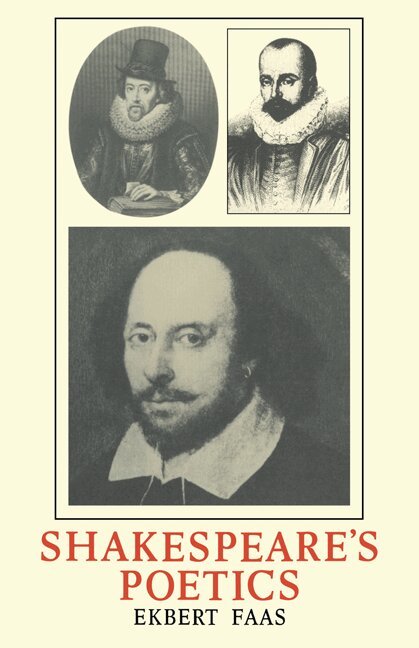
This 1986 book tackles the large and difficult but relatively unexplored topic of how Shakespeare viewed his own craft and creativity. What was his sense of prosody, imagery, poetic structure, and invention? Did he have specific views on acting, the purposes of drama, the unities and audience participation? Was there a conscious theoretical basis to his creation of dramatic personae? What did he think of artistic in relation to natural creativity? Shakespeare's Poetics is a full-length study of this subject. The author charts all its available aspects, and concludes that Shakespeare's idea of poetics occupied a place among contemporary theories which was surprisingly advanced, differing widely from mainstream Renaissance criticism and falling in line with the foremost thinking of the age.
850 kr
Skickas inom 7-10 vardagar
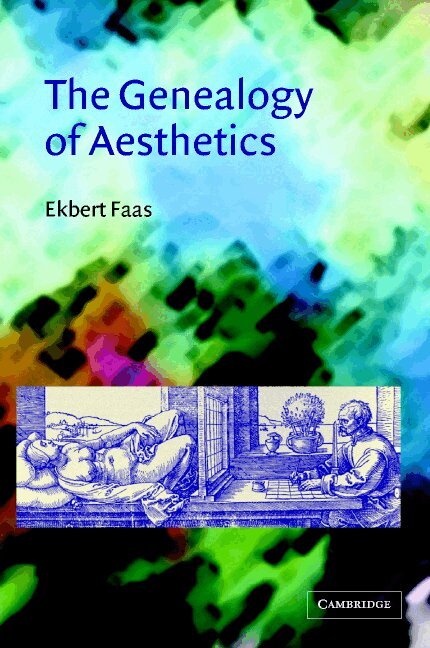
Is it body or spirit that makes us appreciate beauty and create art? The distinguished Canadian critic Ekbert Faas argues that, with occasional exceptions like Montaigne and Mandeville, the mainstream of western thinking about beauty from Plato onwards has overemphasised the spirit, or even execrated the body and sexuality as inimical to the aesthetic disposition. The Genealogy of Aesthetics redresses this imbalance via a radical re-reading of seminal thinkers like Plato, Augustine, Kant, Hegel, Marx, Heidegger and Derrida. Professor Faas attacks both the traditional and postmodern consensus, and offers a new pro-sensualist aesthetics, heavily influenced by Nietzsche, that draws on contemporary neo-Darwinian cognitive science. A work of both polemic and considerable learning, The Genealogy of Aesthetics marks a radical new departure in thinking about art, of interest to all serious students of the humanities and cognitive sciences, which no future work in this field can afford to ignore.
1 019 kr
Skickas inom 3-6 vardagar
Here Ekbert Faas examines the complex interrelationships among the fields of early psychiatry, poetry, and aesthetics through an in-depth study of the Victorian dramatic monologue and its Romantic antecedents. Discussing the work of over thirty major and minor poets, he focuses on what Victorian critics viewed as an unprecedented psychological school of poetry related to early psychiatry and rooted in the poetic "science of feelings" (Wordsworth). This broad historical perspective enables Faas to redefine our current terminology regarding the dramatic monologue and to document the extent to which early psychiatry shaped the poetry, poetics, and general frame of mind of the Victorians. "In the nineteenth century, English poetry began to explore the psyche in ways contemporaries recognized as new. Wordsworth and Coleridge pioneered what Arnold, Tennyson, and Browning continued. Professor Faas painstakingly documents this, and reactions to it, with reference to simultaneous psychiatric work. Fascinating."--Encounter Originally published in 1989.The Princeton Legacy Library uses the latest print-on-demand technology to again make available previously out-of-print books from the distinguished backlist of Princeton University Press. These editions preserve the original texts of these important books while presenting them in durable paperback and hardcover editions. The goal of the Princeton Legacy Library is to vastly increase access to the rich scholarly heritage found in the thousands of books published by Princeton University Press since its founding in 1905.
2 536 kr
Skickas inom 3-6 vardagar
Here Ekbert Faas examines the complex interrelationships among the fields of early psychiatry, poetry, and aesthetics through an in-depth study of the Victorian dramatic monologue and its Romantic antecedents. Discussing the work of over thirty major and minor poets, he focuses on what Victorian critics viewed as an unprecedented psychological school of poetry related to early psychiatry and rooted in the poetic "science of feelings" (Wordsworth). This broad historical perspective enables Faas to redefine our current terminology regarding the dramatic monologue and to document the extent to which early psychiatry shaped the poetry, poetics, and general frame of mind of the Victorians. "In the nineteenth century, English poetry began to explore the psyche in ways contemporaries recognized as new. Wordsworth and Coleridge pioneered what Arnold, Tennyson, and Browning continued. Professor Faas painstakingly documents this, and reactions to it, with reference to simultaneous psychiatric work. Fascinating."--Encounter Originally published in 1989.The Princeton Legacy Library uses the latest print-on-demand technology to again make available previously out-of-print books from the distinguished backlist of Princeton University Press. These editions preserve the original texts of these important books while presenting them in durable paperback and hardcover editions. The goal of the Princeton Legacy Library is to vastly increase access to the rich scholarly heritage found in the thousands of books published by Princeton University Press since its founding in 1905.