Elaine Frantz Parsons - Böcker
Visar alla böcker från författaren Elaine Frantz Parsons. Handla med fri frakt och snabb leverans.
3 produkter
3 produkter
Manhood Lost
Fallen Drunkards and Redeeming Women in the Nineteenth-Century United States
Inbunden, Engelska, 2003
504 kr
Tillfälligt slut
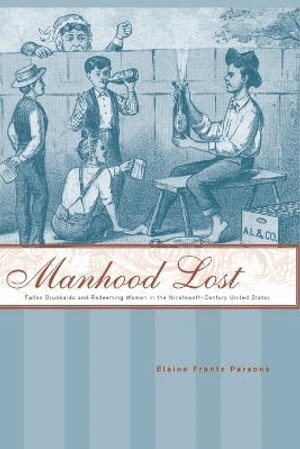
In fiction, drama, poems, and pamphlets, nineteenth-century reformers told the familiar tale of the decent young man who fell victim to demon rum: Robbed of his manhood by his first drink, he slid inevitably into an abyss of despair and depravity. In its discounting of the importance of free will, argues Elaine Frantz Parsons, this story led to increased emphasis on environmental influences as root causes of drunkenness, poverty, and moral corruption-thus inadvertently opening the door to state intervention in the form of Prohibition. Parsons also identifies the emergence of a complementary narrative of "female invasion"-womanhood as a moral force powerful enough to sway choice. As did many social reformers, women temperance advocates capitalized on notions of feminine virtue and domestic responsibilities to create a public role for themselves. Entering a distinctively male space-the saloon-to rescue fathers, brothers, and sons, women at the same time began to enter another male bastion-politics-again justifying their transgression in terms of rescuing the nation's manhood.

Manhood Lost
Fallen Drunkards and Redeeming Women in the Nineteenth-Century United States
Häftad, Engelska, 2009
398 kr
Skickas inom 5-8 vardagar
In fiction, drama, poems, and pamphlets, nineteenth-century reformers told the familiar tale of the decent young man who fell victim to demon rum: Robbed of his manhood by his first drink, he slid inevitably into an abyss of despair and depravity. In its discounting of the importance of free will, argues Elaine Frantz Parsons, this story led to increased emphasis on environmental influences as root causes of drunkenness, poverty, and moral corruption-thus inadvertently opening the door to state intervention in the form of Prohibition. Parsons also identifies the emergence of a complementary narrative of "female invasion"-womanhood as a moral force powerful enough to sway choice. As did many social reformers, women temperance advocates capitalized on notions of feminine virtue and domestic responsibilities to create a public role for themselves. Entering a distinctively male space-the saloon-to rescue fathers, brothers, and sons, women at the same time began to enter another male bastion-politics-again justifying their transgression in terms of rescuing the nation's manhood.

420 kr
Skickas inom 10-15 vardagar
The first comprehensive examination of the nineteenth-century Ku Klux Klan since the 1970s, Ku-Klux pinpoints the group's rise with startling acuity. Historians have traced the origins of the Klan to Pulaski, Tennessee, in 1866, but the details behind the group's emergence have long remained shadowy. By parsing the earliest descriptions of the Klan, Elaine Frantz Parsons reveals that it was only as reports of the Tennessee Klan's mysterious and menacing activities began circulating in northern newspapers that whites enthusiastically formed their own Klan groups throughout the South. The spread of the Klan was thus intimately connected with the politics and mass media of the North.Shedding new light on the ideas that motivated the Klan, Parsons explores Klansmen's appropriation of images and language from northern urban forms such as minstrelsy, burlesque, and business culture. While the Klan sought to retain the prewar racial order, the figure of the Ku-Klux became a joint creation of northern popular cultural entrepreneurs and southern whites seeking, perversely and violently, to modernize the South. Innovative and packed with fresh insight, Parsons' book offers the definitive account of the rise of the Ku Klux Klan during Reconstruction.