Elaine Freedgood - Böcker
Visar alla böcker från författaren Elaine Freedgood. Handla med fri frakt och snabb leverans.
6 produkter
6 produkter
514 kr
Skickas inom 7-10 vardagar
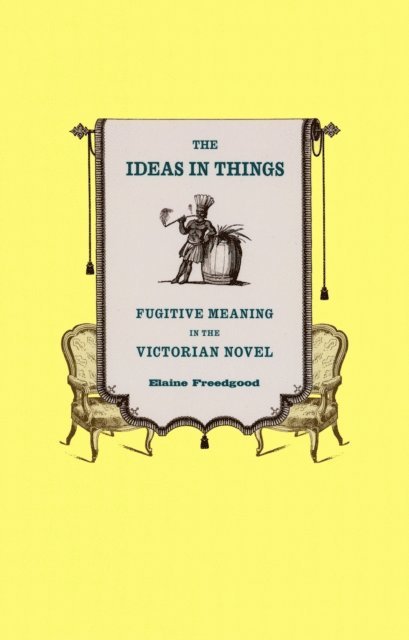
"The Ideas in Things" explores apparently inconsequential objects in popular Victorian texts to make contact with their fugitive meanings. Developing an innovative approach to analyzing nineteenth-century fiction, Elaine Freedgood reconnects the things readers unwittingly ignore to the stories they tell. Building her case around objects from three well-known Victorian novels - Charlotte Bronte's Jane Eyre, Elizabeth Gaskell's Mary Barton, and Charles Dickens' Great Expectations - Freedgood argues that these things are connected to histories that the novels barely acknowledge, generating darker meanings outside the novels' symbolic systems. A valuable contribution to the field of object studies, "The Ideas in Things" pushes readers' thinking about things beyond established concepts of commodity and fetish.
338 kr
Skickas inom 7-10 vardagar
"The Ideas in Things" explores apparently inconsequential objects in popular Victorian texts to make contact with their fugitive meanings. Developing an innovative approach to analyzing nineteenth-century fiction, Elaine Freedgood reconnects the things readers unwittingly ignore to the stories they tell. Building her case around objects from three well-known Victorian novels - Charlotte Bronte's Jane Eyre, Elizabeth Gaskell's Mary Barton, and Charles Dickens' Great Expectations - Freedgood argues that these things are connected to histories that the novels barely acknowledge, generating darker meanings outside the novels' symbolic systems. A valuable contribution to the field of object studies, "The Ideas in Things" pushes readers' thinking about things beyond established concepts of commodity and fetish.
Del 28 - Cambridge Studies in Nineteenth-Century Literature and Culture
Victorian Writing about Risk
Imagining a Safe England in a Dangerous World
Häftad, Engelska, 2006
493 kr
Skickas inom 7-10 vardagar
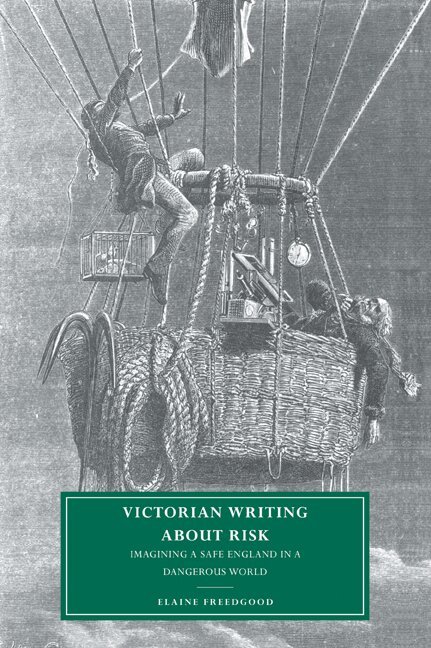
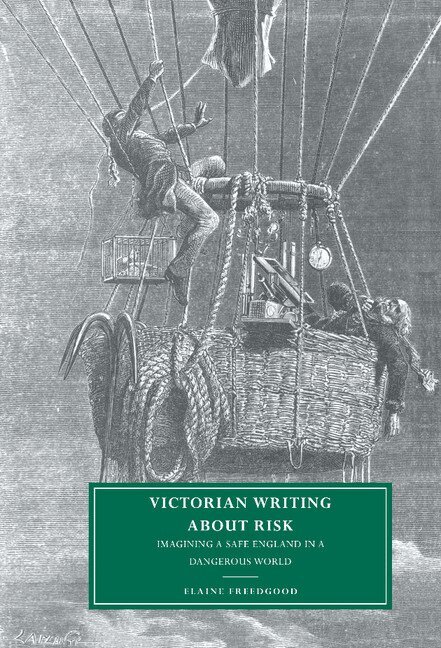
In Victorian Writing about Risk, first published in 2000, Elaine Freedgood explores the geography of risk produced by a wide spectrum of once-popular literature, including works on political economy, sanitary reform, balloon flight, Alpine mountaineering and African exploration. The consolations offered by this geography of risk are precariously predicated on the stability of dominant Victorian definitions of people and places. Women, men, the labouring and middle classes, the English and the Irish, Africa and Africans: all have assigned identities which allow risk to be located and contained. When identities shift and boundaries fail, danger and safety begin to appear in all the wrong places. The texts that this study focuses on reveal the ways in which risk moralizes and naturalizes the economic and political institutions of industrial, imperial culture during a period of unprecedented expansion and change.
Del 28 - Cambridge Studies in Nineteenth-Century Literature and Culture
Victorian Writing about Risk
Imagining a Safe England in a Dangerous World
Inbunden, Engelska, 2000
1 431 kr
Skickas inom 7-10 vardagar
In Victorian Writing about Risk, first published in 2000, Elaine Freedgood explores the geography of risk produced by a wide spectrum of once-popular literature, including works on political economy, sanitary reform, balloon flight, Alpine mountaineering and African exploration. The consolations offered by this geography of risk are precariously predicated on the stability of dominant Victorian definitions of people and places. Women, men, the labouring and middle classes, the English and the Irish, Africa and Africans: all have assigned identities which allow risk to be located and contained. When identities shift and boundaries fail, danger and safety begin to appear in all the wrong places. The texts that this study focuses on reveal the ways in which risk moralizes and naturalizes the economic and political institutions of industrial, imperial culture during a period of unprecedented expansion and change.
388 kr
Skickas inom 7-10 vardagar
A short, provocative book that challenges basic assumptions about Victorian fictionNow praised for its realism and formal coherence, the Victorian novel was not always great, or even good, in the eyes of its critics. As Elaine Freedgood reveals in Worlds Enough, it was only in the late 1970s that literary critics constructed a prestigious version of British realism, erasing more than a century of controversy about the value of Victorian fiction.Examining criticism of Victorian novels since the 1850s, Freedgood demonstrates that while they were praised for their ability to bring certain social truths to fictional life, these novels were also criticized for their formal failures and compared unfavorably to their French and German counterparts. She analyzes the characteristics of realism—denotation, omniscience, paratext, reference, and ontology—and the politics inherent in them, arguing that if critics displaced the nineteenth-century realist novel as the standard by which others are judged, literary history might be richer. It would allow peripheral literatures and the neglected wisdom of their critics to come fully into view. She concludes by questioning the aesthetic racism built into prevailing ideas about the centrality of realism in the novel, and how those ideas have affected debates about world literature.By re-examining the critical reception of the Victorian novel, Worlds Enough suggests how we can rethink our practices and perceptions about books we think we know.
279 kr
Skickas inom 7-10 vardagar
A short, provocative book that challenges basic assumptions about Victorian fictionNow praised for its realism and formal coherence, the Victorian novel was not always great, or even good, in the eyes of its critics. As Elaine Freedgood reveals in Worlds Enough, it was only in the late 1970s that literary critics constructed a prestigious version of British realism, erasing more than a century of controversy about the value of Victorian fiction.Examining criticism of Victorian novels since the 1850s, Freedgood demonstrates that while they were praised for their ability to bring certain social truths to fictional life, these novels were also criticized for their formal failures and compared unfavorably to their French and German counterparts. She analyzes the characteristics of realism—denotation, omniscience, paratext, reference, and ontology—and the politics inherent in them, arguing that if critics displaced the nineteenth-century realist novel as the standard by which others are judged, literary history might be richer. It would allow peripheral literatures and the neglected wisdom of their critics to come fully into view. She concludes by questioning the aesthetic racism built into prevailing ideas about the centrality of realism in the novel, and how those ideas have affected debates about world literature.By re-examining the critical reception of the Victorian novel, Worlds Enough suggests how we can rethink our practices and perceptions about books we think we know.