Eleni Coundouriotis - Böcker
Visar alla böcker från författaren Eleni Coundouriotis. Handla med fri frakt och snabb leverans.
5 produkter
5 produkter
866 kr
Tillfälligt slut
By looking at African novels - in French and English - of both the colonial and postcolonial periods, this text places African literature in its proper context within this field. The author shows how historical narration not only "answers back" to Europe's colonialist legacy, but also serves as a complex form of dissent among Africans themselves. Exploring subjects such as human sacrifice, as portrayed in the historical novels of Rene Maran, Chinua Achebe, Paul Hazoume, Yambo Ouolguem and Ben Okri, the author argues that these writers are part of a tradition of dissent, shattering the myth of national unity. Rather than focusing on resistance to Europe, these works reflect a variety of voices among Africans. By exploring dialogue between literature and history, this book aims to give voice to African novelists' defiance of colonialism and nationalist ideology.
681 kr
Skickas inom 3-6 vardagar
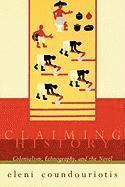
Although postcolonial studies has explored the historical influences and connections among literatures throughout the world, it has considered African writing unique. By looking at African novels-written in both French and English-of the colonial and postcolonial periods, Claiming History places African literature in its proper context within this field. Eleni Coundouriotis shows how historical narration not only "answers back" to Europe's colonialist legacy, but also serves as a complex form of dissent among Africans themselves.Exploring subjects such as human sacrifice as portrayed in the historical novels of Rene Maran, Chinua Achebe, Paul Hazoume, Yambo Ouolguem, and Ben Okri, Coundouriotis argues that these authors are part of a tradition of dissent, shattering the myth of national unity. Rather than focusing on resistance to Europe-the outsider-these works reflect a variety of voices among Africans. Through their historical narratives, African novelists seek to break down and re-create their communities. Novels such as Things Fall Apart and The Famine Road have traditionally been read as ethnographies, authentically depicting the everyday life of Africans.But the emphasis on "authenticity" decontextualizes these books and neglects the ways they grapple with history. Since literature of dissent resists any single or absolute authority, it is in both colonialist and ultranationalist interests to silence it. By exploring the dialogue between literature and history, this book gives voice to African novelists' defiance of colonialism and nationalist ideology, and adds significantly to our understanding of a body of work that has long been ignored or misunderstood.
2 420 kr
Skickas inom 10-15 vardagar
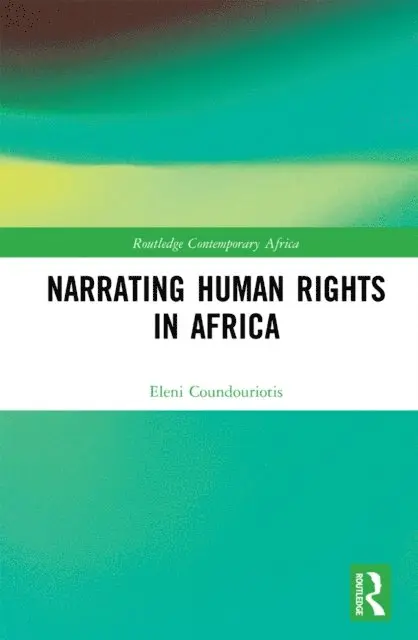
Narrating Human Rights in Africa claims human rights from the perspective of artists from the African continent and situates the key theoretical concepts in African perspectives, undercutting the stereotypes of victimhood and voicelessness. Instead of positioning literary texts as illustrative of points already theorized elsewhere, the author foregrounds the literature itself to show the concepts it offers, the ideas and responses stemming from complex historical circumstances in Africa and expressed by African writers. The book focuses on how narrative creates new categories of thought challenging human rights dogma, whereas the sum of the literary voices evoked also stands by the values of social justice and protection of human rights. The chapters take up key challenges to the narration of human rights in which the contribution of African writers is particularly important. This includes human dignity in the resistance to apartheid, the figure of the child soldier, how humanitarianism’s images affect representational strategies of contemporary African writers, the challenge of testifying about rape in war, how to evoke the disappeared body of the torture victim, the centrality of flight in the refugee and migrant experiences, and finally the long shadow of the "heart of darkness" motif. Offering a sustained examination of the narrative treatment of key human rights concerns as expressed by African writers, this book will be of interest to scholars of African literature, postcolonial studies, African studies, and human rights.
699 kr
Skickas inom 10-15 vardagar
Narrating Human Rights in Africa claims human rights from the perspective of artists from the African continent and situates the key theoretical concepts in African perspectives, undercutting the stereotypes of victimhood and voicelessness. Instead of positioning literary texts as illustrative of points already theorized elsewhere, the author foregrounds the literature itself to show the concepts it offers, the ideas and responses stemming from complex historical circumstances in Africa and expressed by African writers. The book focuses on how narrative creates new categories of thought challenging human rights dogma, whereas the sum of the literary voices evoked also stands by the values of social justice and protection of human rights. The chapters take up key challenges to the narration of human rights in which the contribution of African writers is particularly important. This includes human dignity in the resistance to apartheid, the figure of the child soldier, how humanitarianism’s images affect representational strategies of contemporary African writers, the challenge of testifying about rape in war, how to evoke the disappeared body of the torture victim, the centrality of flight in the refugee and migrant experiences, and finally the long shadow of the "heart of darkness" motif. Offering a sustained examination of the narrative treatment of key human rights concerns as expressed by African writers, this book will be of interest to scholars of African literature, postcolonial studies, African studies, and human rights.
793 kr
Skickas inom 7-10 vardagar
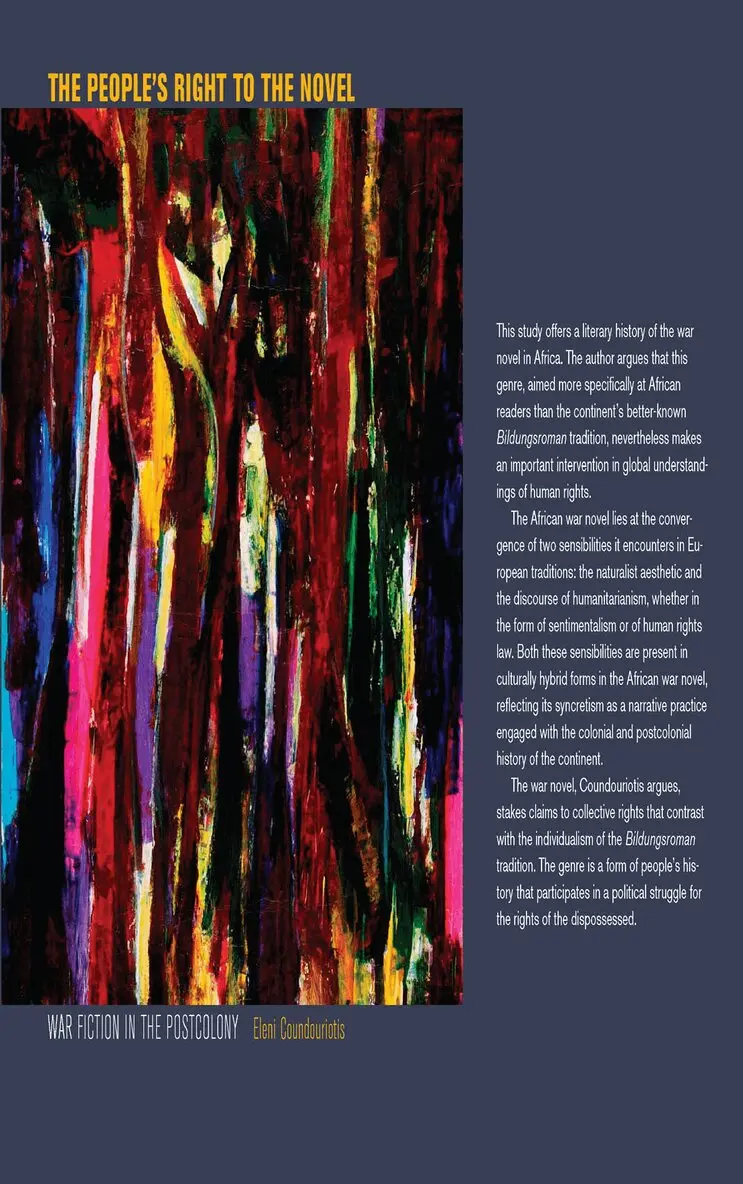
This study offers a literary history of the war novel in Africa. Coundouriotis argues that this genre, aimed more specifically at African readers than the continent's better-known bildungsroman tradition, nevertheless makes an important intervention in global understandings of human rights.The African war novel lies at the convergence of two sensibilities it encounters in European traditions: the naturalist aesthetic and the discourse of humanitarianism, whether in the form of sentimentalism or of human rights law. Both these sensibilities are present in culturally hybrid forms in the African war novel, reflecting its syncretism as a narrative practice engaged with the colonial and postcolonial history of the continent.The war novel, Coundouriotis argues, stakes claims to collective rights that contrast with the individualism of the bildungsroman tradition. The genre is a form of people's history that participates in a political struggle for the rights of the dispossessed.