
Eli Hirsch – författare
Visar alla böcker från författaren Eli Hirsch. Handla med fri frakt och snabb leverans.
7 produkter
7 produkter
2 106 kr
Skickas inom 5-8 vardagar
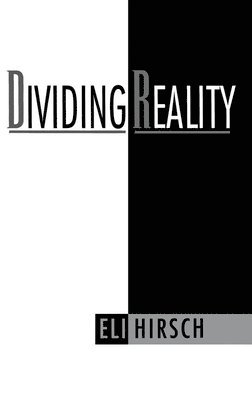
Why does our language divide up reality one way rather than another? On what rational basis does our language contain certain kinds of general words rather than others?Hirsch shows that a language can be constructed which describes reality in ways we would find absurdly irrational, for example by classifying normally disparate items under the same general term. The apparent irrationality of the new language does not depend on its impoverished fact-stating power, as this may be equivalent to the fact-stating power of ordinary language; the problem then is to explain exactly what is wrong with it. Various options are explored and criticized, such as the hypothesis that language must reflect an underlying objective distinction between `natural' kinds; that there are pragmatic reasons for the way language functions as it does; and that, as a matter of `metaphysical necessity,' strange ways of dividing up reality are constructions out of ordinary ways. Having demonstrated that this newly identified problem is in fact a serious one which cannot be easily solved or brushed aside, Hirsch offers his own suggestions for a possible solution.
1 062 kr
Skickas inom 5-8 vardagar
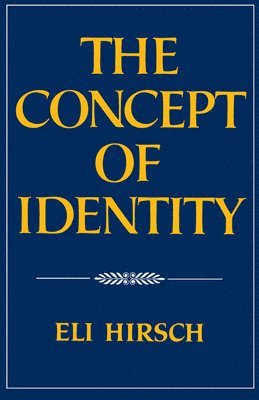
In this book, Eli Hirsch focuses on identity through time, first with respect to ordinary bodies, then underlying matter, and eventually persons. These are linked at various points with other aspects of identity, such as the spatial unity of things, the unity of kinds, and the unity of groups. He investigates how our identity concept ordinarily operates in these respects. He also asks why this concept is so cental to our thinking and whether we can justify seeing the world in terms of such a concept.This is the revised and updated edition of a hardback published in 1982.
862 kr
Skickas inom 5-8 vardagar
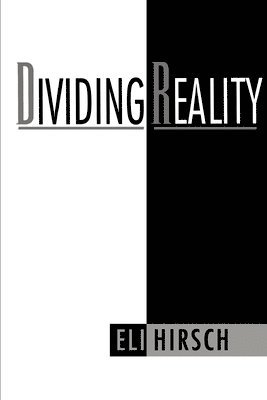
In this book Eli Hirsch identifies and explores a `new' philosophical problem. Hirsch calls this new problem `the division problem'. This is defined as the problem of explaining why our language divides up reality in one way rather than another, or what the rational basis is for our language to contain certain kinds of general words rather than others. Hirsch shows that a language can be constructed which describes reality in ways we would find absurdly irrational, for example by classifying normally disparate items under the same general term. Having demonstrated that this newly identified problem is in fact a serious one which cannot be easily solved or brushed aside, Hirsch offers his own suggestions for a possible solution.
- Nyhet
771 kr
Skickas inom 5-8 vardagar
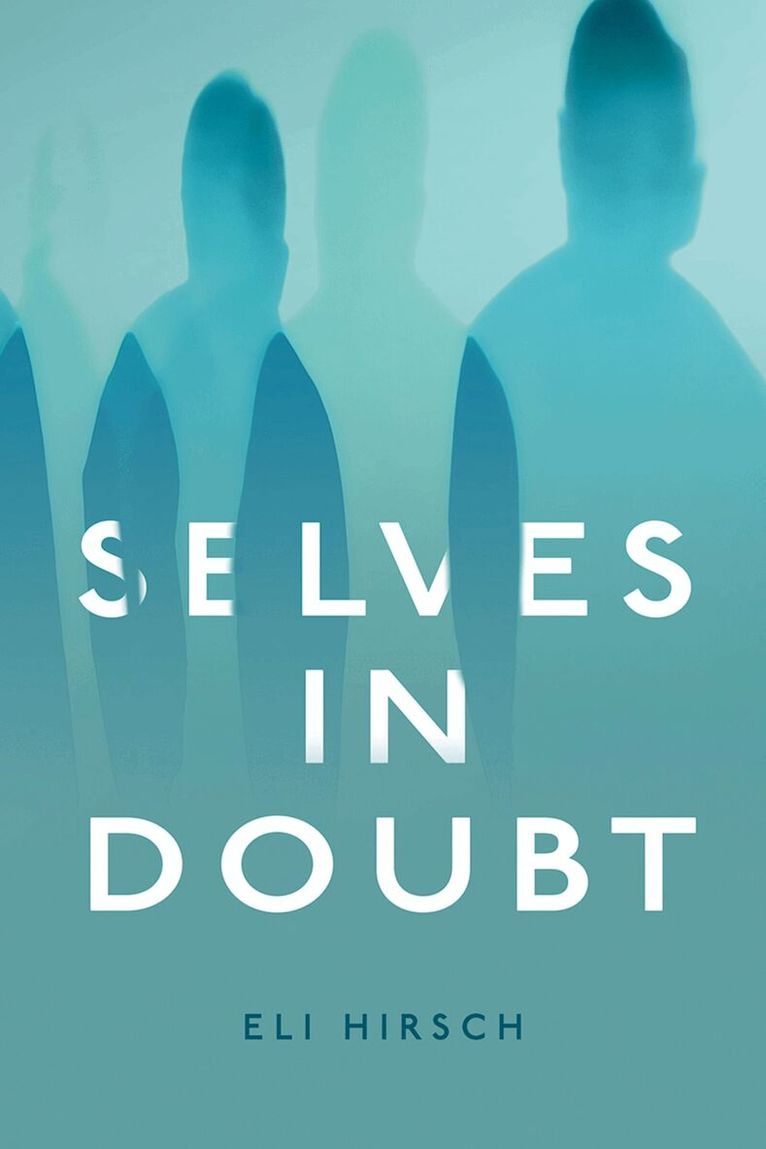
In Selves in Doubt, Eli Hirsch focuses on the importance of the first-person perspective to a normal human level of rational thought and behavior. Hirsch argues that an "I-blind" being—one who lacks the capacity to employ the first-person pronoun—could not be fully rational; nor could they acquire normal knowledge of physical reality.The meaning of the first-person pronoun is shown to have a particular bearing on the anomalous context of split-brain patients and generalizations of that context. Hirsch critiques Parfit's suggestion that a better language might eliminate or revise the concept of personal identity and the use of the first-person pronoun, on the grounds that the first-person perspective must remain as it is because the capacity to employ the first-person pronoun is a necessary condition for a language to be suitable for rational beings. Hirsch also contends that, contrary to Lewis and Sider, it may be difficult to find any other necessary condition for a language to be suitable for rational beings.A bold claim defended later in the book is that it is metaphysically impossible to be sane while doubting the reality of other selves. This claim leads to a discussion of skepticism, and the final chapter consists in reflections on how facing skepticism relates to facing death.
1 436 kr
Skickas inom 5-8 vardagar
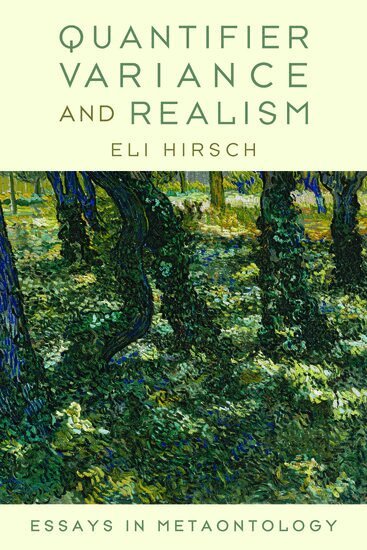
Eli Hirsch has contributed steadily to metaphysics since his ground-breaking (and much cited) work on identity through time (culminating in the 1982 OUP book The Concept of Identity). Within the last 10 years, his work on realism and quantifier variance has been front-and-center in the minds of many metaphysicians. Metametaphysics, which looks at foundational questions about the very practice of metaphysics and the questions it raises, is now a popular area of discussion. There is a lot of anxiety about what ontology is, and Hirsch's diagnosis of how revisionary ontologists go wrong is one of the main views being discussed. This volume collects HIrsch's essays from the last decade (with the exception of one article from 1978) on ontology and metametaphysics which are very much tied to these debates. His essays develop a distinctive language-based argument against various anti-commonsensical views that have recently dominated ontology. All these views go astray, Hirsch says, by failing to interpret ordinary assertions about existence in a plausibly charitable way, so their philosophizing leads them to misuse language about ontology - our ordinary concept of 'what exists' - in favor of a position othat is quite different. Hirsch will supply a new introduction. The volume will interest philosophers of metaphysics currently engaged in these debates.
1 087 kr
Skickas inom 10-15 vardagar
Radical Skepticism and the Shadow of Doubt brings something new to epistemology both in content and style. At the outset we are asked to imagine a person named Vatol who grows up in a world containing numerous people who are brains-in-vats and who hallucinate their entire lives. Would Vatol have reason to doubt whether he himself is in contact with reality? If he does have reason to doubt, would he doubt, or is it impossible for a person to have such doubts? And how do we ourselves compare to Vatol? After reflection, can we plausibly claim that Vatol has reason to doubt, but we don’t? These are the questions that provide the novel framework for the debates in this book. Topics that are treated here in significantly new ways include: the view that we ought to doubt only when we philosophize; epistemological “dogmatism”; and connections between radical doubt and “having a self.” The book adopts the innovative form of a “dialogue/play.” The three characters, who are Talmud students as well as philosophers, hardly limit themselves to pure philosophy, but regale each other with Talmudic allusions, reminiscences, jokes, and insults. For them the possibility of doubt emerges as an existential problem with potentially deep emotional significance. Setting complex arguments about radical skepticism within entertaining dialogue, this book can be recommended for both beginners and specialists.
344 kr
Skickas inom 10-15 vardagar
Radical Skepticism and the Shadow of Doubt brings something new to epistemology both in content and style. At the outset we are asked to imagine a person named Vatol who grows up in a world containing numerous people who are brains-in-vats and who hallucinate their entire lives. Would Vatol have reason to doubt whether he himself is in contact with reality? If he does have reason to doubt, would he doubt, or is it impossible for a person to have such doubts? And how do we ourselves compare to Vatol? After reflection, can we plausibly claim that Vatol has reason to doubt, but we don’t? These are the questions that provide the novel framework for the debates in this book. Topics that are treated here in significantly new ways include: the view that we ought to doubt only when we philosophize; epistemological “dogmatism”; and connections between radical doubt and “having a self.” The book adopts the innovative form of a “dialogue/play.” The three characters, who are Talmud students as well as philosophers, hardly limit themselves to pure philosophy, but regale each other with Talmudic allusions, reminiscences, jokes, and insults. For them the possibility of doubt emerges as an existential problem with potentially deep emotional significance. Setting complex arguments about radical skepticism within entertaining dialogue, this book can be recommended for both beginners and specialists.