Eliot Freidson - Böcker
Visar alla böcker från författaren Eliot Freidson. Handla med fri frakt och snabb leverans.
11 produkter
11 produkter
289 kr
Skickas inom 7-10 vardagar
Eliot Freidson has written the first systematic account of professionalism as a method of organizing work. In ideal-typical professionalism, specialized workers control their own work, while in the free market consumers are in command, and in bureaucracy managers dominate. Freidson shows how each method has its own logic requiring different kinds of knowledge, organization, career, education and ideology. He also discusses how historic and national variations in state policy, professional organization, and forms of practice influence the strength of professionalism. In appraising the embattled position of professions today, Freidson concludes that ideologically inspired attacks pose less danger to professionals' institutional privileges than to their ethical independence to resist use of their specialized knowledge to maximize profit and efficiency without also providing its benefits to all in need. This timely and original analysis will be of great interest to those in sociology, political science, history, business studies and the various professions.
260 kr
Skickas inom 7-10 vardagar
"This is an immensely useful book for sociologists working in a wide range of sub-fields. It confirms Freidson's status among the leading exponents of the old Chicago tradition. This book is catholic in its reading, sophisticated in its arguments and cautious in its judgements."—Robert Dingwall, Sociology"As an attempt to provide a complex, wide-ranging account this book should be essential reading for specialist students, and it should act as a stimulus for the extension of both empirical research and theory."—Alex Faulkner, Sociological Review"Freidson's book is a concise introduction to the professions, challenging specialists with its puncturing of theoretically induced misconceptions and offering general readers a clear but critical entrée to the theoretical literature concerning this central aspect of modern society."—Andrew Abbott, Science"This is a stimulating and well-written book which opens up a new perspective on the professions as well as contributing to existing debates."—David Podmore, Times Higher Education Supplement
722 kr
Skickas inom 10-15 vardagar
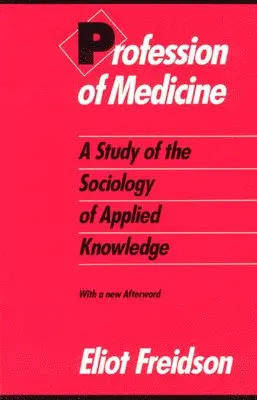
In the United States today we are confronted by a number of serious social problems, not the least of which concern the character of our basic human services. In each of the broad public domains of welfare, education, law, and health there are crises of public confidence. Each in its own way is failing to accomplish its essential mission of alleviating material deprivation, instructing the young, controlling and righting criminal and civil wrongs, and healing the sick. The poor, the student, the offender and the victim, the sick-all have in some way protested the failure of the institutions responsible for them. And these protests occur at a time when the human services are absorbing an increasingly massive amount of money and manpower. Awareness of that crisis intensified in the second half of the twentieth century. Increasing energy has been invested in research designed to determine what can be done. Each of the human services has long had its own research tradition, but during the sixties each has also made a concerted effort to mobilize and use the skills of such comparatively new disciplines as sociology. Owing to these new demands, sociology itself has grown. The hitherto obscure specialties of the sociology of law and medicine and the established specialties of criminology and educational sociology have taken on new vigor. In applying themselves the task of studying the human services, however, these segments of sociology have had to choose between two different strategies. Rather than dealing with the details of the human services for their own sake-and this lack of detail in a characteristic limitation of the second approach-this book shall instead attempt to stand outside the system in order to delineate one of its critical assumptions and a strategic feature of its basic structure. This book deals with the concept of profession, for the concept rests on assumptions about how services to laymen should be controlled and is realized by a special kind of social structure that organizes the presentation of those services.
778 kr
Skickas inom 10-15 vardagar
"Medical Professionals and Their Work" conveys how medical people shape and organize the knowledge, perception, and experience of illness, as well as the substance of illness behavior, its management, and treatment. It is now well established that the unique symbolic equipment of the human animal is intimately connected with the functioning of the body. Freidson and Lorber believe that the proper understanding of specifically human rather than generally "animal" illness requires careful and systematic study of the social meanings surrounding illness.The content of social meanings varies from culture to culture and from one historical period to another. As important as the content of those social meanings, is the organization of groups who serve as carriers and, sometimes, creators. In the case of illness, a critical difference exists between those considered to be competent to diagnose and treat the sick and those excluded from this special privilege - a separation as old as the shaman or medicine-man. Such differences become solidified when the expert healer becomes a member of an organized, full-time occupation, sustained in monopoly over the work of diagnosis and treatment by the force of the state, and invested with the authority to make official designation of the social meanings to be ascribed to physical states.The medical profession in advanced nations is in a vise between professional needs and political demands. Its organization and its knowledge establish many of the conditions for being recognizably and legitimately ill, and the professional controls many of the circumstances of treatment. It thus plays a central role in shaping the experience of being ill. With this fact of modern life in mind, this collection on the character of experts or professionals in general and of medicine as a profession in particular is uniquely fashioned.
382 kr
Skickas inom 7-10 vardagar
"Must be judged as a landmark in medical sociology."—Norman Denzin, Journal of Health and Social Behavior"Profession of Medicine is a challenging monograph; the ideas presented are stimulating and thought provoking. . . . Given the expanding domain of what illness is and the contentions of physicians about their rights as professionals, Freidson wonders aloud whether expertise is becoming a mask for privilege and power. . . . Profession of Medicine is a landmark in the sociological analysis of the professions in modern society."—Ron Miller, Sociological Quarterly"This is the first book that I know of to go to the root of the matter by laying open to view the fundamental nature of the professional claim, and the structure of professional institutions."—Everett C. Hughes, Science
643 kr
Skickas inom 5-8 vardagar
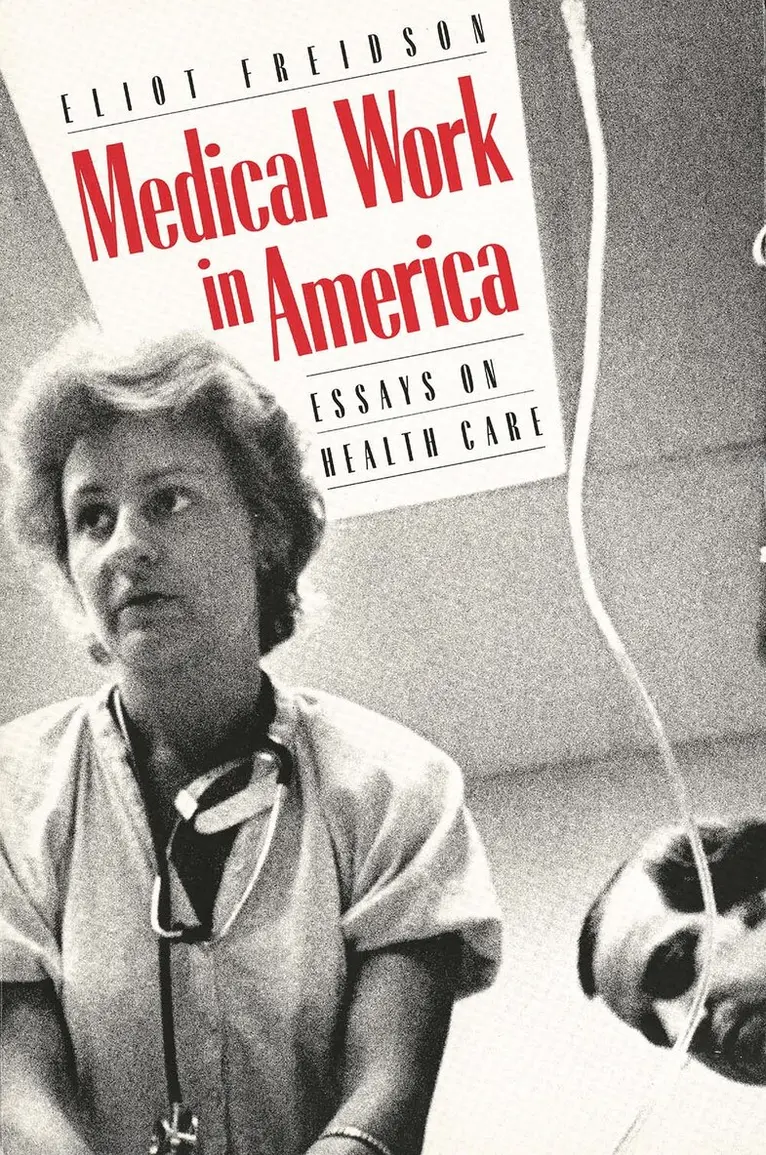
Present-day health care policies in the United States are moving toward a system in which patients will be treated like industrial objects by doctors forced to work mechanically, says the distinguished medical sociologist Eliot Freidson in Medical Work in America. He offers a number of controversial proposals designed both to reduce costs and to avoid such dehumanization.In a series of essays that includes some of his classic work as well as significant new material, Freidson discusses the doctor-patient relationship, relations between physicians in various forms of medical practice, and the forces now reorganizing medical work. He shows how increasingly restrictive health insurance contracts insert a new, problematic element into both doctor-patient and colleague relations, and how bureaucratic methods of controlling medical decisions affect those relations. Finally, Freidson advances some basic principles to guide health care policy. He emphasizes that the physician's freedom to exercise discretion is essential if patients are to be treated as individuals rather than as administratively defined diagnostic categories. His recommendations include eliminating fee-for-service compensation, controlling health industry profits, and limiting the external administrative regulation of medical decisions while organizing medical work in such a way as to maximize effective and responsible self-governance.
753 kr
Skickas inom 11-20 vardagar
Eliot Freidson has written the first systematic account of professionalism as a method of organizing work. In ideal-typical professionalism, specialized workers control their own work, while in the free market consumers are in command, and in bureaucracy managers dominate. Freidson shows how each method has its own logic requiring different kinds of knowledge, organization, career, education and ideology. He also discusses how historic and national variations in state policy, professional organization, and forms of practice influence the strength of professionalism. In appraising the embattled position of professions today, Freidson concludes that ideologically inspired attacks pose less danger to professionals' institutional privileges than to their ethical independence to resist use of their specialized knowledge to maximize profit and efficiency without also providing its benefits to all in need. This timely and original analysis will be of great interest to those in sociology, political science, history, business studies and the various professions.
265 kr
Skickas inom 11-20 vardagar
This book is an original interpretation of the professions and the role of the professional in Western industrial societies today.
2 712 kr
Skickas inom 3-6 vardagar
"Medical Professionals and Their Work" conveys how medical people shape and organize the knowledge, perception, and experience of illness, as well as the substance of illness behavior, its management, and treatment. It is now well established that the unique symbolic equipment of the human animal is intimately connected with the functioning of the body. Freidson and Lorber believe that the proper understanding of specifically human rather than generally "animal" illness requires careful and systematic study of the social meanings surrounding illness.The content of social meanings varies from culture to culture and from one historical period to another. As important as the content of those social meanings, is the organization of groups who serve as carriers and, sometimes, creators. In the case of illness, a critical difference exists between those considered to be competent to diagnose and treat the sick and those excluded from this special privilege - a separation as old as the shaman or medicine-man. Such differences become solidified when the expert healer becomes a member of an organized, full-time occupation, sustained in monopoly over the work of diagnosis and treatment by the force of the state, and invested with the authority to make official designation of the social meanings to be ascribed to physical states.The medical profession in advanced nations is in a vise between professional needs and political demands. Its organization and its knowledge establish many of the conditions for being recognizably and legitimately ill, and the professional controls many of the circumstances of treatment. It thus plays a central role in shaping the experience of being ill. With this fact of modern life in mind, this collection on the character of experts or professionals in general and of medicine as a profession in particular is uniquely fashioned.
2 098 kr
Skickas inom 10-15 vardagar
In the United States today we are confronted by a number of serious social problems, not the least of which concern the character of our basic human services. In each of the broad public domains of welfare, education, law, and health there are crises of public confidence. Each in its own way is failing to accomplish its essential mission of alleviating material deprivation, instructing the young, controlling and righting criminal and civil wrongs, and healing the sick. The poor, the student, the offender and the victim, the sick-all have in some way protested the failure of the institutions responsible for them. And these protests occur at a time when the human services are absorbing an increasingly massive amount of money and manpower. Awareness of that crisis intensified in the second half of the twentieth century. Increasing energy has been invested in research designed to determine what can be done. Each of the human services has long had its own research tradition, but during the sixties each has also made a concerted effort to mobilize and use the skills of such comparatively new disciplines as sociology. Owing to these new demands, sociology itself has grown. The hitherto obscure specialties of the sociology of law and medicine and the established specialties of criminology and educational sociology have taken on new vigor. In applying themselves the task of studying the human services, however, these segments of sociology have had to choose between two different strategies. Rather than dealing with the details of the human services for their own sake-and this lack of detail in a characteristic limitation of the second approach-this book shall instead attempt to stand outside the system in order to delineate one of its critical assumptions and a strategic feature of its basic structure. This book deals with the concept of profession, for the concept rests on assumptions about how services to laymen should be controlled and is realized by a special kind of social structure that organizes the presentation of those services.
1 761 kr
Skickas inom 10-15 vardagar
This book appears at an opportune time in the history of evaluation. Its detailed and up-to-date account of the organization and use of evaluation in eight Western, democratic countries—Canada, Germany, United Kingdom, United States, Denmark, Holland, Norway, and Switzerland—shows how evaluation functions at different levels of development. Focusing on the national or federal level of government, this volume presents a systematic and comparative view of eight nations at different stages of the development, institutionalization, and utilization of evaluations. All of these original contributions have been written by academics and government officials involved in the production and use of evaluation findings. Each shows how their respective country has moved to institutionalize evaluation at the federal level, and each explores the reasons for that institutionalization. Among them are managerial accountability, the increased complexity of the decisions facing policymakers, federally sponsored social change that needs to be tracked and assessed, and the increasing recognition that political power comes to those who possess such information. Program Evaluation and the Management of Government is tightly integrated. The contributions share coherence, a common analytic framework and use of key terms, resulting from the authors’ three-year dialogue as members of the Working Group on Policy and Program Evaluation sponsored by the International Institute for Administrative Sciences located in Belgium. Their shared commitment to working together has given us the first systematic effort to assess evaluation across such a large number of countries. It will be of interest to applied social scientists and policymakers, especially those interested in comparative research.