Elisabeth Köll - Böcker
Visar alla böcker från författaren Elisabeth Köll. Handla med fri frakt och snabb leverans.
3 produkter
3 produkter
Del 229 - Harvard East Asian Monographs
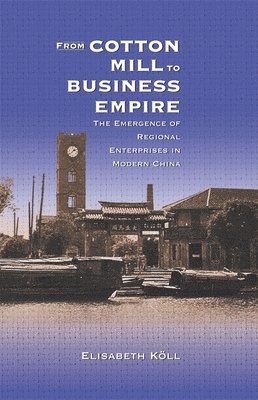
From Cotton Mill to Business Empire
The Emergence of Regional Enterprises in Modern China
Inbunden, Engelska, 2004
408 kr
Skickas inom 7-10 vardagar
The demise of state-owned enterprises, the transformation of collectives into shareholding cooperatives, and the creation of investment opportunities through stock markets indicate China's movement from a socialist, state-controlled economy toward a socialist market economy. Yet, contrary to high expectations that China's new enterprises will become like corporations in capitalist countries, management often remains under the control of the onetime bureaucrats who ran the socialist enterprises.The concepts, definitions, and interpretations of property rights, corporate structures, and business practices in contemporary China have historical, institutional, and cultural roots. In tracing the development under founder Zhang Jian (1853-1926) and his successors of the Dasheng Cotton Mill in Nantong into a business group encompassing, among other concerns, cotton, flour, and oil mills, land development companies, and shipping firms, the author documents the growth of regional enterprises as local business empires from the 1890s until the foundation of the People's Republic in 1949. She focuses on the legal and managerial evolution of limited-liability firms in China, particularly issues of control and accountability; the introduction and management of industrial work in the countryside; and the integration and interdependency of local, national, and international markets in Republican China.
Del 52 - Harvard Studies in Business History
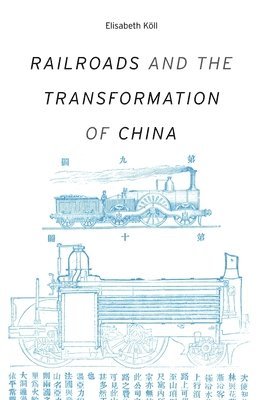
Railroads and the Transformation of China
Inbunden, Engelska, 2019
363 kr
Skickas inom 7-10 vardagar
As a vehicle to convey both the history of modern China and the complex forces still driving the nation’s economic success, rail has no equal. Railroads and the Transformation of China is the first comprehensive history, in any language, of railroad operation from the last decades of the Qing Empire to the present.China’s first fractured lines were built under semicolonial conditions by competing foreign investors. The national system that began taking shape in the 1910s suffered all the ills of the country at large: warlordism and Japanese invasion, Chinese partisan sabotage, the Great Leap Forward when lines suffered in the “battle for steel,” and the Cultural Revolution, during which Red Guards were granted free passage to “make revolution” across the country, nearly collapsing the system. Elisabeth Köll’s expansive study shows how railroads survived the rupture of the 1949 Communist revolution and became an enduring model of Chinese infrastructure expansion.The railroads persisted because they were exemplary bureaucratic institutions. Through detailed archival research and interviews, Köll builds case studies illuminating the strength of rail administration. Pragmatic management, combining central authority and local autonomy, sustained rail organizations amid shifting political and economic priorities. As Köll shows, rail provided a blueprint for the past forty years of ambitious, semipublic business development and remains an essential component of the PRC’s politically charged, technocratic economic model for China’s future.
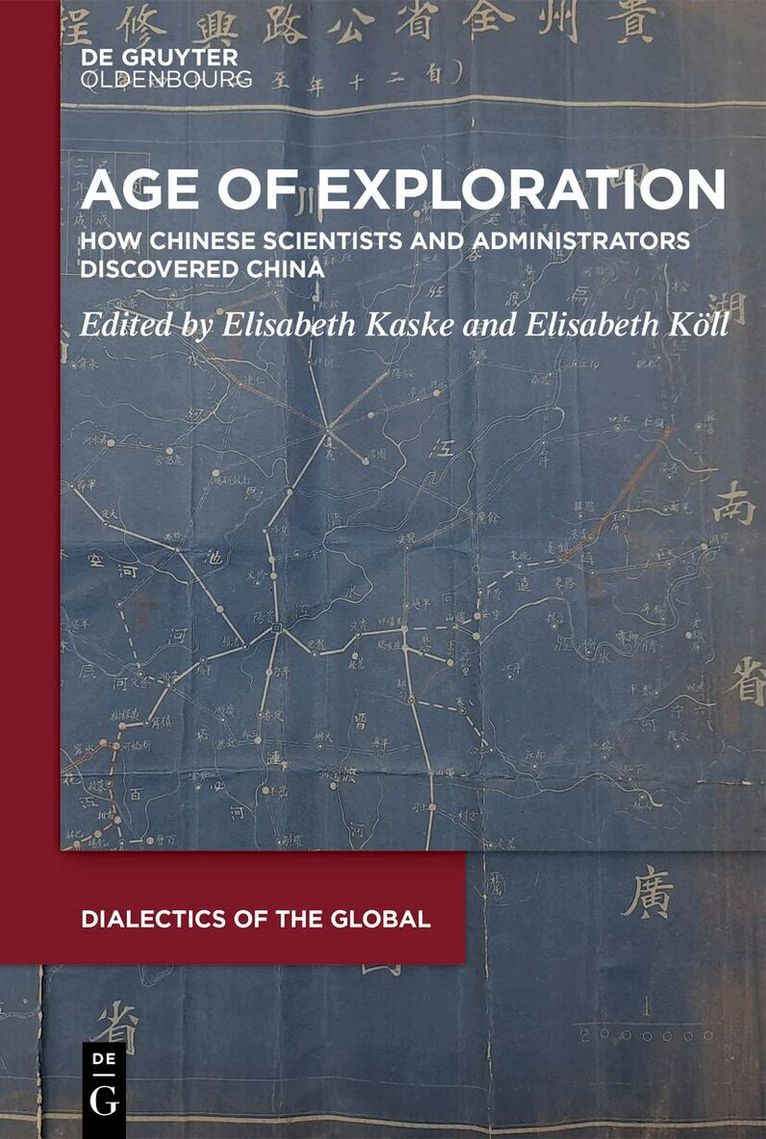
Age of Exploration
How Chinese Scientists and Administrators Discovered China
Inbunden, Engelska, 2024
1 342 kr
Skickas inom 3-6 vardagar
In the early twentieth century, Chinese intellectuals came to realize that Westerners surpassed them not only in knowledge of the world, but also in knowledge of China itself. A rising generation of Chinese scientists, engineers, and administrators was eager to address this state of affairs and began to retrace the footsteps of Western explorers who had crisscrossed China during the preceding century. The nine case studies assembled in this book show how a new cohort of professional Chinese explorers traveled, studied, appropriated, and reshaped national space from the 1920s to the 1950s. In some instances, the explorers drew directly from the fieldwork practices of their Western predecessors. In others, they trained compilers to collect and systematize local knowledge that could be passed up the administrative hierarchy to government and national institutions. Their projects helped to claim natural resources, prepare for infrastructural development, and create new institutionalized knowledge and public engagement with textual representations of China’s geobody. This book elucidates the ways in which knowledge production in early twentieth-century China centered on space and contributed to China’s transformation into a modern nation-state.