Elisabetta Basso - Böcker
Visar alla böcker från författaren Elisabetta Basso. Handla med fri frakt och snabb leverans.
4 produkter
4 produkter
950 kr
Skickas inom 7-10 vardagar
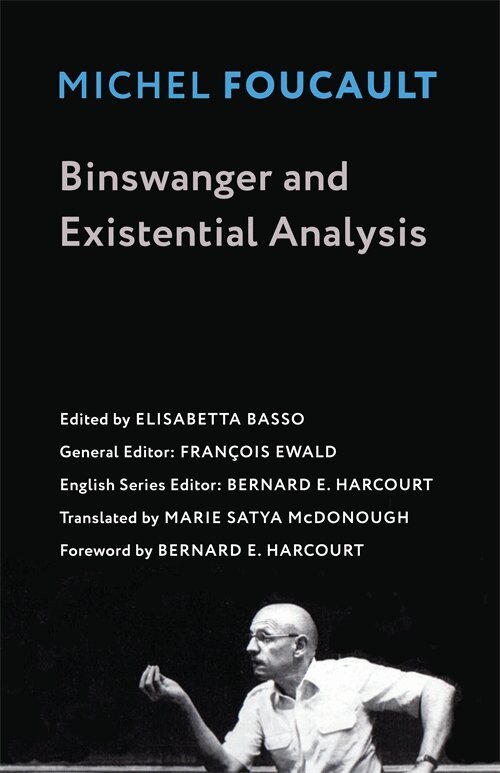
In the early 1950s, the young Michel Foucault took a keen interest in the method of existential analysis—Daseinsanalyse—developed by the Swiss psychiatrist Ludwig Binswanger. He gave a lecture course on this topic at the University of Lille in the spring of 1953 and wrote a detailed introduction to the 1954 French translation of Binswanger’s Dream and Existence (1930), in which he promised a forthcoming book that would “situate existential analysis within the development of contemporary reflection on man.” This book presents Foucault’s unpublished manuscript on Binswanger and existential analysis for the first time in English, offering crucial insight into his intellectual development.Foucault carries out a systematic examination of Daseinsanalyse, contrasting it with psychiatry, psychoanalysis, and phenomenology and championing its ambition to understand mental illness. In his critique of existential analysis, Foucault began his turn toward emphasizing the primacy of experience, which would lead to the radically new perspective and genealogical methods of The History of Madness and The History of Sexuality. Revealing a little-known influence on Foucault’s historicist approach, Binswanger and Existential Analysis reminds us of his unparalleled ability to destabilize our conceptions of self.
243 kr
Skickas inom 7-10 vardagar
In the early 1950s, the young Michel Foucault took a keen interest in the method of existential analysis—Daseinsanalyse—developed by the Swiss psychiatrist Ludwig Binswanger. He gave a lecture course on this topic at the University of Lille in the spring of 1953 and wrote a detailed introduction to the 1954 French translation of Binswanger’s Dream and Existence (1930), in which he promised a forthcoming book that would “situate existential analysis within the development of contemporary reflection on man.” This book presents Foucault’s unpublished manuscript on Binswanger and existential analysis for the first time in English, offering crucial insight into his intellectual development.Foucault carries out a systematic examination of Daseinsanalyse, contrasting it with psychiatry, psychoanalysis, and phenomenology and championing its ambition to understand mental illness. In his critique of existential analysis, Foucault began his turn toward emphasizing the primacy of experience, which would lead to the radically new perspective and genealogical methods of The History of Madness and The History of Sexuality. Revealing a little-known influence on Foucault’s historicist approach, Binswanger and Existential Analysis reminds us of his unparalleled ability to destabilize our conceptions of self.
Young Foucault
The Lille Manuscripts on Psychopathology, Phenomenology, and Anthropology, 1952–1955
Inbunden, Engelska, 2022
1 107 kr
Skickas inom 7-10 vardagar
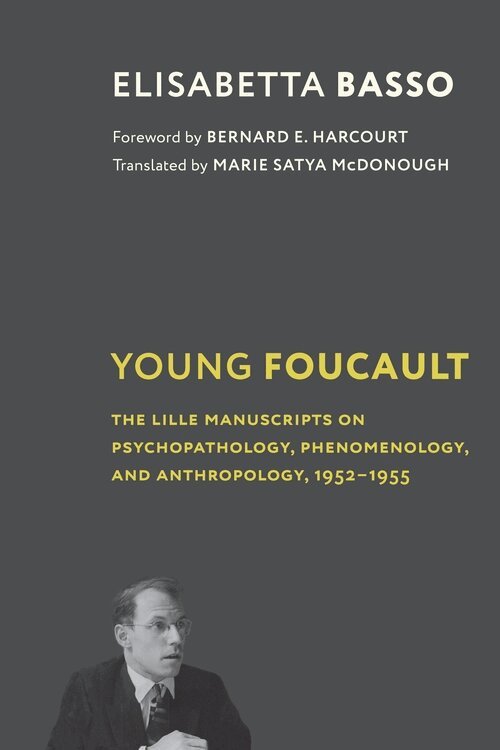
In the 1950s, long before his ascent to international renown, Michel Foucault published a scant few works. His early writings on psychology, psychopathology, and anthropology have been dismissed as immature. However, recently discovered manuscripts from the mid-1950s, when Foucault was a lecturer at the University of Lille, testify to the significance of the work that the philosopher produced in the years leading up to the “archaeological” project he launched with History of Madness.Elisabetta Basso offers a groundbreaking and in-depth analysis of Foucault’s Lille manuscripts that sheds new light on the origins of his philosophical project. She considers the epistemological style and methodology of these writings as well as their philosophical context and the scholarly networks in which Foucault was active, foregrounding his relationship to existential psychiatry. Young Foucault blurs the boundaries between biography and theory, exploring the transformations—and, at times, contradictions—that characterize the intellectual trajectory of a philosopher who, as Foucault himself put it, “turned to psychology, and from psychology to history.” Retracing the first steps of the philosopher’s intellectual journey, Basso shows how Foucault’s early writings provide key insights into his archaeological work of the 1960s. Assembling a vast array of archival sources—including manuscripts, reading notes, notes for lectures and conferences, and correspondence—this book develops a new and deeper understanding of Foucault’s body of work.
Young Foucault
The Lille Manuscripts on Psychopathology, Phenomenology, and Anthropology, 1952–1955
Häftad, Engelska, 2022
282 kr
Skickas inom 7-10 vardagar
In the 1950s, long before his ascent to international renown, Michel Foucault published a scant few works. His early writings on psychology, psychopathology, and anthropology have been dismissed as immature. However, recently discovered manuscripts from the mid-1950s, when Foucault was a lecturer at the University of Lille, testify to the significance of the work that the philosopher produced in the years leading up to the “archaeological” project he launched with History of Madness.Elisabetta Basso offers a groundbreaking and in-depth analysis of Foucault’s Lille manuscripts that sheds new light on the origins of his philosophical project. She considers the epistemological style and methodology of these writings as well as their philosophical context and the scholarly networks in which Foucault was active, foregrounding his relationship to existential psychiatry. Young Foucault blurs the boundaries between biography and theory, exploring the transformations—and, at times, contradictions—that characterize the intellectual trajectory of a philosopher who, as Foucault himself put it, “turned to psychology, and from psychology to history.” Retracing the first steps of the philosopher’s intellectual journey, Basso shows how Foucault’s early writings provide key insights into his archaeological work of the 1960s. Assembling a vast array of archival sources—including manuscripts, reading notes, notes for lectures and conferences, and correspondence—this book develops a new and deeper understanding of Foucault’s body of work.