Eliza McGraw - Böcker
Visar alla böcker från författaren Eliza McGraw. Handla med fri frakt och snabb leverans.
3 produkter
3 produkter
427 kr
Skickas inom 7-10 vardagar
Jews have long occupied visible roles in the South. Jewish families have owned establishments ranging from dry-goods stores to Thomas Jefferson's Monticello, and some of the region's most important writers and scholars have been Jewish. Yet surveys of southern culture rarely assess the contributions of Jews, while histories of Jews in America virtually exclude those living in the South. Eliza R. L. McGraw's multifaceted study fills both gaps and in doing so expands how we define the South.In Two Covenants, McGraw mines eclectic representations of Southern Jewishness as varied as the Carolina Israelite newspaper, the Mardi Gras Krewe du Jieux, southern Baptist conversion-instruction pamphlets, and the film Driving Miss Daisy. She also considers literary representations of southern Jews in the works of both Jewish and non-Jewish writers, including Thomas Wolfe, Robert Penn Warren, Walker Percy, Lillian Hellman, David Cohn, Louis Rubin, Jr., Eli Evans, James Weldon Johnson, Jean Toomer, and Charles Chesnutt.While concerned with established concepts such as ethnicity and region, McGraw raises many questions that illustrate the complexity of southern Jewishness. Can one individual straddle two identities? How do race, class, and gender influence southern Jewishness? What are the differences between southern Jews and other southerners, or between southern Jews and other Jews? Does anti-Semitism manifest itself differently or with unique effects in the South?In suggesting answers to these and other questions, McGraw ranges widely over the southern cultural landscape and reveals that although southern Jewishness remains a marginal identity due to the small size of its constituency it nevertheless inhabits and helps to form the South at large. The very presence and vitality of southern Jewishness demonstrate that southern identity, like national identity, is a fluid cultural experience.
718 kr
Tillfälligt slut
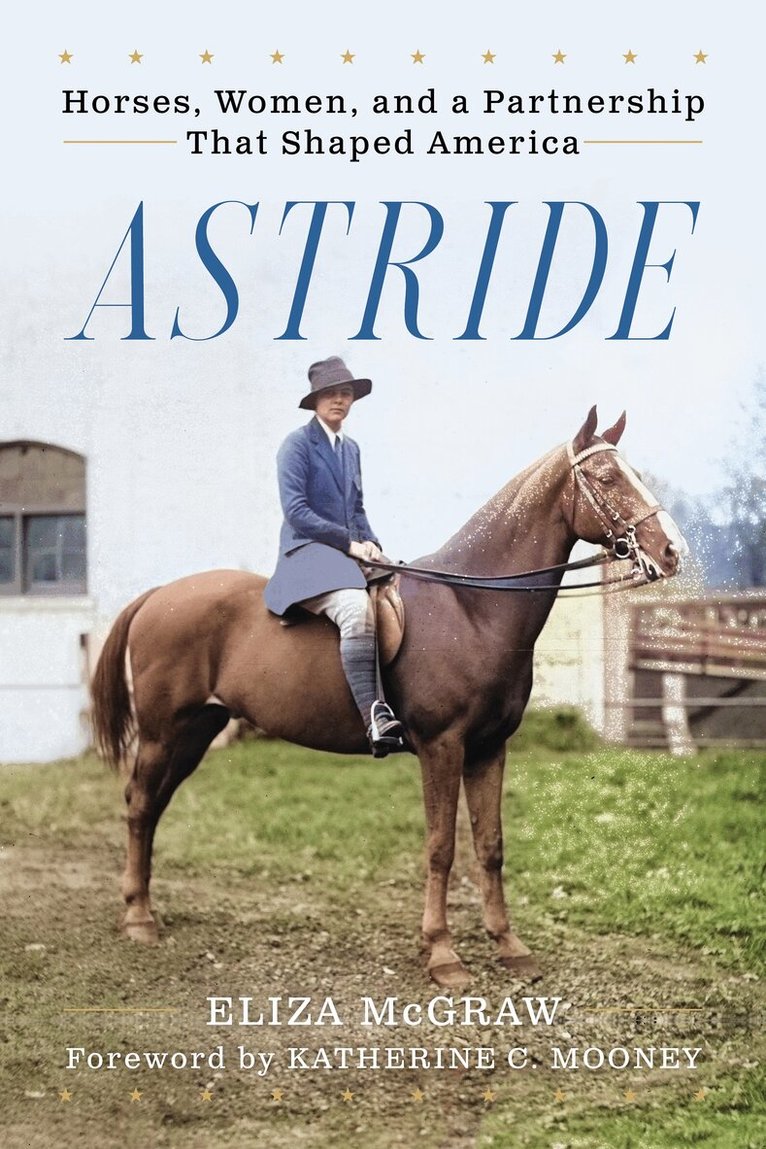
On March 3, 1913, a quarter of a million people gathered in Washington, DC, to watch five thousand female suffragists march down Pennsylvania Avenue, headed by a cohort of equestrians in breeches and plumed hats. From atop a white horse, wearing long white boots and a cloak emblazoned with a Maltese cross, Inez Milholland rallied her compatriots against hecklers. Channeling Joan of Arc, Milholland appeared strong and fearless as she sat astride her horse._x000D_The latter half of the 1800s ushered in a golden age of the horse that found more American women riding—both aside and astride—as they commanded presence in the public sphere. Reporters filed riding-craze stories about Manhattan socialites shopping on horseback, women who exercised on hobby horses, and women who worked as horsebreakers, cattle rustlers, or jockeys. In Astride: Horses, Women, and a Partnership That Shaped America, Eliza McGraw weaves together stories of women who pioneered in worlds such as Thoroughbred breeding, the circus, and horse rescue at a time when American women in general internalized the lessons of horsewomen: take chances, take up more space, and learn to get back on._x000D_From tamers to caretakers and performers to teachers, all worked with horses to buck the status quo. Expressing the idea of femininity with athleticism and authority, these trailblazers changed the way America understood women. Richly illustrated with period photographs, Astride demonstrates that even small changes can advance the fight for progress.
350 kr
Tillfälligt slut
On March 3, 1913, a quarter of a million people gathered in Washington, DC, to watch five thousand female suffragists march down Pennsylvania Avenue, headed by a cohort of equestrians in breeches and plumed hats. From atop a white horse, wearing long white boots and a cloak emblazoned with a Maltese cross, Inez Milholland rallied her compatriots against hecklers. Channeling Joan of Arc, Milholland appeared strong and fearless as she sat astride her horse._x000D_The latter half of the 1800s ushered in a golden age of the horse that found more American women riding—both aside and astride—as they commanded presence in the public sphere. Reporters filed riding-craze stories about Manhattan socialites shopping on horseback, women who exercised on hobby horses, and women who worked as horsebreakers, cattle rustlers, or jockeys. In Astride: Horses, Women, and a Partnership That Shaped America, Eliza McGraw weaves together stories of women who pioneered in worlds such as Thoroughbred breeding, the circus, and horse rescue at a time when American women in general internalized the lessons of horsewomen: take chances, take up more space, and learn to get back on._x000D_From tamers to caretakers and performers to teachers, all worked with horses to buck the status quo. Expressing the idea of femininity with athleticism and authority, these trailblazers changed the way America understood women. Richly illustrated with period photographs, Astride demonstrates that even small changes can advance the fight for progress.