Elizabeth A. Cecil - Böcker
Visar alla böcker från författaren Elizabeth A. Cecil. Handla med fri frakt och snabb leverans.
2 produkter
2 produkter
1 076 kr
Skickas inom 5-8 vardagar
This conference volume unites a wide range of scholars working in the fields of history, archaeology, religion, art, and philology in an effort to explore new perspectives and methods in the study of primary sources from premodern South and Southeast Asia. The contributions engage with primary sources (including texts, images, material artefacts, monuments, as well as archaeological sites and landscapes) and draw needed attention to highly adaptable, innovative, and dynamic modes of cultural production within traditional idioms. The volume works to develop categories of historical analysis that cross disciplinary boundaries and represent a wide variety of methodological concerns. By revisiting premodern sources, Asia Beyond Boundaries also addresses critical issues of temporality and periodization that attend established categories in Asian Studies, such as the “Classical Age” or the “Gupta Period”. This volume represents the culmination of the European Research Council (ERC) Synergy project Asia Beyond Boundaries: Religion, Region, Language and the State, a research consortium of the British Museum, the British Library and the School of Oriental and African Studies, in partnership with Leiden University.
Del 21 - Gonda Indological Studies
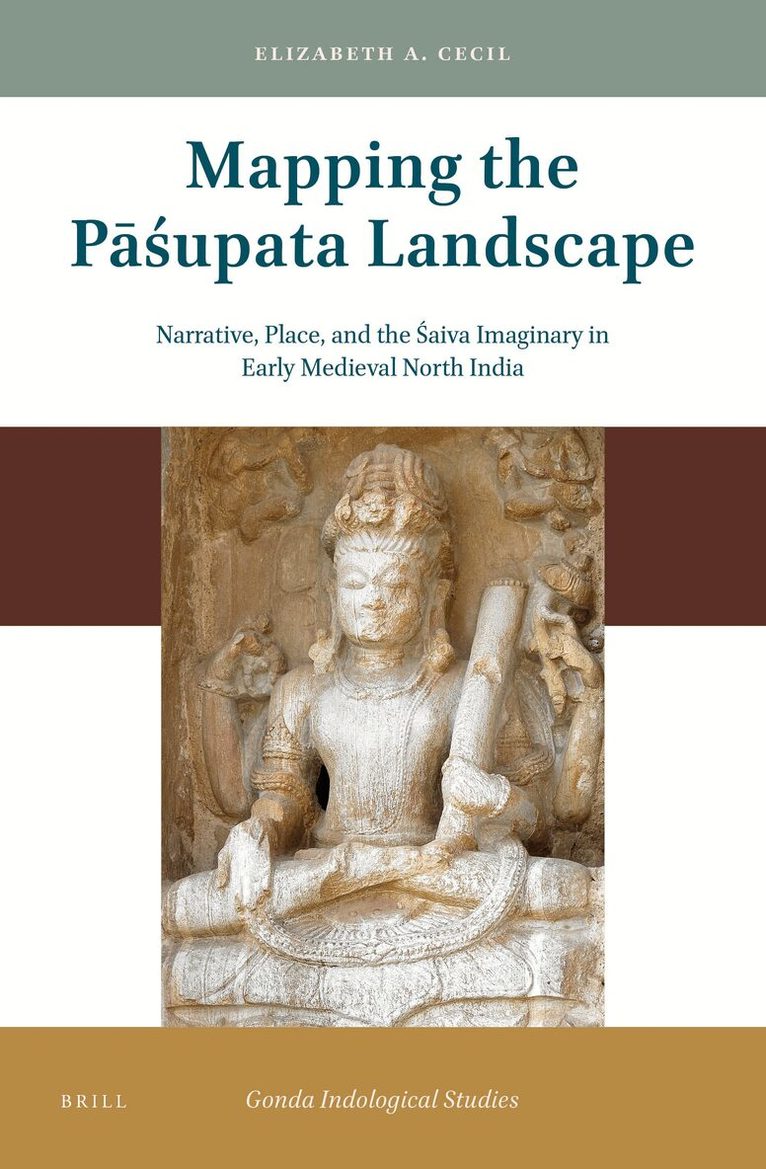
Mapping the Pāśupata Landscape
Narrative, Place, and the Śaiva Imaginary in Early Medieval North India
Inbunden, Engelska, 2020
1 204 kr
Skickas inom 5-8 vardagar
In Mapping the Pāśupata Landscape: Narrative, Place, and the Śaiva Imaginary in Early Medieval North India, Elizabeth A. Cecil explores the sacred geography of the earliest community of Śiva devotees called the Pāśupatas. This book brings the narrative cartography of the Skandapurāṇa into conversation with physical landscapes, inscriptions, monuments, and icons in order to examine the ways in which Pāśupatas were emplaced in regional landscapes and to emphasize the use of material culture as media through which notions of belonging and identity were expressed. By exploring the ties between the formation of early Pāśupata communities and the locales in which they were embedded, this study reflects critically upon the ways in which community building was coincident with place-making in Early Medieval India.