
Elizabeth Atwood - Böcker
Visar alla böcker från författaren Elizabeth Atwood. Handla med fri frakt och snabb leverans.
2 produkter
2 produkter
530 kr
Skickas
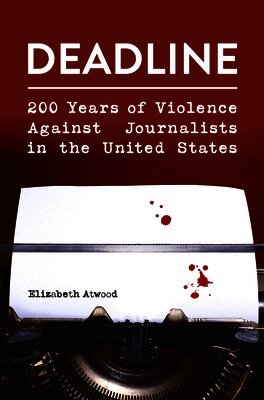
In Deadline: 200 Years of Violence against Journalists in the United States, Elizabeth Atwood offers the first comprehensive look at the history of fatal attacks against journalists in the United States between 1829 and the present. Atwood describes the political, technological, and economic context of these assaults, and includes brief biographies of the victims and accounts of what happened both them and to their assailants after the attacks. To help us understand these attacks, Atwood presents a framework for categorizing them, built on John Nerone’s studies on assaults on American media workers. Atwood categorizes attacks against journalists as attacks against individuals, ideas, and media institutions, and undertaken to suppress reporting on certain topics and in the context of wars and other international or conflicts. Crucially, Deadline utilizes this framework to offer possible solutions to the issue of violence against journalists. Atwood was inspired to explore the pressing issue of violence against American journalists after the tragic death of one of her colleagues at the Baltimore Sun, Rob Hiaasen, in the Capital Gazette shooting in 2018. Throughout, she demonstrates that distrust of the media and violence against the press in the United States are hardly new developments. Her work examines how intimidation, violence, and censorship have, in fact, been used against the American press since both its and the nation’s founding.
Liberation of Marguerite Harrison
America's First Female Foreign Intelligence Agent
Inbunden, Engelska, 2020
362 kr
Tillfälligt slut
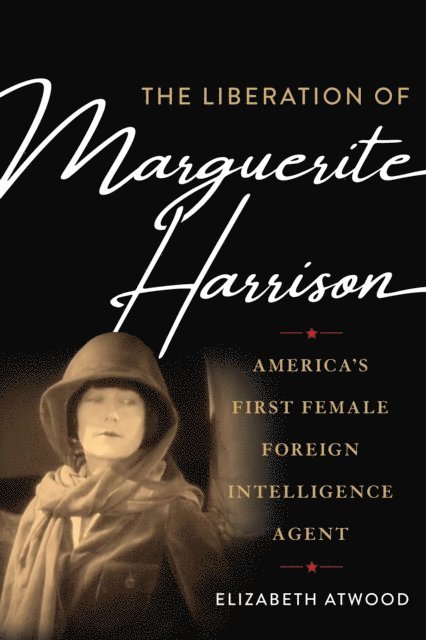
In September 1918, World War I was nearing its end when Marguerite E. Harrison, a thirty-nine-year-old Baltimore socialite, wrote to the head of the U.S. Army's Military Intelligence Division (MID) asking for a job. The director asked for clarification. Did she mean a clerical position? No, she told him. She wanted to be a spy.Harrison, a member of a prominent Baltimore family, usually got her way. She had founded a school for sick children and wangled her way onto the staff of the Baltimore Sun. Fluent in four languages and knowledgeable of Europe, she was confident she could gather information for the U.S. government. The MID director agreed to hire her, and Marguerite Harrison became America's first female foreign intelligence officer.For the next seven years, she traveled to the world's most dangerous places--Berlin, Moscow, Siberia, and the Middle East--posing as a writer and filmmaker in order to spy for the U.S. Army and U.S. Department of State. With linguistic skills and knack for subterfuge, Harrison infiltrated Communist networks, foiled a German coup, located American prisoners in Russia, and probably helped American oil companies seeking entry into the Middle East. Along the way, she saved the life of King Kong creator Merian C. Cooper, twice survived imprisonment in Russia, and launched a women's explorer society whose members included Amelia Earhart and Margaret Mead.As incredible as her life was, Harrison has never been the subject of a published book-length biography. Past articles and chapters about her life relied heavily on her autobiography published in 1935, which omitted and distorted key aspects of her espionage career. Elizabeth Atwood draws on newly discovered documents in the U.S. National Archives, as well as Harrison's prison files in the archives of the Russian Federal Security Bureau in Moscow, Russia. Although Harrison portrayed herself as a writer who temporarily worked as a spy, this book documents that Harrison's espionage career was much more extensive and important than she revealed. She was one of America's most trusted agents in Germany, Russia and the Middle East after World War I when the United States sought to become a world power.